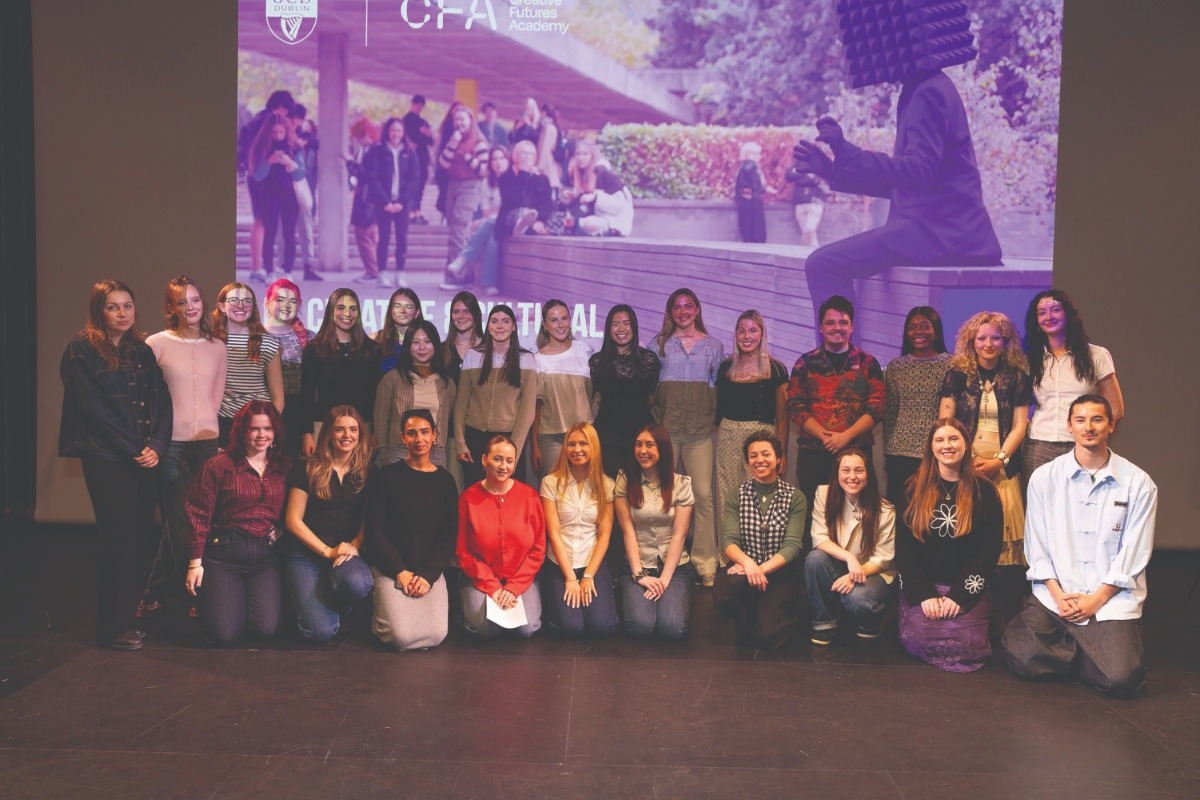
Another remarkable year has showcased student and academic achievements alongside an ambitious programme of cultural outreach, reflecting our Irish roots and global reach. We continue to take pride in the creativity, innovation and impact our students have on the social and cultural fabric of Irish society. Fostering this talent and preparing students to embark on dynamic and impactful careers was never more apparent than at the first BA Creative & Cultural Industries Final Year Showcase, which demonstrated talent, ambition and creativity in abundance.
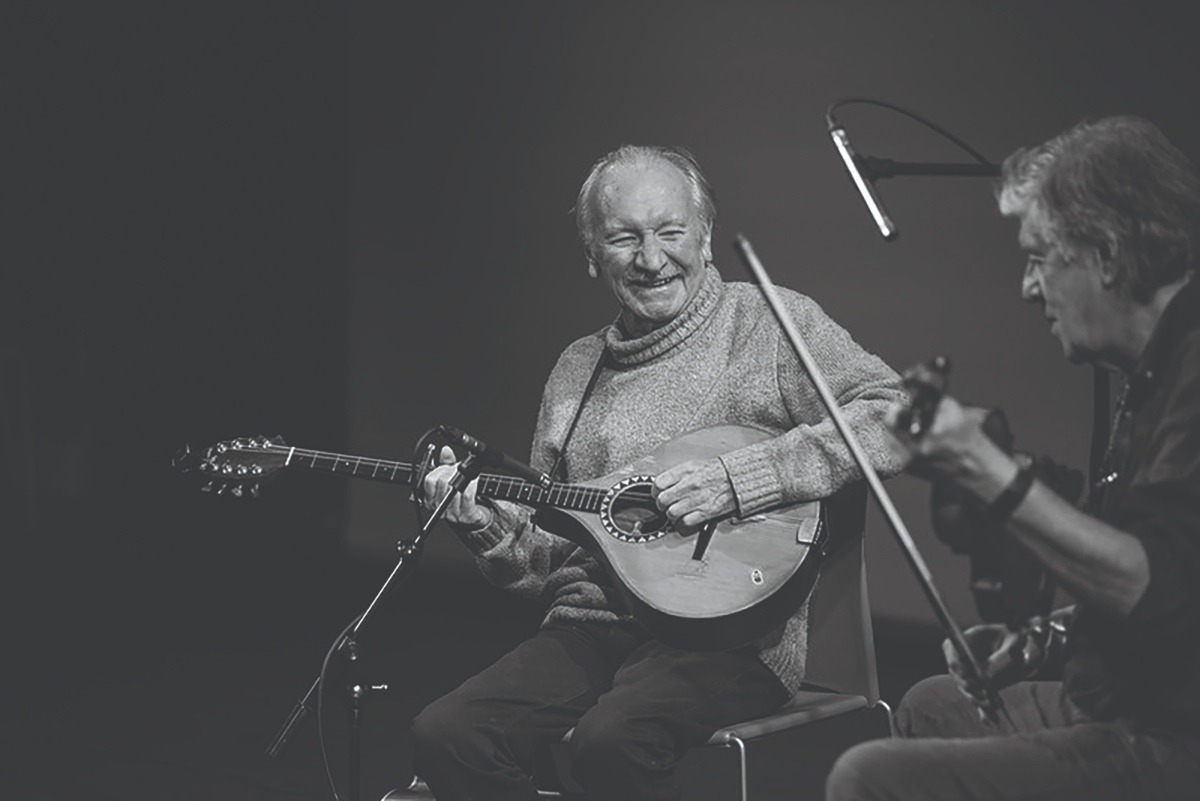
In September, the College hosted a very special premiere of In Time: Dónal Lunny. Produced by South Wind Blows in association with UCD, the documentary film follows Lunny’s moving journey through traditional, folk and contemporary music. Friends, family and guests were treated to live performances by Dónal, Paddy Glackin and the UCD Traditional Music Practice Ensemble as well as a conversation with the film’s Emmy Award-winning director, Nuala O’Connor.
Another artist whose documentary film ODYSSEY illuminated the Trapdoor Theatre was John Behan, with a special UCD screening and Q&A with the film’s contributors: the sculptor John Behan, director Donald Taylor Black, and composer Bill Whelan.
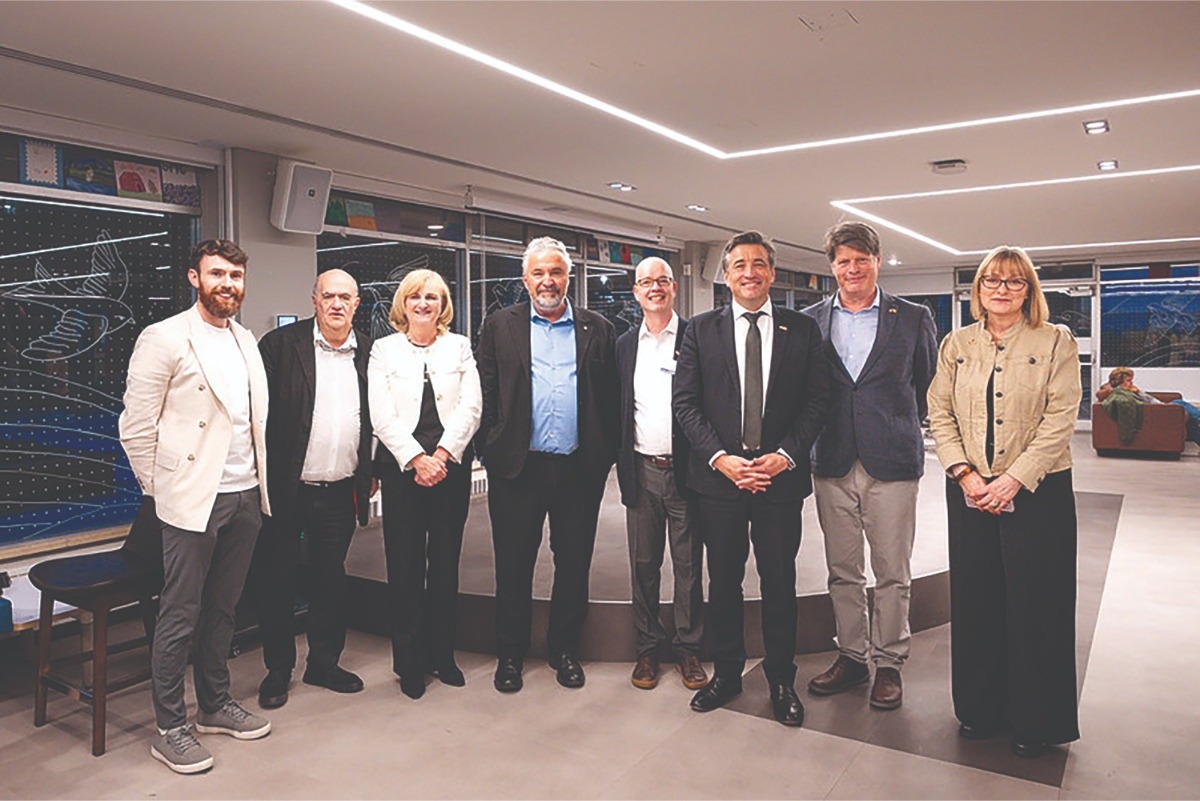
From artistic to literary legends, Colm Tóibín delivered the inaugural Craig Dobbin Legacy Lecture to alumni and friends at the University of Toronto and Memorial University in Newfoundland in May. A partnership between the College and the Ireland Canada University Foundation, the Craig Dobbin Legacy Programme is designed to advance strong links through academic scholarships for research opportunities. Spellbound guests listened to Tóibín reflect on “Literature of Homecoming”, an especially poignant and timely lecture as the 180th anniversary of 1847 approaches, marking the beginning of Ireland and Canada’s shared history, which endures today with many Irish calling Canada home, as remarked by Ambassador John Concannon. Award-winning journalist and author Fintan O’Toole delivered the Annual College Lecture in partnership with the UCD Clinton Institute last November.
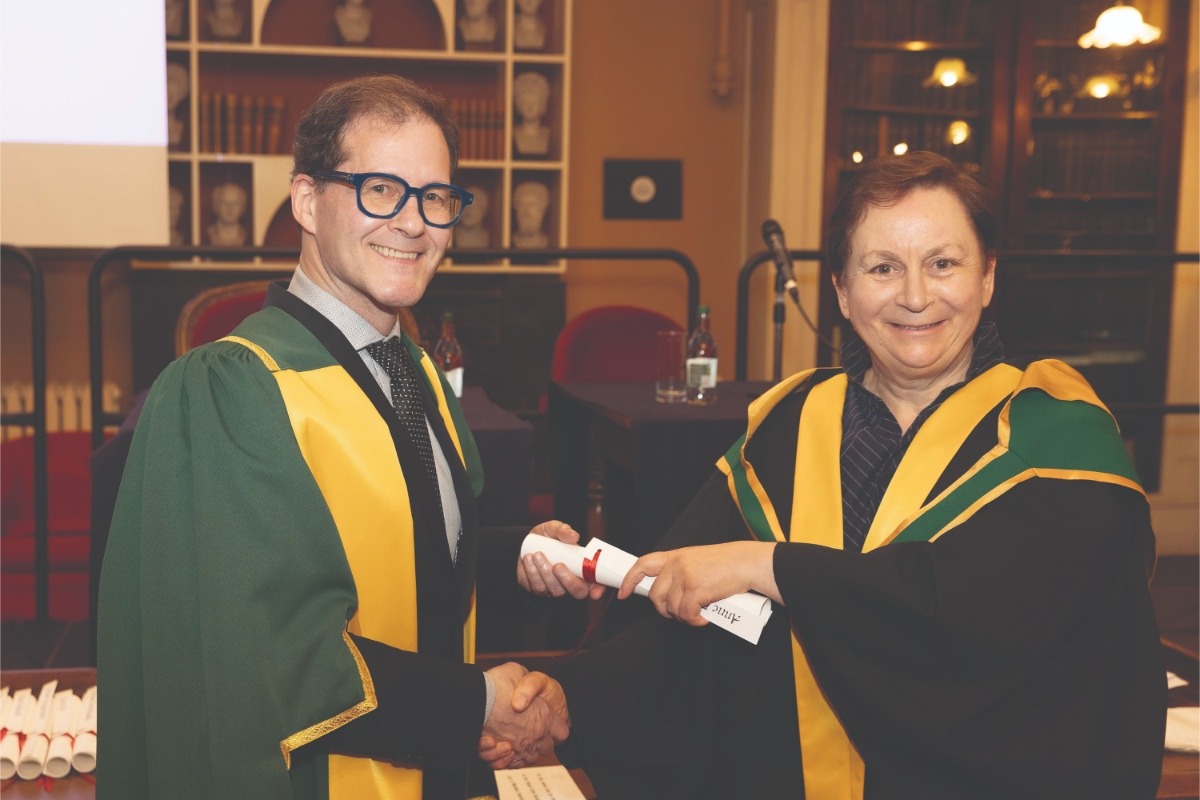
The College enjoyed many successes in national and international awards and distinctions. Professor Diarmaid Ferriter was named the patron of the Dr Éamon Phoenix Foundation. The Booker Prize winner Anne Enright, Professor of Fiction, UCD School of English, Drama and Film, was elected to the Royal Irish Academy, Ireland’s highest academic honour. Professor Porscha Fermanis, UCD School of English, Drama and Film, was awarded €2.5 million in ERC Advanced Grant funding to lead the PanAsia project.
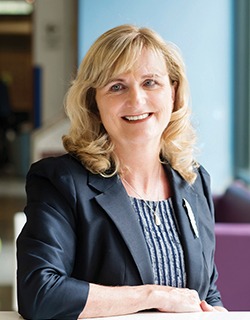
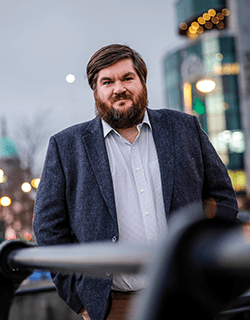
As College Principal, I was honoured to win the 2026 NovaUCD Consultancy of the Year Award, leading a team of 7, for the first comprehensive study of Irish language media on the island of Ireland, tendered by Coimisiún na Meán.
The year finished on a high with Kathy Rose O’Brien, a graduate of the UCD Clinton Institute, and Kate Lawlor, an MA student in UCD School of Irish, Celtic Studies and Folklore, being awarded prestigious Fulbright Scholarships to undertake landmark academic and cultural placements at the Smithsonian American Women’s History Museum in Washington, D.C., and the University of Notre Dame in Indiana, respectively. Their achievements reflect the excellence and global impact of the College’s students and alumni.
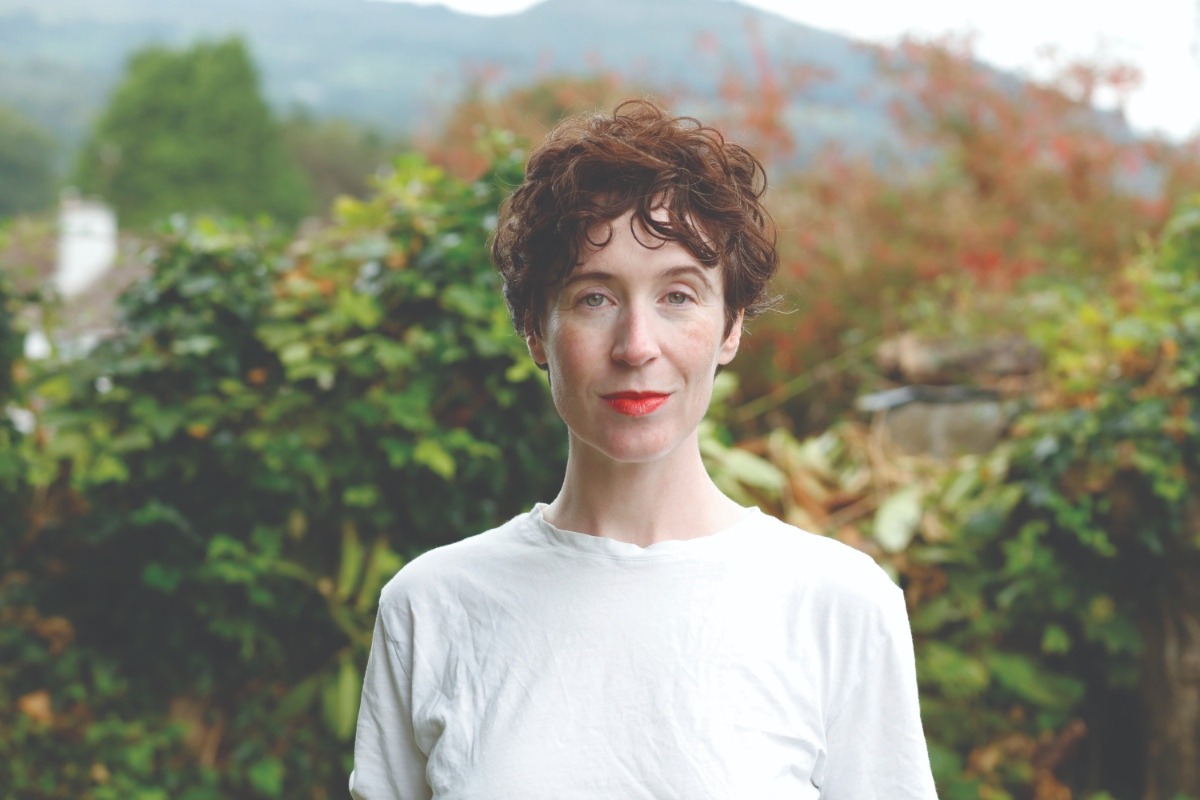
The College was delighted to announce several new appointments, including Dr Katherine Ebury as James Joyce Chair, and award-winning novelist Niamh Campbell to the Creative Writing Team following the recent publication of her third novel, Make Strange.
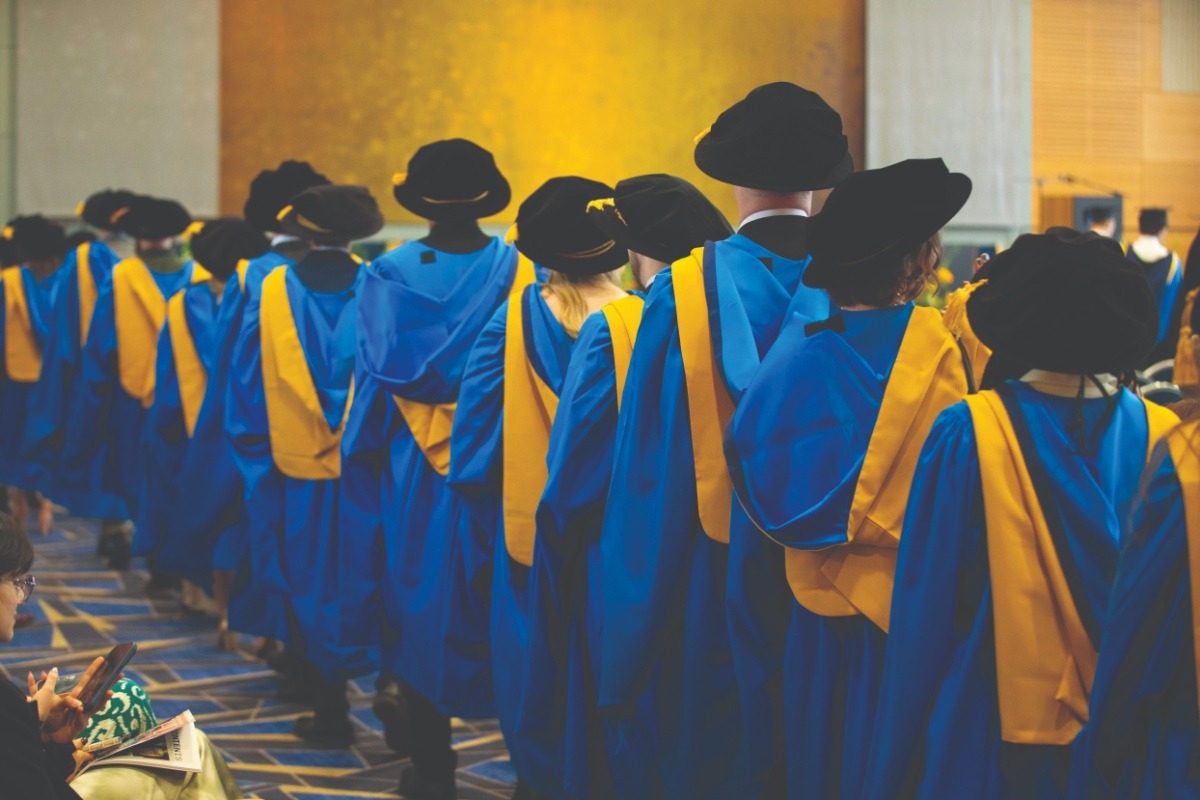
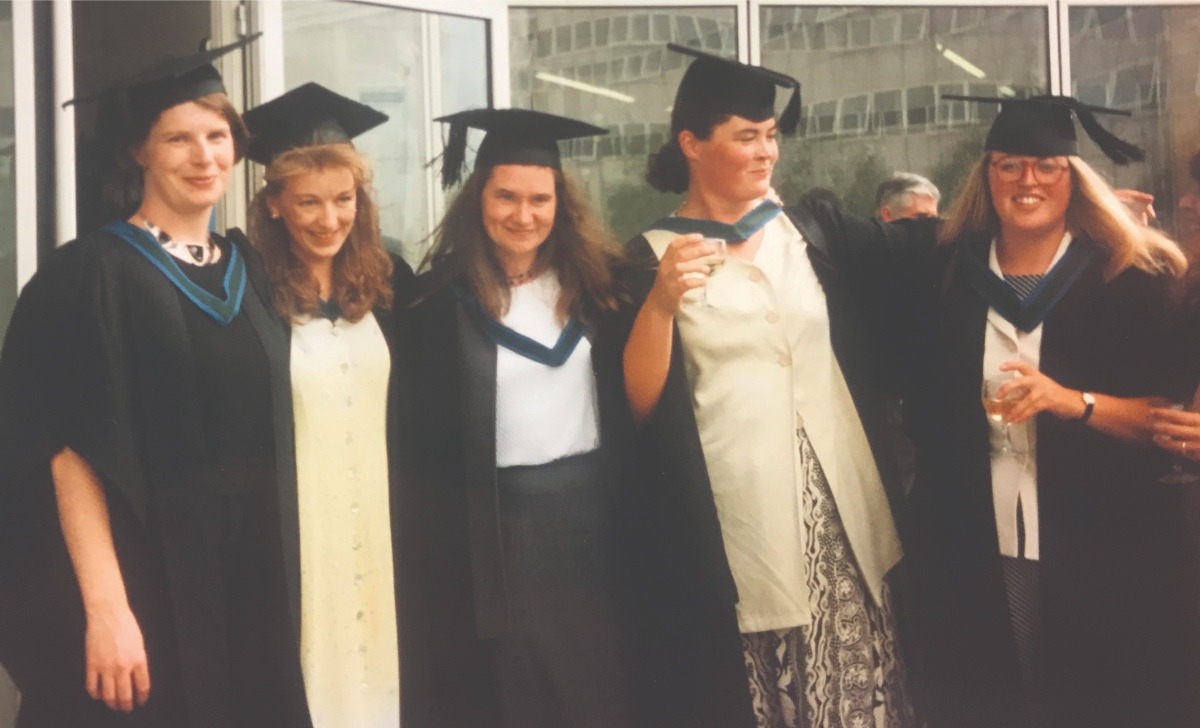
Established in 2022, the BA Creative & Cultural Industries confers its first cohort of alumni this year.
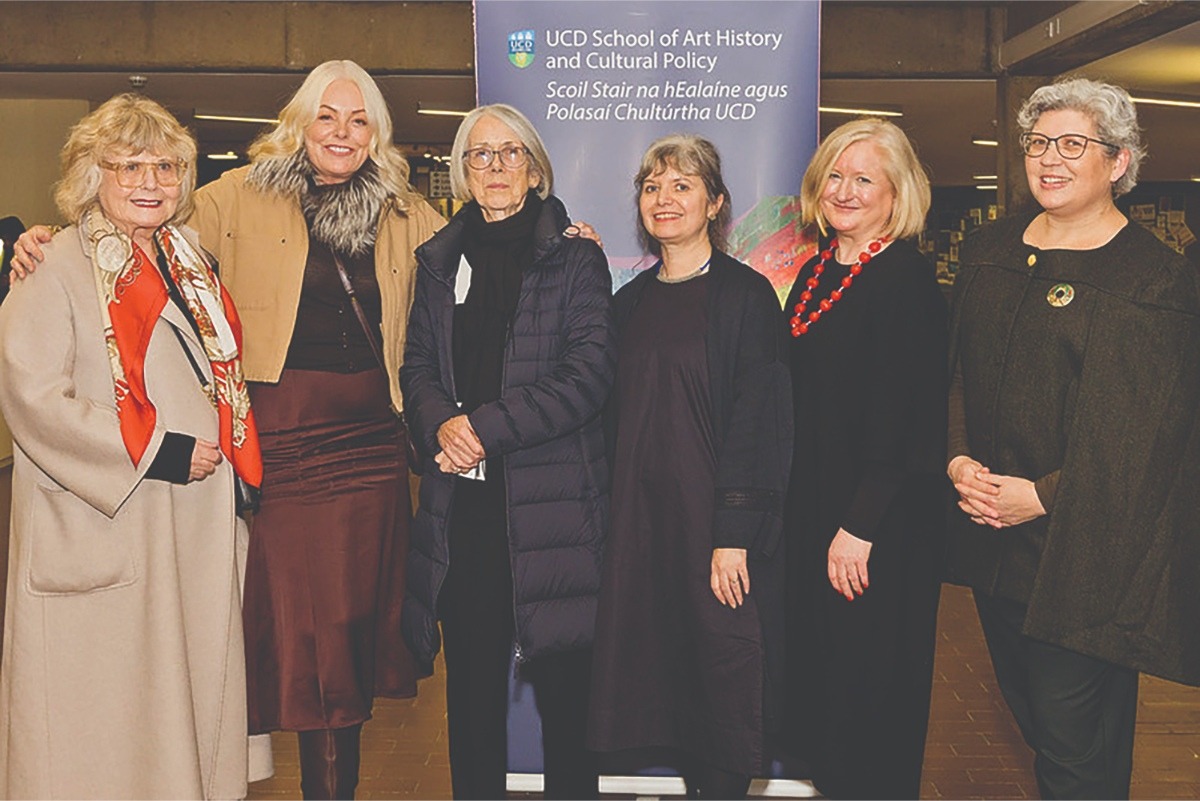
Dr Michael Iantorno was appointed to the School of Art History & Cultural Policy, which also celebrated its milestone 60th anniversary. The School welcomed back long-standing lecturer and friend Professor Emerita Paula Murphy, who delivered the Annual Alumni Lecture on “An unorthodox approach to being a sculpture historian”. The School of Classics also hosted the 2026 UCD Classical Society Inaugural Lecture.
Furthering our commitment to diversity and inclusion, a bilingual gender diversity website was launched in March, which aims to recognise the identities and experiences of transgender and gender-diverse students, faculty, and staff.
The School of Languages, Cultures & Linguistics, along with TCD, hosted more than 300 international scholars at the biennial Society for Italian Studies conference, commemorating Ireland’s pioneering role in Italian Studies.
BA Creative & Cultural Industries Class of 2026 at their end of year showcase. Dónal Lunny performing with Paddy Glackin.L-R: Pa Sheehan, Colm Tóibín, Professor Regina Uí Chollatáin, Charlie Foran (MC), Dr Paul Halferty, Ambassador John Concannon, James Kelly, Amanda Hopkins.Niamh Campbell.Anne Enright, UCD Professor of Creative Writing (Prose Fiction), elected to the Royal Irish Academy.Maeve Valentine, Dr Susan Storey, Prof. Emerita Paula Murphy, Associate Prof. Roisin Kennedy, Carla Briggs, Prof. Emily Mark-FitzGerald.
Tá UCD rangaithe sa 100ú háit ar domhan sa Ranguithe Domhanda Ollscoile QS is déanaí. Tháinig UCD 18 n-áit chun cinn sa rangú i mbliana; léiríonn an chloch mhíle shuntasach seo go bhfuil an Ollscoil ag dul ó neart go neart le cúpla bliain anuas. Is aitheantas é an t-éacht seo ar uaillmhian agus rath na hOllscoile i réimsí an taighde, an oideachais agus na rannpháirtíochta domhanda
Taighde Feiceálach
Tá Tionchar an Taighde ar cheann de na príomhtháscairí a dheimhníonn seasamh UCD i measc na 100 ollscoil is fearr ar domhan. Tá dul chun cinn suntasach déanta ag an ollscoil, ag dreapadh 49 n-áit chun bheith uimhir a haon in Éirinn maidir le Luanna in aghaidh an Dáimhe, agus ag ardú 57 n-áit i méadracht an Líonra Taighde Idirnáisiúnta. Ina theannta sin, tá UCD i measc na 20 ollscoil Eorpacha is fearr le haghaidh maoiniú Horizon Europe do thaighde agus nuálaíocht.
Feabhas ar Cháil & Inbhuanaitheacht
Léiríonn na ranguithe is déanaí an méadú is mó riamh i gCáil Fostóirí (suas 36 áit), agus mhéadaigh Cáil Acadúil freisin (suas 5 áit). Leanann an Ollscoil de bheith ag feidhmiú go láidir san infhostaitheacht, agus tá sí fós i measc na n-ollscoileanna is fearr ar domhan maidir le Torthaí Fostaíochta do chéimithe. Lena chois sin, léirítear tiomantas UCD don inbhuanaitheacht ina rangú sa 47ú háit ar fud an domhain don mhéadracht shonrach seo.
Pobal agus Comhpháirtíocht
Tagann éacht UCD chun cinn agus an iomaíocht dhomhanda ag dul i ndéine, agus measúnú déanta ar na míilte institiúid gach bliain le bheith san áireamh sna ranguithe. Tá dlúthbhaint ag rath agus tionchar na hOllscoile le tacaíocht agus tiomantas a léiríonn gach duine i bpobal UCD – dámh, mic léinn, foireann, alumni agus comhpháirtithe ina measc.
20 BLIAIN DE CHÚRAM OTHAR Á CHEILIÚRADH AG IONAD TAIGHDE CLINICIÚIL UCD
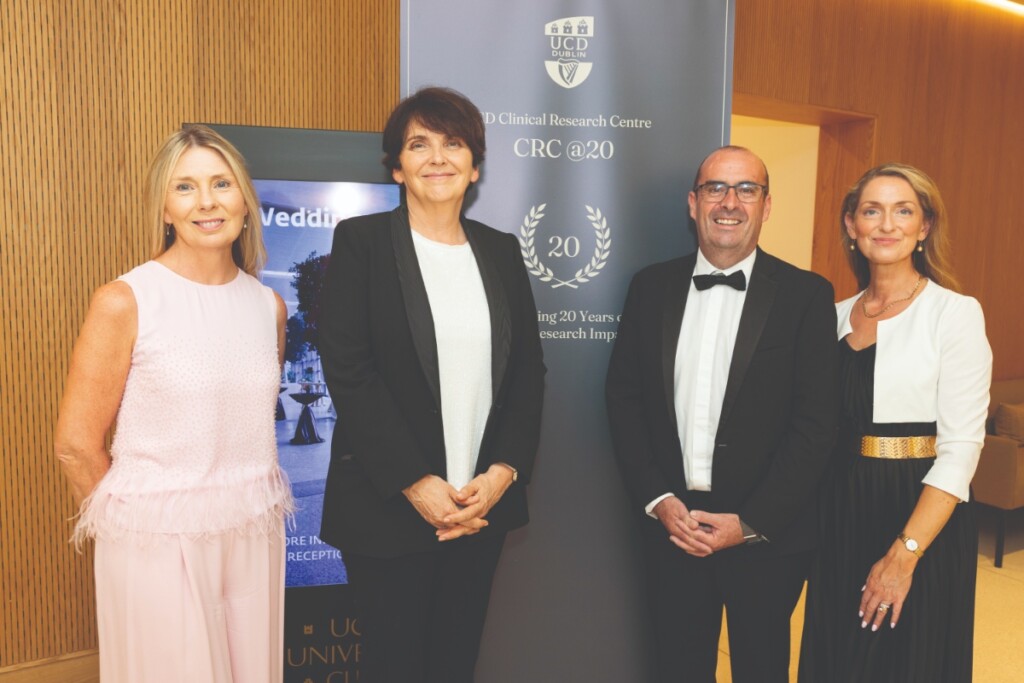
Tá Ionad Taighde Cliniciúil (CRC) UCD i Scoil an Leighis UCD ag ceiliúradh 20 bliain ar an bhfód i mbliana. Déanann an chloch mhíle seo scór bliain de thaighde cliniciúil ceannródaíoch a chomóradh, ag tabhairt cóireálacha nuálacha d’othair, agus ag tabhairt rochtain do na míilte duine ar thrialacha cliniciúla a d’athraigh agus a shábháil saolta araon.
Is é CRC UCD an t-ionad taighde cliniciúil acadúil is mó in Éirinn. Seasann CRC UCD amach mar gheall ar an mbéim a chuireann sé ar ghalair agus ar riochtaí sláinte éagsúla, agus an tacaíocht fhairsing a thugann sé ar feadh aistear an othair. Trí líonra comhoibríoch a chuimsíonn ospidéil agus áiseanna cúraim phríomhúil, tá CRC UCD tar éis cur ar chumas breis agus 25,000 othar rochtain a fháil ar chóireálacha nuálacha agus seirbhísí leighis den chéad scoth in Éirinn le 20 bliain anuas.
Go dtí seo, tá breis agus €200 milliún i maoiniú taighde tugtha ag an ionad do staidéir chliniciúla, a bhfuil torthaí ceannródaíocha mar thoradh orthu. I measc na n-éachtaí suntasacha, tá trialacha nuálacha in ailse, galair neamhchoitianta, agus riochtaí riospráide, chomh maith le forbairt teiripe CFTR (Rialtóir Seoltas Tras-scannáin Fibróis Chisteach).
Ghlac CRC UCD páirt i dtrialacha luath-idirghabhála le linn ghéarchéim Covid-19, rud a chabhraigh le cúrsa domhanda na paindéime a athrú. I ndiaidh Brexit, bhunaigh an Lárionad comhpháirtíochtaí le hollscoileanna sa Ríocht Aontaithe, chun ligean do thrialacha criticiúla ailse leanúint ar aghaidh, rud a chinntigh nach gcaillfeadh othair rochtain ar chúram riachtanach.
Chun comóradh 20 bliain CRC UCD a cheiliúradh, seoladh leabhar speisialta ag ócáid in UCD. Leagann an leabhar ‘20 Voices’ béim ar an tionchar daonna atá ag an Ionad trí scéalta pearsanta na n-othar, na foirne agus na gceannairí a thóg, a thacaigh agus a mhúnlaigh é a roinnt.
Louise Beer is an artist and curator from Aotearoa New Zealand, now living in the English seaside town of Margate. She is the UCD College of Science and Mayo Dark Sky Park Satellite Artist in Residence 2025-2026.
I studied for a BA (Hons) in Fine Art at Middlesex University before an MA in Art and Science at Central Saint Martins. After graduating, I co-directed several collectives and an art gallery, developing residencies in the UK and Europe, and over 200 exhibitions and events exploring Earth and space.
I have been artist in residence in different places in the UK, Europe and Australasia, and have been commissioned to create work for cathedrals, churches, institutions, galleries and schools. Now, as well as my residency at UCD, I am also Artist in Residence at the Institute of Astronomy, University of Cambridge and I am Art Gene’s 25 x 25 Environmental Artist in Residence.
I see my art and curatorial practice as a way to explore and reflect on scientific knowledge and discovery. My practice explores our relationship to Earth’s environments, to deep time, and to the cosmos through engaging with scientists and communities. I am interested in how light pollution acts as a visual disconnection to the universe and how this may be shaping how we perceive the significance of the climate crisis.
I hope to help audiences reconnect with the night sky and to be able to place their own existence, and the lives of other species, within the deep time continuum, through installation, moving image, photography, writing, participatory works and sound.
The open call for the Mayo Dark Sky Park Satellite Residency had similarities to what I was already pursuing in my practice: bringing together Earth and space scientists, and dark skies. I applied with my project, ‘Earth, a Cosmic Spectacle’.
This is a multi-chapter project where scientific perspectives, community reflections and photographic, installation and sound works coalesce around questions of climate, deep time and our place within the cosmos.
I developed my interest in the night sky through my father. He had photographs of deep space and diagrams of our place in the Milky Way in his home. These, coupled with a vibrant and endless cosmos above at night in Aotearoa New Zealand, made it feel wonderfully inescapable.
I moved to cities in England as a teenager, and realised that not every person shared this same opportunity of experiencing the visual cosmos due to different levels of light pollution. Since then, I have been thinking about how that might affect us philosophically.
My practice has explored the importance of natural darkness for flora and fauna, and how artificial light at night can disturb natural rhythms that evolved over millions of years in response to Earth’s cycles of light and darkness. My work has moved from looking into the magnificence of the cosmos, to seeing Earth in my view of space.
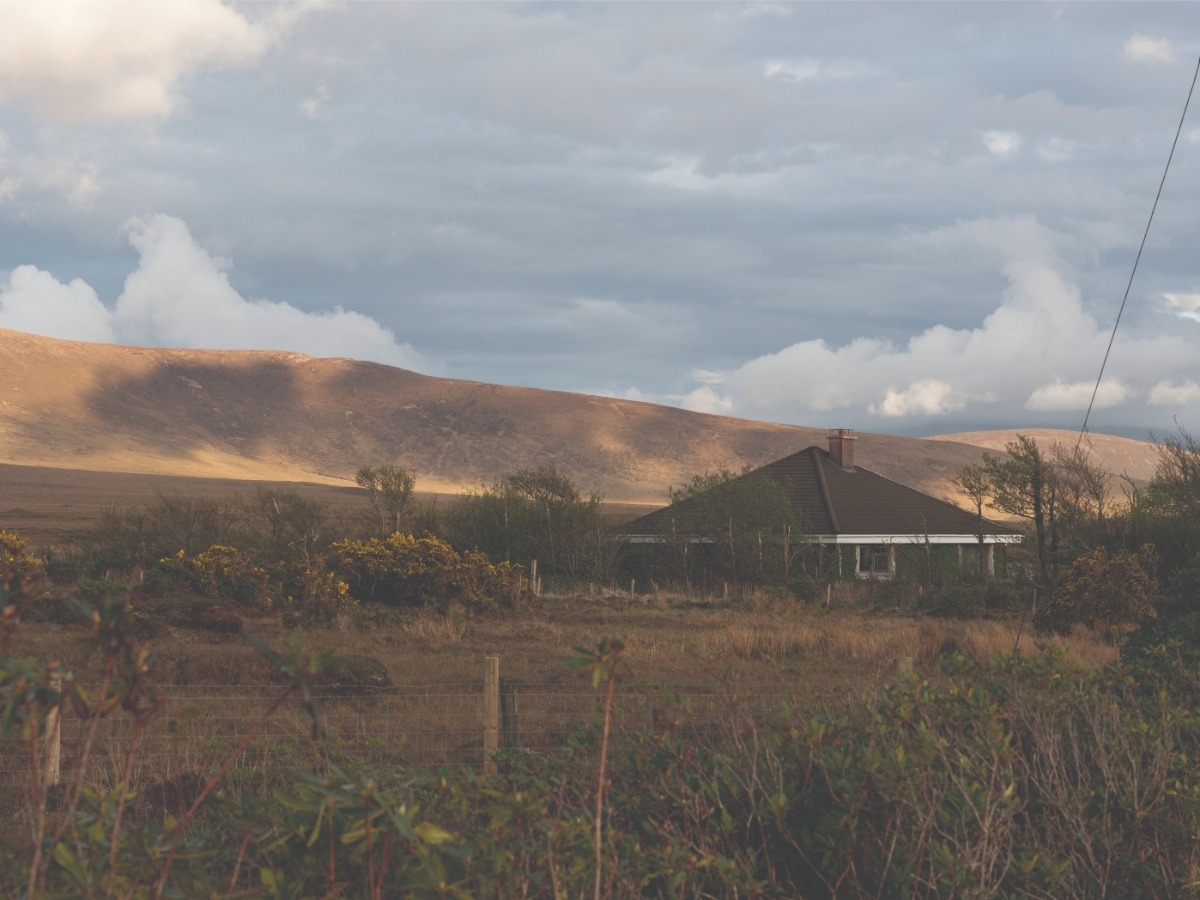
My residency began at Mayo Dark Sky Festival 2025, which brought together astronomy, biodiversity and cultural talks and events to highlight the importance of dark skies. I have spent time in the Wild Nephin National Park cottage near Ballycroy, in winter and in spring. I have explored different parts of the landscape, taking in the scale, observing the biodiversity and the ever-present weather in the daytime and at night time. Travelling into the park with conservation and dark sky rangers gave me a deeper understanding of the complexity of their work, from protecting biodiversity to considering the cultural significance of the landscape.
During clear weather, the night skies in Mayo were some of the darkest I have seen in Europe. My initial reaction was a feeling of deep sadness, that this sky exists behind the cloud of light pollution for all life in the UK and Ireland, whether a plant, an insect or a human being. Under these dark skies I also saw the greatest number of satellites I have encountered. Beneath this view of the Milky Way, it felt dystopian, a future possibility I had been imagining for years was now visible from this remote cottage. It has revealed a new layer of urgency for protecting the night sky, not only because of its importance for biodiversity, but also because it invites us to revere each layer of life on this planet within its cosmic context.
During my visits to the national park, I have been photographing the landscape and using different microphones to record the sounds of wildlife in the area. I layer these photographic elements to bring together different scales of time, from the astronomical, to the momentary nature of a lifetime.
My work has moved from looking into the magnificence of the cosmos, to seeing Earth in my view of space.”
The residency has allowed me to work and collaborate with scientists from UCD, including Professor Padraig Dunne, UCD School of Physics, Dr Edith Kubik, UCD School of Earth Sciences and Professor Lorraine Hanlon, Director of UCD Centre for Space Research (C-Space).
I have also presented a talk about my research at UCD, undertaking informal conversations with scientists before inviting them to contribute their perspectives in the form of an anonymous letter, written whilst looking into the stars. These postcards will be added to my archive of reflections, collected over each chapter of my project.
The question they have been asked is, “How does your knowledge of the scales of time and the ~13.8 billion year concatenation of astronomical and Earth-based events required to create Earth and all its biodiversity, help to shape your understanding of the significance of the climate crisis?”
I am interested in how their knowledge influences their perspective about other questions we might have about Earth and space. Associate Professor Patrick Orr showed me a fossil held by UCD, with the trace of a small, unidentified organism from around 350 million years ago, and it was deeply moving to encounter an individual life from eons ago. We thought about the age of different things in the sky: meteorites, our atmosphere, the Milky Way. Professor Hanlon helped me understand different aspects of astronomy, which revealed new ways of looking at and understanding the night sky in Mayo.
Dr Kubik and Professor Dunne joined me at the cottage in the Wild Nephin National Park for a weekend, where we went on walks, looked at the stars, cooked and talked together about our research, and our thoughts about the climate crisis. It was a brilliant way of bringing different specialisms and lived experience together.
I plan to continue developing this methodology of creating encounters between scientists from different fields in dark sky locations for future projects. The conversations with each of the scientists and rangers have influenced the development of my photography and field recording during the residency.
Next, I will be displaying a soundpiece and the postcard reflections, and presenting a talk at the Mayo Dark Sky Festival in October, and I am continuing my research through other collaborations and writing projects.
As the climate crisis becomes an ever bigger part of our lives, and the lives of other species, it is comforting to know that there are thousands of people working day and night to try and mitigate these changes. How we respond to the knowledge of both the fragility and the value of life on Earth is up to each of us.
The cottage in the Wild Nephin National Park, near Ballycroy.Beer’s work has led her to understand the importance of natural darkness for flora and fauna.Dusk over Mayo, 2026.
Hildegarde, Lesley and Robert O’Connor, with UCD President, Professor Orla Feely, and Minister for Further and Higher Education, Research, Innovation and Science, James Lawless at the opening of the O’Connor Centre for Learning.
Philanthropy is integral to the creation of a welcoming and inclusive campus, where students flourish, and new discoveries are made.
Across UCD, transformative capital projects are creating a campus where well-being, inclusion and belonging are embedded by design. Innovative learning spaces and modern facilities reflect the ambitions of a Global Top 100 University. They inspire curiosity, encourage collaboration and support excellence in education and research. Far beyond bricks and mortar, these investments represent a commitment to the generations of UCD students who will shape the future, and to the researchers whose discoveries will help address some of the world’s greatest challenges. They are made possible with the help of our extraordinary community of alumni, philanthropic supporters and partners, whose vision and generosity are making an impact that will endure for future generations, and furthermore help to unlock essential government funding.
UCD O’CONNOR CENTRE FOR LEARNING AT THE HEART OF ACADEMIC LIFE
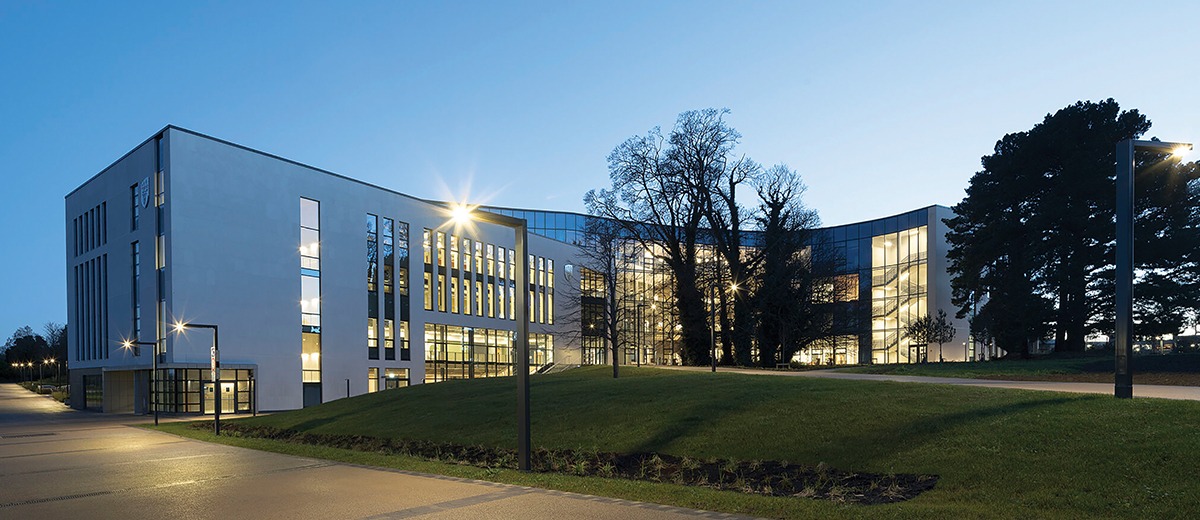
Officially opened in March 2026, the O’Connor Centre for Learning is an exciting new landmark on the Belfield campus. Designed to meet the needs of contemporary learners, the Centre provides flexible teaching spaces, technology-enabled classrooms and welcoming areas for independent and collaborative study. It reflects the evolution of higher education, where learning extends beyond the lecture theatre and students thrive in environments that encourage creativity, discussion and connection.
The Centre also reflects UCD’s commitment to sustainability. As a Near-Zero Energy Building (NZEB), it incorporates innovative design and advanced technologies that reduce energy demand while optimising heating, lighting and water use, supporting the University’s ambition to achieve net zero carbon emissions by 2040.
Named in honour of the late Dr Eddie O’Connor, a distinguished UCD alumnus whose generous philanthropic gift helped make the project possible, the Centre stands as a lasting tribute to his belief in the importance of education. His legacy lives on in a building that will enrich the experience of UCD students for decades to come.
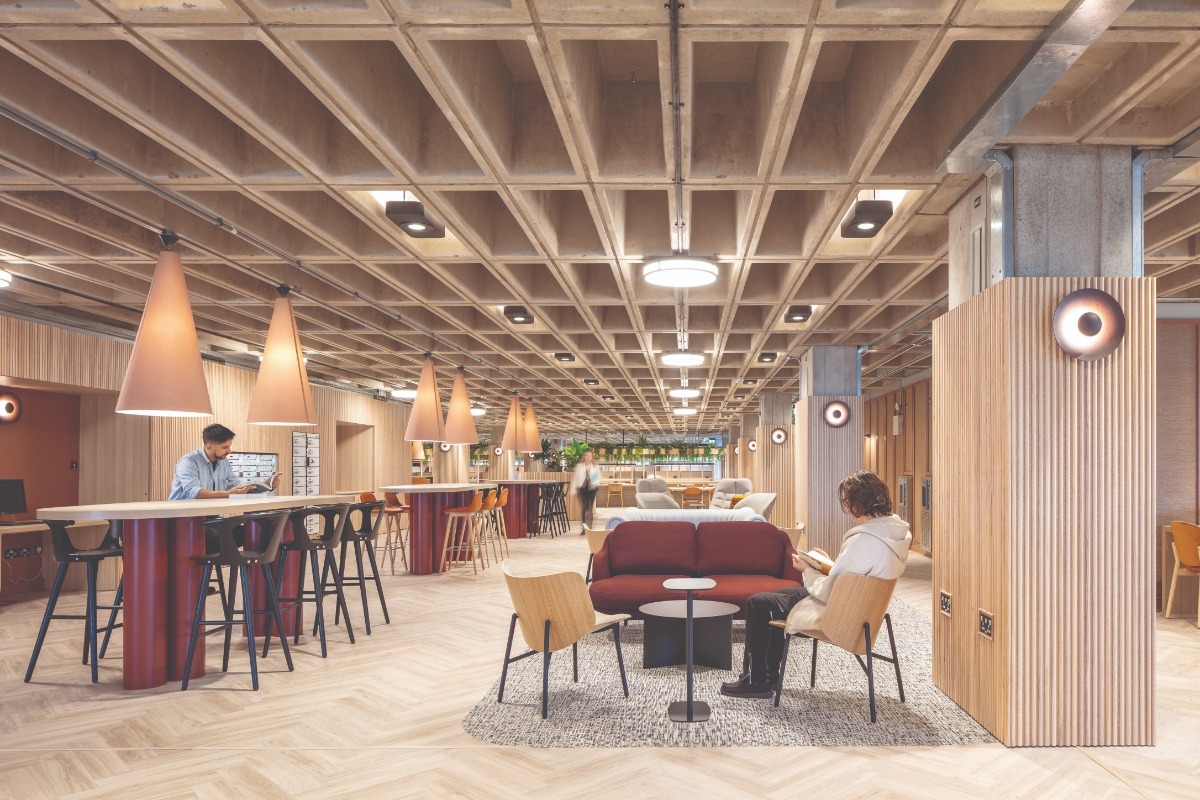
The refurbished Level 3 of the James Joyce Library.
A LIBRARY DESIGNED FOR WELL-BEING AND INCLUSION
The James Joyce Library has been at the heart of student life in Belfield since the 1970s. It is woven into the memories of our alumni as a place where minds are opened to new ideas and knowledge, bonds are forged in the heat of exam season, and respite from the busyness of campus life is found.
The ongoing transformation of the Library recognises the diverse needs of students and researchers, and the changed landscape of learning in the digital age. It reflects a broader vision for how knowledge is created, accessed and exchanged, by incorporating modern technology, flexible study areas, collaborative spaces and inclusive facilities.
Beyond a purely academic function, the Library offers a safe and comfortable sanctuary, from early until late, to students who commute long distances to campus, or who may not have access to adequate resources or space to study at home. It is designed to give all students, regardless of circumstance, a sense of belonging in their place of learning.
Alongside student well-being, the redevelopment also emphasises the Library’s role as custodian of the remarkable treasures held in UCD Archives, UCD Special Collections and the National Folklore Collection, with a new Cultural Heritage Centre that will soon bring the story of Ireland and its people to a wider audience.
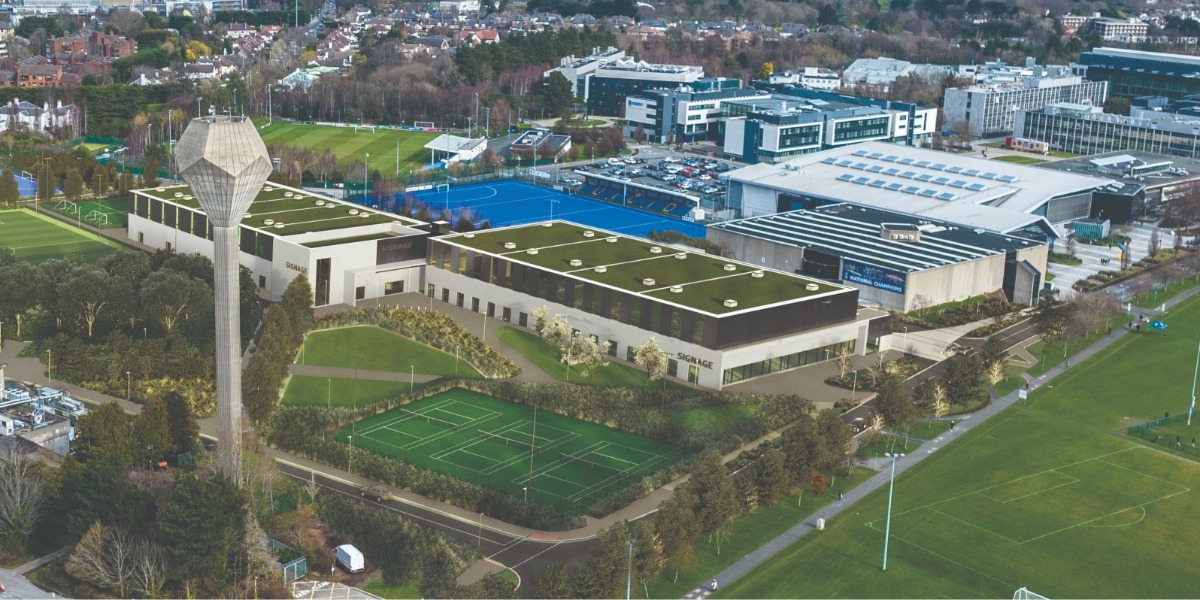
UCD’s sporting facilities are undergoing a €90+ million redevelopment.
SPORTS AND AMENITIES FOR ALL
Well-being, connection and belonging are fundamental to a holistic university experience. The investment in UCD’s Sports and Amenities Precinct, supported by students through the UCD Student Centre Levy, will enhance the campus environment and benefit students’ physical and mental health, whether they are competing at the highest level in sport, exploring new activities through clubs and societies, or simply finding opportunities to connect with friends.
As part of a wider €90+ million redevelopment of UCD’s sporting facilities, which has included the resurfacing of playing pitches and the completion of a state-of-the-art athletics track, the Sports and Amenities Precinct will be a focal point for sport, recreation, performance and community on campus.
The new facilities will include five indoor tennis courts, rehearsal and performance spaces, and a multipurpose sports hall with the flexibility and space to accommodate an examination centre. This will be a game changer during busy exam periods, eliminating the added stress of having to travel off campus to sit exams.
The new Science District is designed to inspire discovery, collaboration and innovation.
A NEW ERA OF UCD SCIENCE
A remarkable 20-year transformation of UCD Science – and one of the largest investments in science infrastructure in the State – is entering its final chapter. Students, researchers and faculty are eagerly anticipating the move into the completed UCD O’Brien Centre for Science in the coming academic year, bringing to life a vibrant, interconnected Science District designed to inspire discovery, collaboration and innovation.
Built to accommodate 7,500 students and hundreds of academic and professional staff, the new teaching and laboratory spaces have been created with flexibility, adaptability and sustainability in mind. In this way, the facilities will evolve seamlessly to accommodate emerging technologies and new approaches to research, teaching and learning. The ambitious vision for UCD Science is coming to fruition thanks to the incredible support of alumni and donors, and the enduring resilience of the UCD science community throughout this multiphase project.
Philanthropic support is essential for UCD’s research programmes.
SUSTAINABLE PHILANTHROPY: AN ENDOWMENT FOR THE FUTURE
UCD is fortunate to have the support of an extraordinary philanthropic community of alumni and friends across the globe who believe in UCD’s mission and care about its future. This year, UCD’s commitment to establishing an Endowment Fund marks a defining moment in its story, and a call to build a permanent foundation for its success. The University has pledged €30 million in seed funding on the condition that this investment is matched by philanthropic donations.
Unlike gifts directed to immediate priorities, donations to the Endowment will be invested for the long term, generating a sustainable and growing source of income for the University in perpetuity. This is philanthropy with compounding impact. Every donation today will keep working for UCD long after it is made, funding scholarships, research and ambition for future generations of students.
An endowment of scale gives UCD something rare: the freedom to think in decades, not budget cycles. It strengthens the University’s ability to seize emerging opportunities, to lead research of global significance without being constrained by short-term funding cycles, and to protect the student experience against times of uncertainty. For donors, it is a chance to leave a legacy that will endure for generations to come.
ACCELERATING INNOVATION IN CANCER RESEARCH AND CARE
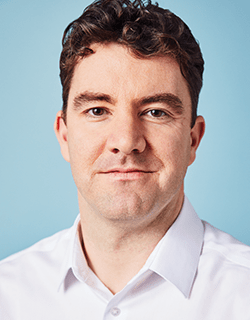
Dr David Fennelly, Clinical Director of St Vincent’s UCD Cancer Centre.
Philanthropic support is also critical to advancing UCD’s groundbreaking research programmes and partnerships. A long-standing partnership with St Vincent’s University Hospital is driving breakthroughs in cancer research and transforming patient care. St Vincent’s UCD Cancer Care Centre represents an ambitious vision to be recognised both nationally and internationally as a world-class comprehensive cancer centre.
In Ireland, an estimated one in two people will receive a cancer diagnosis during their lifetime, and demand for specialist cancer services will continue to rise as our population grows and ages. Meeting that challenge requires more than exceptional clinical care – it demands sustained investment in research, innovation and education to deliver life-saving therapies for patients.
Philanthropy will play a vital role in ensuring that promising discoveries by scientists in UCD can be translated into new therapies and better outcomes for patients as quickly as possible. Investment in endowed academic chairs, fellowships and scholarships will attract outstanding clinicians and researchers, while fostering a vibrant research network that brings together experts across disciplines and around the world.
Building this research infrastructure is critical to ensuring that Ireland remains at the forefront of cancer research and treatment, according to Dr David Fennelly, Clinical Director of St Vincent’s UCD Cancer Centre.
“Everyone recognises the key role that research plays in improving patient outcomes,” he says. “I want to create a research infrastructure that will link clinician scientists in the hospital with scientific colleagues in UCD. With that foundation in place, the Centre will be able to attract further competitive research funding, expand access to clinical trials and train the next generation of oncology leaders.”
By supporting the new St Vincent’s UCD Cancer Centre, alumni and donors have an opportunity to invest in a future where more patients have access to clinical trials, personalised treatments are more widely available, and scientific breakthroughs are translated rapidly into new therapies.
“This is all about improving the lives of patients and their families,” Dr Fennelly concludes. “The skills, the expertise, the enthusiasm – it’s all there already. It’s a matter of funding now.”
ONWARDS WITH GRATITUDE
We are immensely grateful for the support and encouragement of our fantastic community of alumni, donors, partners and friends. Together, we are investing in a brighter future by creating life-changing opportunities for students and helping to advance cutting-edge research at UCD.
■ To learn more about how you can support these projects and other initiatives at UCD, contact UCD Foundation by email at info@ucdfoundation.ie, or telephone +353 1 716 1406.
The extraordinary generosity of UCD alumni and friends creates life-changing opportunities for students.
At UCD, we believe that talent, ambition and potential should not be limited by personal circumstances. Our exceptional community of alumni and supporters plays a vital role in making that belief a reality. Thanks to their generosity, students from every background are not only accessing a world-class UCD education; they are enjoying the full experience of university life.
UCD Cothrom na Féinne is Ireland’s largest needs-based access scholarship programme, currently supporting over 500 students. These scholarships do far more than ease financial pressure. They provide security at a pivotal moment in a student’s life, allowing them to focus on learning, build meaningful friendships, participate fully in campus life and make the most of every opportunity UCD has to offer.
For many students, a scholarship means fewer hours spent working to cover essential costs and more time investing in their studies, well-being and future aspirations.
Scholarships such as UCD’s Réalta (Engineering), Aspire (Business), and Declan McCourt (Law) help students progress to postgraduate study that prepares them for rewarding careers. The impact of scholarship support extends far beyond graduation. Scholarship recipients become healthcare professionals, teachers, researchers, entrepreneurs, engineers and community leaders who use their education to make a positive difference in society.
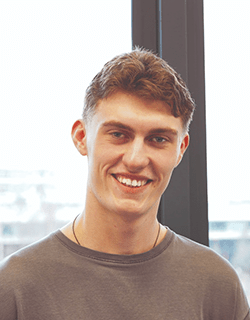
JONAH
UCD Cothrom na Féinne Scholar
“I am incredibly grateful to everyone who contributes to the UCD Champions fund. The scholarship has given me a real sense of opportunity and encouragement. It has given me the space and confidence to focus on my future and take the next steps forward.”
OUR SHARED HUMANITY
TALA
UCD Humanitarian Fund Scholar
“Facing death every moment wasn’t easy at all. But it also showed me how vulnerable life is and how it can be taken away in just one second. My family encouraged me to go and not look back. This opportunity is a life-changing turning point for all of us. I am grateful for every single person that made this possible. One day, I will tell my children that I had the chance to live this life because of them.”
Generous support from our community also empowers UCD to respond to emerging needs and global challenges. The UCD Humanitarian Fund was established in August 2025 as a direct response to the displacement of students from Gaza. Humanitarian scholarships offer sanctuary and hope to students like Tala, who have been forced to flee conflict, providing them with the opportunity to rebuild their lives through education in a welcoming academic community.
Looking back on what we have achieved together over the past year fills us with gratitude and pride. Every scholarship awarded represents the belief of alumni and friends in the transformative power of education. Together, we are unlocking potential, changing lives and ensuring that UCD students have the confidence, opportunity and support to shape a brighter future for us all.
Meet UCD’s researchers who listen, engage and co-create research and innovation to deliver real impact for the people and communities who need it the most
In its strategy to 2030, ‘Breaking Boundaries,’ UCD set a course to enable a more effective exchange of people and ideas. It aims to achieve this through ethical partnerships with research institutions, industries, third-sector organisations and policymakers. By being bold and far-reaching in how we engage, we can make a genuine, positive difference in people’s lives.
Driven by this goal, and in recognition of the increased focus on aligning strategic research with societal needs, expectations and values, UCD now actively supports ‘Engaged Research’ through a dedicated development platform to enable and embed best practice. An approach to academic research that involves active collaboration and partnership between researchers and the communities they study or serve, Engaged Research aims to address real-world problems and generate knowledge that is relevant, useful, and meaningful to the communities involved.
Similarly, the need for evidence-informed policymaking has never been more striking. Society faces a host of complex global challenges, including climate breakdown, pandemics, cost of living crises, energy poverty, ageing populations, and food security, none of which can be meaningfully addressed without insights from academic research.
The UCD Policy Interface works to develop and strengthen links between researchers and policy professionals, so that high-quality evidence can more readily inform public policy. It complements the extensive engagement already underway across UCD’s schools, colleges, institutes, and centres, most especially UCD Geary Institute for Public Policy, helping researchers drive real impact on policy and wider society.
In addition, UCD has forged deep, long-term alliances with leading universities and research organisations across the world, including CERN, the European Space Agency, the World Health Organisation, and the UN. This is driving research and innovation in key areas such as health, life sciences and sustainability, fostering collaboration with industry, NGOs and communities, and developing the global talent pipeline through exchange and fellowships.
Through centralised and local initiatives across the University, engagement and collaboration are at the heart of our research mission, across disciplines, borders and sectors, to generate real-world impact where it matters most.
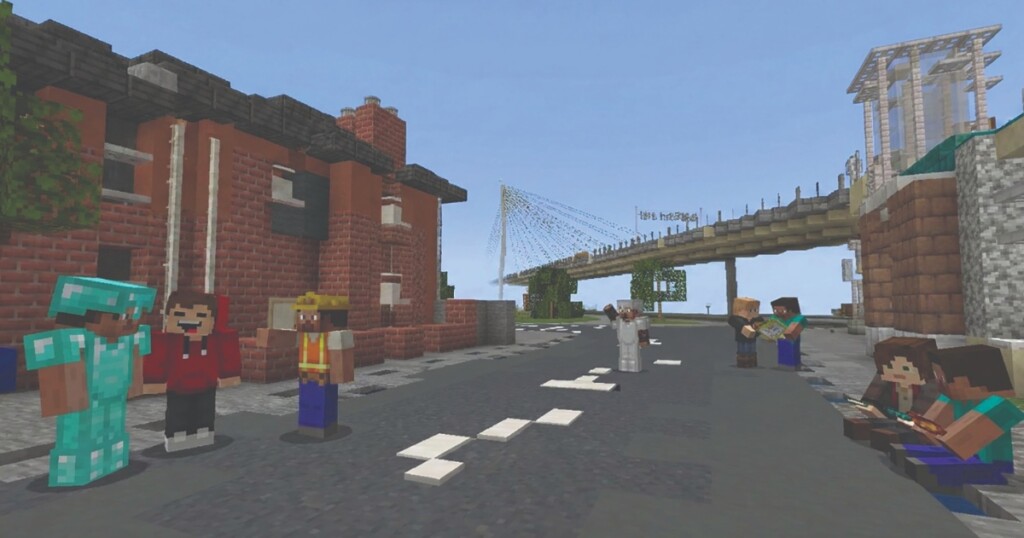
Assistant Professor in Digital Landscape Design, Ítalo Sousa de Sena developed a community 'Minecraft' containing a replica of Dundrum.1
CITIZEN COLLABORATION IN URBAN DESIGN
A UCD-led initiative, ‘Dundrum by Design’ collaborated with the Dundrum community in Dublin to redefine citizen participation and engagement in urban planning processes. A tripartite partnership between UCD School of Architecture, Planning and Environmental Policy, Dún Laoghaire-Rathdown County Council and the Dundrum community, the project adopted flexible, systems-thinking approaches and state-of-the-art technical and social innovations for climate transition.
The project’s ‘Living Streets’ scheme enabled local residents to vote on sustainable mobility interventions to make streets greener and connect communities. In addition, Assistant Professor in Digital Landscape Design, Ítalo Sousa de Sena developed a community ‘Minecraft’ (computer game) containing a replica of Dundrum. Aimed at citizens between eight and 18 years old, the gamified approach targeted marginalised voices that are often excluded from urban design processes, allowing them to engage with the project and share their desires.
Initiatives like Dundrum by Design are helping to shift urban planning and design towards more community inclusion and engagement, which is essential in climate transition.
Dr Páraic Kerrigan and Dr Claire McGuinness, UCD School of Information and Communication Studies, led the research with Irish public library staff to understand the scope, mechanisms and impact of far-right agitation.2
PUBLIC LIBRARY RESISTANCE AGAINST FAR-RIGHT AGITATION
Researchers at UCD School of Information and Communication Studies worked to improve the experience of public library staff across Ireland by documenting and addressing harassment from far-right agitators, particularly targeting LGBTQ+ services. Engaging with library staff nationwide, the research revealed how online and in-person intimidation affects mental health, physical safety and workplace security.
Collaborating with librarians, trade unions, and sector stakeholders, the research played an important role in the co-development of practical strategies to strengthen library resilience, including enhanced safety plans, staff training, role clarification and liaison with local Gardaí. The research has empowered public libraries to respond confidently to intimidation, ensuring inclusive services for all communities. It has also influenced policy and public understanding of threats to Irish libraries, amplifying the voices of staff and users alike.
The team shared findings at a European Commission stakeholder meeting on disinformation, engaging Irish NGOs, government agencies and media representatives. This extended the project’s reach internationally and provided a model for libraries in other countries facing similar threats.
3
SOCIAL RESEARCH MODELS FOR INCLUSIVE DESIGN
SMARTlab UCD is a global research hub supporting Creative Technology Innovation (CTI) for real social change, working in partnership with SMARTlab clg, the Inclusive Design Research Centre of Ireland (IDRC), and international funders. Led at UCD by Professor Lizbeth Goodman, the centre focuses on the co-design of bespoke tools and their validation through novel, socially-based research methods.
SMARTlab at UCD has partnered with the Anne Sullivan Foundation (ASF) for people who are deafblind and living with dual sensory loss, on a joint project called ‘INCLUDE deafblind.’ The project aims to improve lives by co-designing policy and awareness-raising campaigns as well as custom inclusive assistive technologies through a co-creation process. The project brings together people who are deafblind, researchers and designers from SMARTlab, IDRC, ASF and Usher Syndrome Ireland, to co-create and test new innovative solutions. This hands-on method ensures the technology fits real everyday needs.
In addition, the project leaders campaigned for deafblindness to be officially recognised as a unique disability under Irish law, and for people with deafblindness to be included in health and education planning through accessible consultation and lived experience representation.
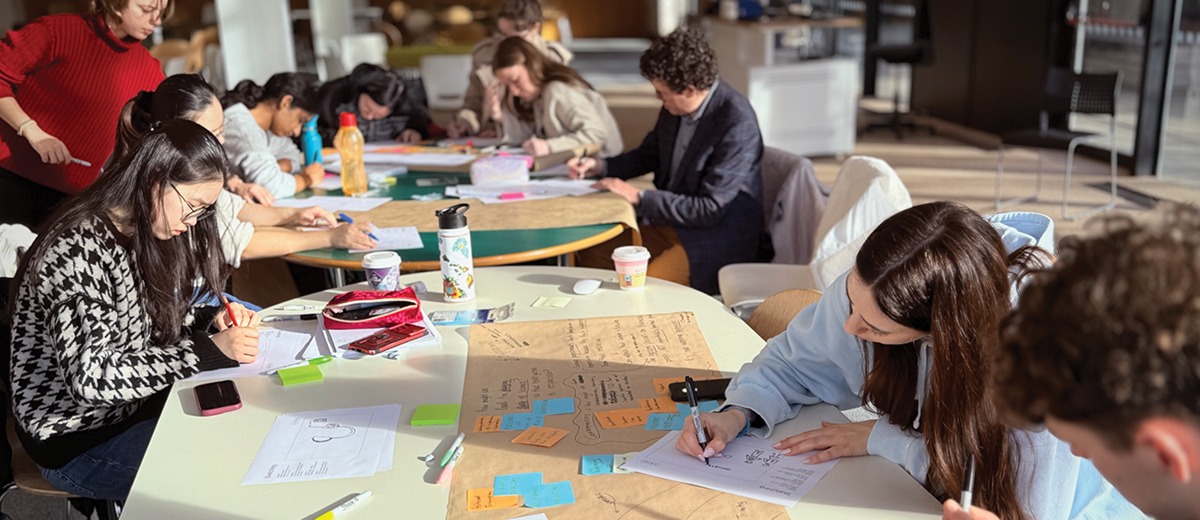
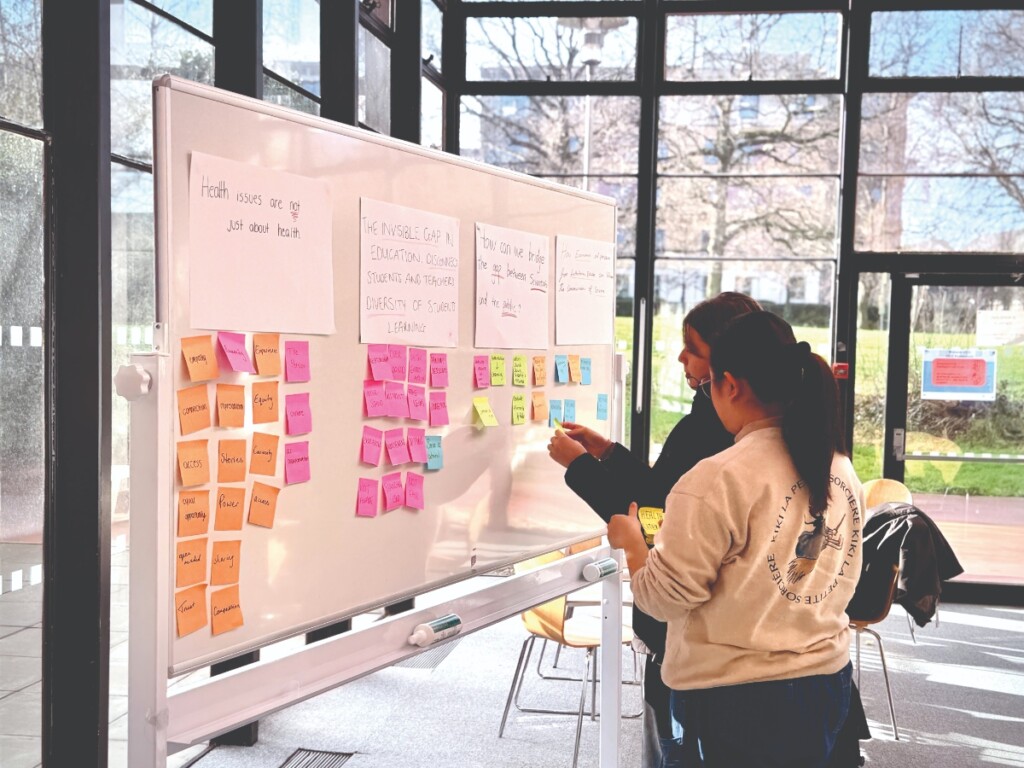
Students Kaja Zeman and Sherlene Yun Soo working to identify complex problems.4
‘DESIGN THINKING’ FOR PUBLIC ENGAGEMENT TO TACKLE DISINFORMATION
At UCD School of Education, Professor Shane Bergin co-developed a pilot public engagement training programme for students, which trialled a ‘design thinking’ process, in collaboration with the Department of Public Expenditure, Infrastructure, Public Service Reform and Digitalisation. The programme saw students working to develop public engagement responses to complex problems such as trust in science, meaningful science education, patient-doctor interactions, and how geopolitics is weaponising science.
Students experimented with design-based approaches in a research-led space to explore complex issues and effective interventions, informed by Professor Bergin’s extensive European research on how the public engages with science, and assisted by facilitators from the Department.
Best practice developed through the partnership was reflected in ‘Design for Public Value: Guidelines for Designing Better Public Services through Policy, Delivery and Digital Transformation,’ which was launched by Minister Jack Chambers at the Better By Design conference on 18 June 2026.
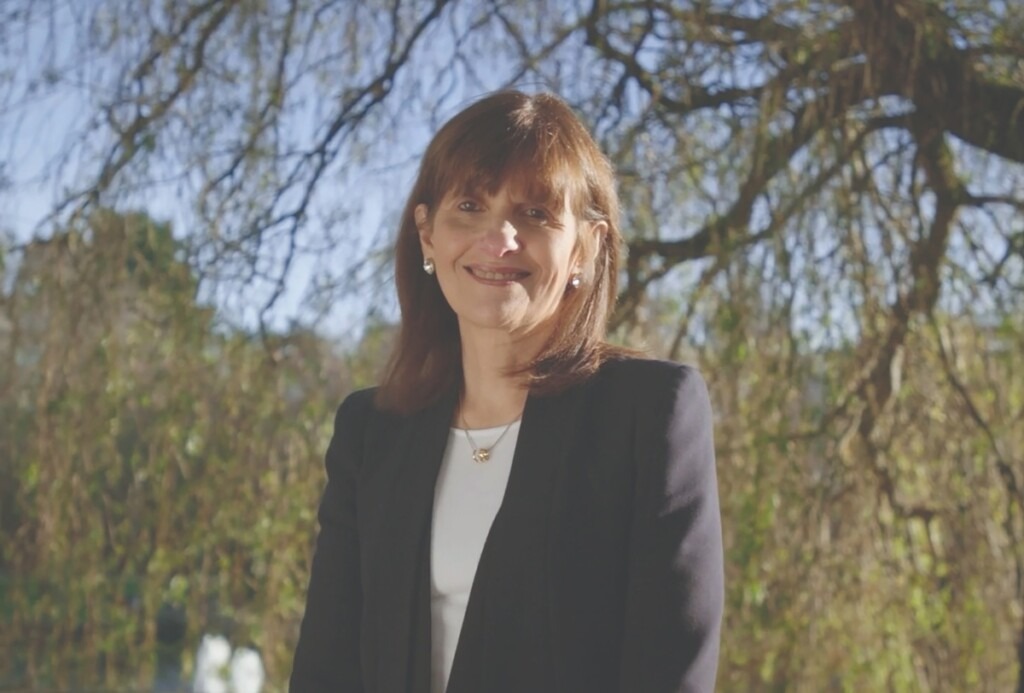
Prof. Patricia Fitzpatrick, UCD School of Public Health, Physiotherapy and Sports Science.5
SUPPORTING CANCER PATIENTS TO QUIT SMOKING POST DIAGNOSIS
Up to 20% of all people diagnosed with cancer are smokers, and Professor Patricia Fitzpatrick at UCD School of Public Health, Physiotherapy and Sports Science has been on a mission to help them. Patients with cancer who smoke had not been offered sufficient support to quit by the health service, despite evidence of the benefits of quitting after a cancer diagnosis. Benefits include improved treatment outcomes, fewer treatment complications, improved survival rates and positive effects on health.
Professor Fitzpatrick’s project, funded by the Irish Cancer Society, was co-developed with cancer patients who smoke. Her research, which included an audit of all eight adult specialist cancer hospitals and the national centre for radiotherapy, found that sustained, non-judgemental support across hospital and community settings, involving healthcare practitioners and family, could help cancer patients quit.
The impacts of the research have been profound. The findings were adopted in full by the HSE National Cancer Control Programme and set as a priority for 2024, to the benefit of an estimated 3,744 to 4,959 patients with cancer, and their families, each year thereafter.
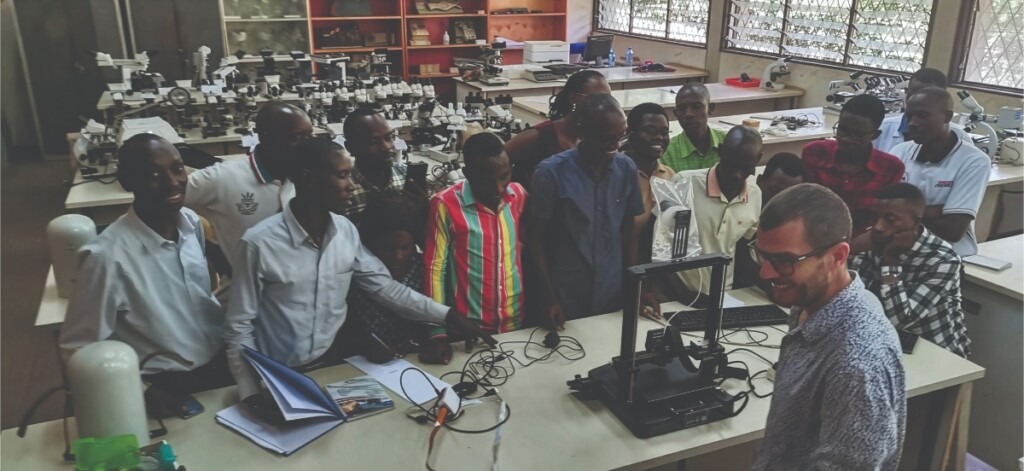
The Enderscope, developed by researchers in UCD, being used in a training workshop with microscopists in Burundi, led by our collaborator Jerome Mutterer from the French National Centre for Scientific Research (CNRS).6
DEMOCRATISING DISCOVERY: OPEN IMAGING AND MICROSCOPY TOOLS FOR ALL
Microscopy underpins much of modern science, yet globally, access to advanced imaging remains highly unequal. Commercial microscopes are often prohibitively expensive and technically complex, excluding schools, community groups and researchers in resource-limited settings, particularly in low- and middle-income countries.
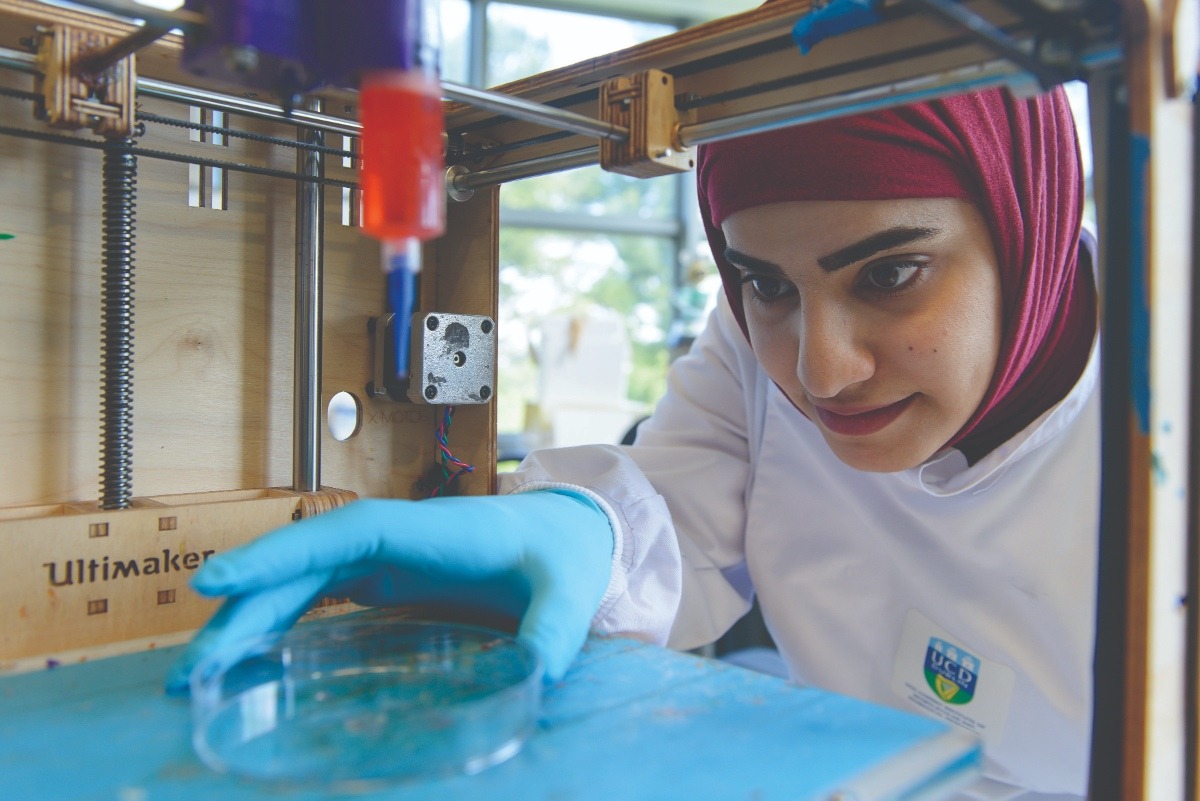
Dr Mark Pickering from UCD School of Medicine addressed this global challenge by reimagining how scientific tools are designed, built and shared. By repurposing widely available consumer technologies such as 3D printers and combining them with open-hardware principles, his research enables scientific discovery in contexts where traditional infrastructure is unavailable.
Dr Pickering’s efforts have expanded access to advanced imaging across Europe, Africa and the Americas through the development of low-cost, open-source microscopes, including the FlexiScope, Incubot and EnderScope. The use of open designs, freely available build guides and community-led training allows tools to be adapted to local needs and resources. This work is not only a technical innovation but also a transferable framework for inclusive, global scientific participation.
Europe needs innovation to improve its competitiveness and the lives of its citizens. Universities like UCD are leading the way
Every seven years, the EU’s leaders articulate their priorities by setting the multi-annual financial framework (MFF). The EU’s budget for the coming cycle is a proposed €2 trillion for 2028-34 and the largest research and innovation programme in the world, currently called Horizon Europe, is negotiated as part of this.
These negotiations take place as Ireland chairs the Presidency of the Council of the European Union, and its priorities of Competitiveness, Security and Values will be central to the direction of the next MFF. Universities like UCD play a significant role in shaping the future direction of Europe through research, innovation and education. UCD is Ireland’s leading university, by some significant distance, in drawing down Horizon Europe funding and is regularly in the top 20 in Europe. Over the coming months, we’re hosting a series of key Presidency events in partnership with Government and the EU Commission.
AI IN SCIENCE SUMMIT 2026, AIS2026
UCD is Ireland’s leader in AI research and under our strategy Breaking Boundaries, we’ve committed to bringing together our substantial base of AI researchers across all disciplines in the UCD AI Institute. On October 15 and 16, we’ll host the AI in Science Summit, AIS2026, an official Irish Presidency event and European AI Innovation Month flagship summit. The Summit will bring together scientists, industry leaders, investors and policymakers to explore the transformative impact of artificial intelligence on scientific discovery — and how Europe can drive this transformation with a distinctive and responsible approach.
START-UPS AND SCALE-UPS: ADVANCE CONFERENCE
For over 20 years, NovaUCD has been at the heart of Ireland’s innovation system. During that time, it supported 650 new companies, which raised over €1.5 billion in equity, supporting thousands of new jobs. It has been named by the Financial Times as one of Europe’s Leading Start-Up Hubs for the last three years in a row – the only university-based hub in Ireland on the list.
On 8 and 9 December, UCD, with Enterprise Ireland and the European Innovation Council, will host the ADVANCE conference, which will serve as a launchpad for Europe’s renewed industrial sovereignty.
The Conference will bridge the gap between global Big Tech experience and emerging Deep Tech excellence. It aims to provide a platform for founders, policymakers, large corporates, investors, universities, innovation agencies, and accelerators to examine important developments shaping Europe’s innovation future – from the European Tech Champions Initiative and the rise of university-based venture building to the increasing strategic importance of deep tech solutions for economic security, climate transitions, and technological sovereignty.
AND MANY MORE…
Around campus, we will be hosting many more engagements and events as part of our Presidency programme, including ‘Upholding Democracy: Institutional Legitimacy, Governance, and Social Cohesion’, which will take place in November. Off campus, our leaders will be contributing to the Presidency One Health and Bioeconomy Conferences.
EUROPEAN AMBITION
UCD graduates have always played significant leadership roles in Europe. Seven of Ireland’s fourteen Commissioners are alumni, as is the Commission’s first female Secretary General, Catherine Day. This tradition of leadership in Europe continues, and in this edition of UCD Connections we meet Patricia Reilly, UCD veterinary graduate and member of European Commission President Ursula von der Leyen’s cabinet.
We meet Patricia Reilly, UCD veterinary graduate and member of European Commission President Ursula von der Leyen’s cabinet
Patricia (Trish) Reilly is a UCD veterinary graduate (MVB 1996) who has enjoyed an eclectic career, marrying her love of animal health with a strong interest in politics and law. Currently European Commission President Ursula von der Leyen’s advisor on agriculture, health, animal health and welfare, equality and financial services, she reflects on her time in UCD and how it set her on the path to her demanding, yet fulfilling job.
The scientific method is something that I bring to my work every day.”
How did your UCD experience set you on the path to the career you have now?
I came from a veterinary background. My dad was a vet – he was sort of the classic James Herriot type, a country vet who wore a tweed jacket and a tie to work every day, even when he was calving cows. So I spent all of my childhood holidays in the car with him, driving around from one farm to the next while he did his calls.
I took the scenic route through college. If I’m honest, I suppose I found the first few years difficult because I failed exams. And I think I failed the exams because I found the coursework difficult and boring. Full disclosure – I also partied quite a lot! But once I got as far as the final couple of years, I was really glad that I stuck with it.
It was back in the days when the Veterinary College was on Shelbourne Road in Ballsbridge, and we were in a little bubble. It was a great time, a really fantastic experience. I loved the Vet College and I really liked the people I was in class with, and also the staff.
When I left UCD I went into mixed general practice, and I loved it, but I knew after a while that it wasn’t for me long term, so I joined the Department of Agriculture, Food and the Marine in 2001, joining literally as foot and mouth disease broke out in the UK. It was all hands on deck, so I got an opportunity to experience a lot at an early stage.
I also very quickly realised I didn’t know the difference between a directive and a regulation, so I studied for a diploma in European law with the Law Society, which I found fascinating, and then went on to King’s Inns.
Looking back, is there anything from your early path you still draw on in your job today?
The honest to God answer is I use it every day of the week. I use it every hour of the day. The scientific method is something that I bring to my work every day. If something is put in front of me as a proposal or an idea, where’s the evidence to underpin it? Where does that come from? Is it credible? Can you back it up? Is there a better way to do it?
I also think veterinary medicine tends to attract people who are quite independent and capable of working on their own initiative; problem solvers. That scientific rigour is important, but so are the people skills. Whatever job you’re doing, you have to be able to work with the people around you.
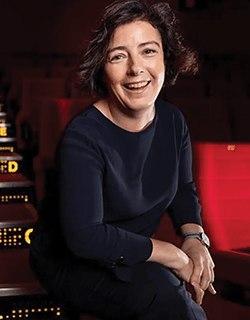
UCD graduate Patricia Reilly.
You are on the external advisory committee for UCD School of Veterinary Medicine – do you still maintain strong links to the University?
I am a very proud UCD graduate, and I made precious, lifelong friendships with people who mean a great deal to me. I’ve watched the veterinary faculty move to the fabulous facility on the Belfield campus, taking its place among the best in Europe.
Ours is one of only nine European colleges accredited by the American Veterinary Medical Association, a measure of its international reputation. I’ve been lucky enough to work with Dr Tony Holohan, who leads UCD One Health Centre, and I look forward to further collaboration. One Health is a crucial approach, highlighting the interdependence of human health, animal health, and our environment – three legs of a stool that can only be stable if all the supports are robust.
How do you see UCD expertise contributing to shaping Europe’s future, given its success in Horizon Europe funded research, for example?
Ireland has really upped its game when it comes to research, and a big fuel to that came when I was working with Máire Geoghegan-Quinn. As European Commissioner for Research and Innovation, she put a focus on the value of the Horizon Programme to researchers and universities. UCD has really stepped up on that. It is incredible to see the work that’s going on. There are world leaders in certain sectors in UCD, especially the bioeconomy, where there’s fabulous work happening. We’ve got the One Health Centre with top-class people who are very highly regarded at an international level.
Patricia Reilly, Ciara Feeney-Reid, Tara Lovett, Ciara Downes and Els Dehaene.
What does the EU presidency mean for Ireland and what can we hope to achieve?
The European budget is agreed every seven years, and we’re coming to a crucial point now. Hopefully, during the course of the Irish presidency, the overall budget for the coming seven years will be agreed. That means there’s a lot of responsibility on the presidency. Of course, from that will flow the funding for the next Horizon programme and the next Common Agricultural Policy. These policies are relevant and of great benefit to Ireland.
On a granular level, in my own policy areas, I hope we make serious progress on the Biotech Act, which I coordinated and steered the political proposals on, and which aims to speed up clinical trials in Europe and improve competitiveness.
Does Ireland have an influential role within the EU?
In terms of preparation for the Irish presidency, we’ve done a fantastic job. There’s a really good team of people with expertise, who were bedded down in their roles before the presidency started and who know the environment here well.
Within Europe, I don’t think we punch above our weight, but we box clever. We’re one of 27, and we are as influential as any other member state in that sense. It’s a remarkably democratic system. I know people complain sometimes about Brussels and bureaucracy and rules, but I can’t think of a better place to live than Europe, to be honest.
Are there specific events you are looking forward to as part of the presidency?
I’m very excited to see UCD Lyons Farm being showcased as part of the University’s Presidency programme. I have great memories of Lyons – it was a much less sophisticated place in the 1990s. We took a rickety bus from Ballsbridge every week to learn the fine arts of animal husbandry, which was probably the first element of the curriculum that involved live animals, and kept me interested in the course.
What would you say to a young person in Ireland today who wants a career shaping EU policy, but has no idea where to start?
A career that involves shaping EU policy is incredibly rewarding, whether working at national or EU level. For a career in one of the European institutions, get yourself a good primary degree, and don’t assume that your qualification has to involve European law or economics. Vets may be a bit of a rarity in the Commission, but I’m certainly not the only one, and I have colleagues who are physicists, doctors, humanities graduates and IT specialists.
To get started, the institutions offer great internships, or stages, where successful applicants get to spend five months in a paid position in one of the many policy departments. In very general terms, I would encourage any young person to keep their hearts and minds open to opportunity. I don’t really believe in making long-term career plans – what you think you want to do with your life may evolve; keep learning and don’t be afraid to pivot to something new.
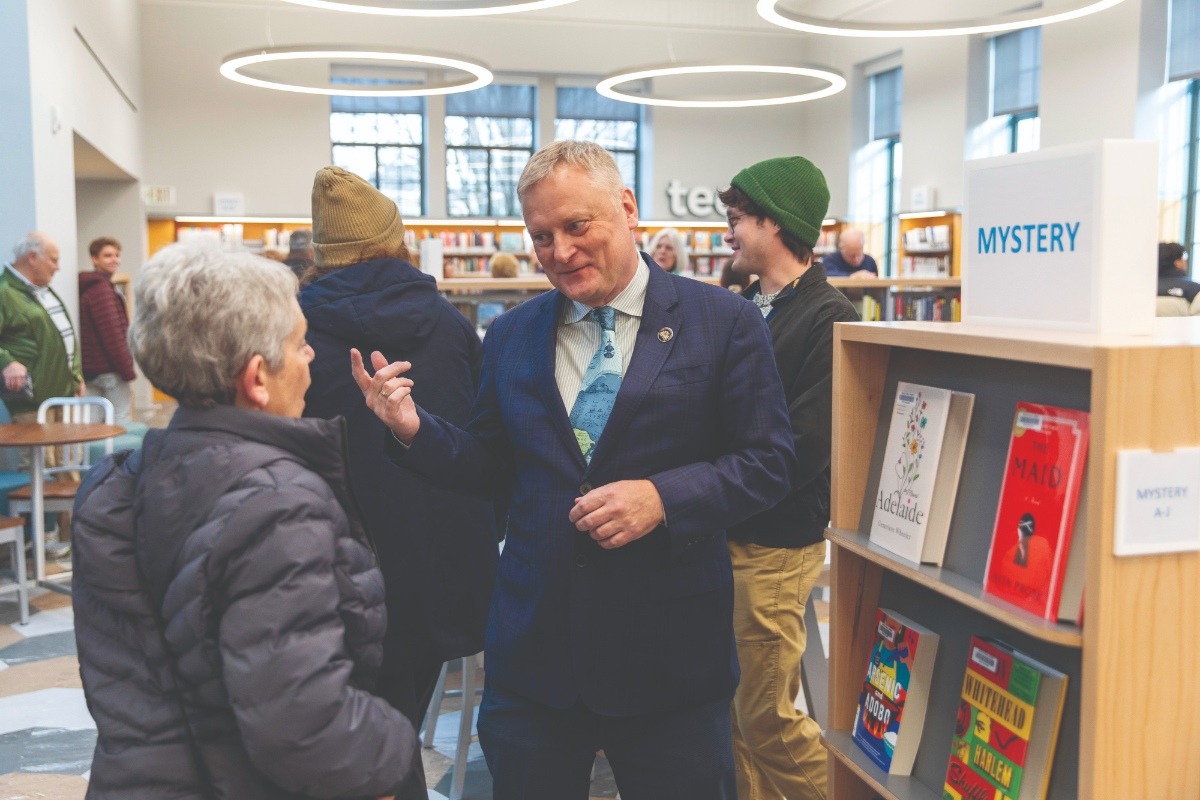
David Leonard has been the permanent President of the Boston Public Library since 2016, originally joining the library system in 2009.
David Leonard didn’t set out to run a library, but a UCD education that taught him how to think has led him to the top of one of Boston’s storied institutions, as the President of Boston Public Library
On paper, David Leonard isn’t the guy you would expect to be President of Boston Public Library (BPL), the oldest municipal library in the US. In actuality, his unique background in the seemingly opposing disciplines of philosophy and mathematics primed him perfectly for the complex but rewarding role, which sees him presiding over a collection of approximately 23 million manuscripts, maps, and other documents.
“That’s actually the beauty of a good college education,” he says. “It gives you a foundation and helps you find the things you care about, but that doesn’t mean that’s where you’re going to end up. But if you’re learning about something you’re passionate about, then you can apply that in any field that you end up in.”
David is from Dublin, pledging allegiance to both the north and south sides, given his father was from Ranelagh and his mother from Glasnevin. While he originally wanted to study science, he fell a few points short in the Leaving Certificate, and ended up studying mathematics as part of an Arts degree at UCD.
Philosophy was simply a random choice for another first-year class, but it ended up being a serendipitous one, as David discovered a “love and passion” for the subject. “For me, it was the best of both worlds. It wasn’t about how these are two opposite subjects, but rather two different ways of applying interest. So I think my philosophy interest was much more about, how do we think, and how do we know things? How do we understand the world?”
Early childhood tragedy – he lost his mother when he was just six years old – meant he was “always a big thinker”. “The ‘why’ question for someone who loses a parent early on is always there,” he admits. “‘Why’ becomes a very important question that they live with for the rest of their life in some ways. So it tracks in terms of what I was forced to deal with as a kid.”
David says his was ultimately the typical student experience of the 1980s – including living in bedsits in Rathmines which provided little in the way of comfort but total freedom. Upon graduation, he decided to delve deeper into some of the subjects he had encountered in his philosophy studies, choosing to complete a Masters degree. Then, one of his former professors at UCD, Richard Kearney – now Charles B. Seelig Chair of Philosophy at Boston College – suggested he come Stateside to study for his Doctorate in the subject.
For David and so many other graduates during that time, it was a no-brainer. Dublin in the 1980s, he points out, was not the vibrant, modern capital city it is today. “The Celtic Tiger hadn’t yet arrived,” he says. “Pursuing a PhD in Boston offered me two things – one, take my academic career to the next step, and two, have the experience of living somewhere else, other than Ireland.”
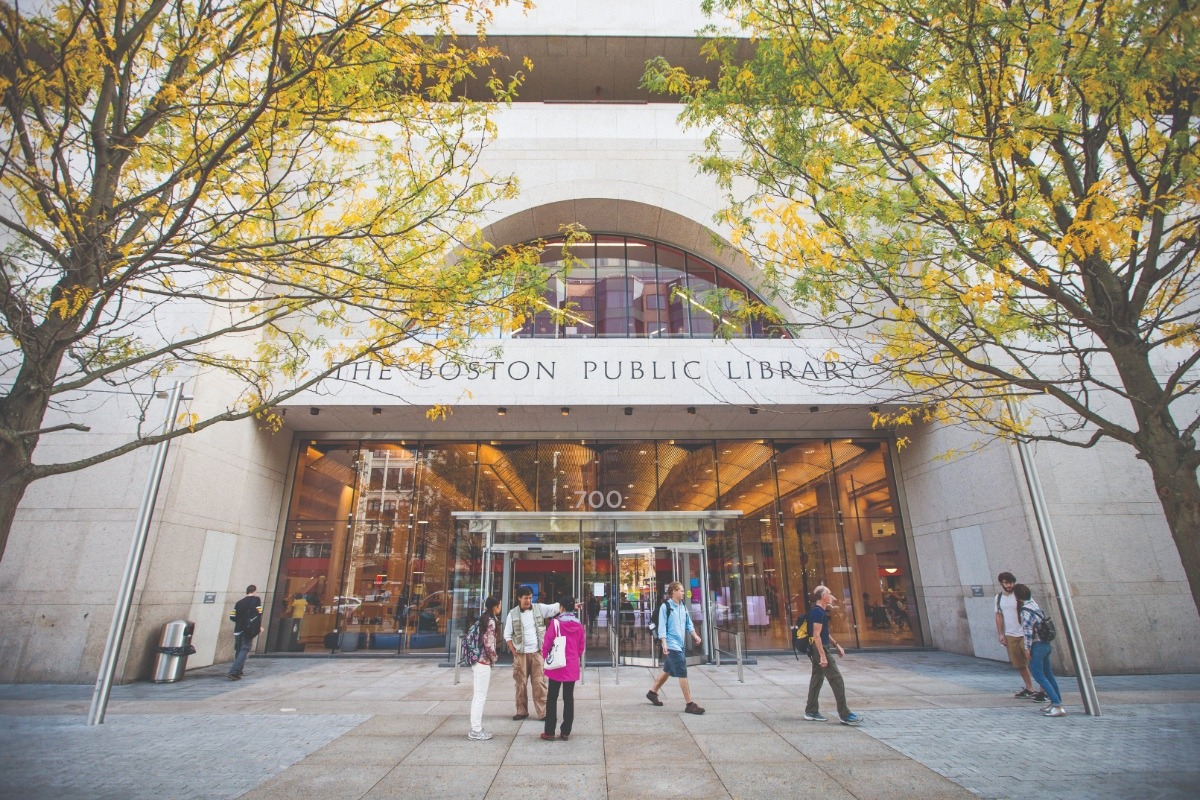
The new, welcoming entrance into the Boylston Street Building is designed to better connect it to the city.
David quickly and easily made his home in the New England city, which has a relatively small core population of 700,000. “I have travelled the US extensively, and I think Boston is the most European of the American cities for many reasons,” he asserts. “I quickly made friends, had relationships, and built my career, and suddenly you realise you’ve spent more of your adult life there than at home.”
David never finished the PhD, admitting he was “burnt out” by the academic experience by the time he approached its conclusion. Timing, however, is everything, and his covetable mathematics experience was now in demand as the ‘dot com’ boom took off.
“It was the late ’90s, early 2000s, this is when the internet and all of the online world was getting started,” he explains. “It was a really interesting time to start working in that as a career, and with the math background and the interest in science and computers, suddenly that all came back into focus for me.” He worked for a number of consulting firms and non-profits before finding himself at Boston Public Library in 2009, where his first role was chief technology officer.
One of my biggest challenges is trying to describe in a simple sentence exactly what a public library in the 21st century is, because it’s also constantly in motion.”
“This was in the wake of the financial crisis of 2008, and so it was more a case of, well, where would be a good place to land for a few years?” he recalls. “I thought this looked interesting, and it could be a two- or three-year stint and then onto whatever was next. But I took to it like a duck to water in many ways, and loved the environment.”
Indeed, his pride at working for the venerable institution is evident as he explains his not-so-linear road to becoming President. Having spent seven years in different roles, the then-President stepped down, and David threw his hat in the ring.
“I do not look on paper like I am the right qualified person for this job, but it is an educational institution,” he explains. “So it’s drawing on my academic background, but I also spent 15 years in the technology space proper. Libraries today are as much about technology as they are about traditional services, as most people now consume information digitally. So by some calculation, I actually ended up being the logical choice for the role, and ten years later I am still having a blast.”
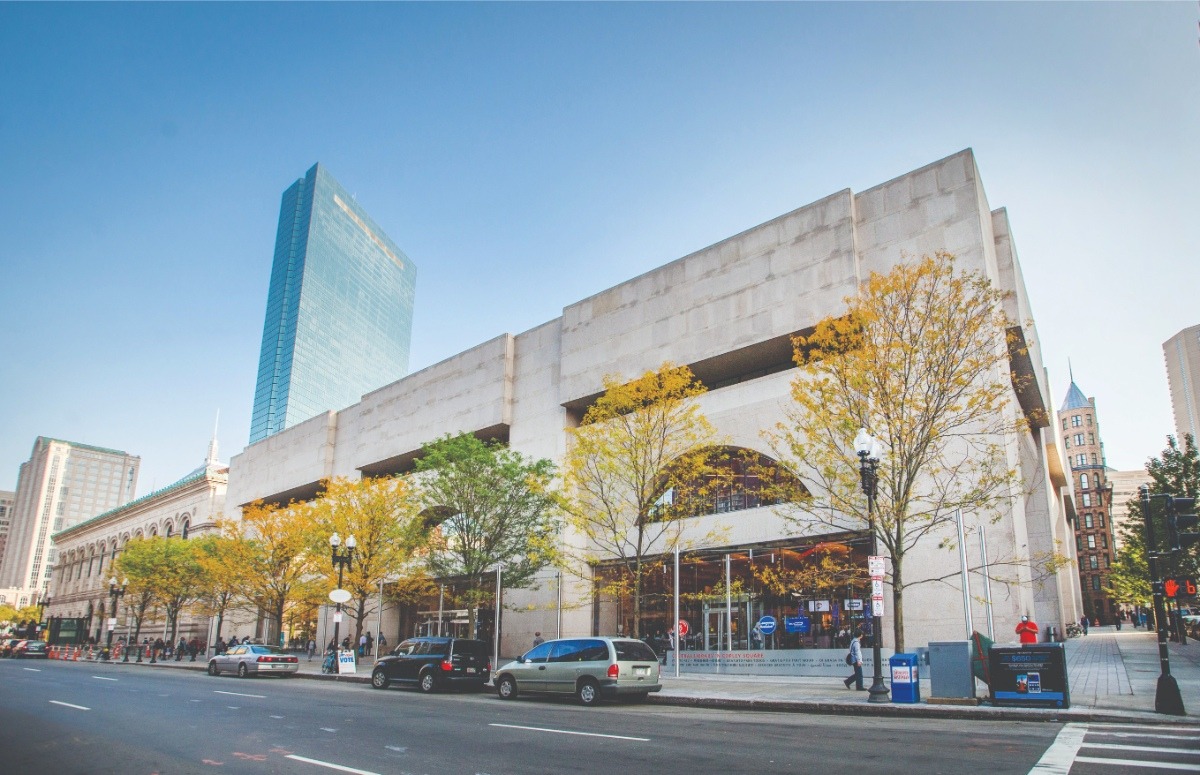
The recently renovated facade of the brutalist Boylston Street Building contrasts with the older McKim Building to the left hand side.
That’s despite the job being both challenging and frustrating, especially in recent times; David discreetly notes that with the BPL being part of the government in the US, “that comes with baggage”.
While the Boston Public Library encompasses 25 local library branches that are more akin to our own experience of a community library, the Central Library in Boston’s historic Copley Square is what most people think of as the library proper. David’s biggest achievement during his time as President, he says, was “undoubtedly” overseeing the delicate – and hugely expensive – renovation of the landmark 1972 extension to the building.
The Central Library, he explains, is two buildings: the original McKim Building, and the modern Boylston Street Building. “It’s a beautiful 1895 building, with its more European-style architecture, and then the other half, which was the result of the first major renovation, was a 1970s proto-brutalist building that was pretty dark and not the most welcoming experience.”
If you want a successful result from an AI tool, how you ask the question is the essential determinant.”
A $78 million transformation has changed all that, producing a “dynamic, warm, welcoming space” that Bostonians, initially sceptical of the high cost, ultimately fell in love with, he says. “We tracked the foot traffic to the building, and it was up by 40% over what it had been before the renovation. So, it became a destination in a new way, simply because we had transformed the experience, not just the building.”
As UCD continues its own redevelopment of the 1970s brutalist building that houses the James Joyce Library, David recalls his meeting with University Librarian – and fellow mathematician – Dr Sandra Collins, during a visit to Dublin two years ago. “It was a lovely opportunity, as two heads of libraries, to share stories of embarking on a renovation from about the same period,” he says. “BPL is a library but also part archive, part museum, and we are also a research library, so we have as much in common with a university library as we do with your local library down the street.”
David is still grappling with the big questions, admitting there is a constant tension that comes with balancing the weight of history with the persistent drive for modernisation. “One of my biggest challenges is trying to describe in a simple sentence exactly what a public library in the 21st century is, because it’s also constantly in motion,” he says. “For me, the question is how do we serve our community today, not, what do we have and how do we preserve it?
“Although those are important questions too, we have to consider what the modern society, the urban environment, and the democracy itself wants from a library, particularly right now when the world is in such a crazy state and people don’t know what to expect from the government or even from their own society. How does the library today promote dialogue around these things?”
The Boston Public Library is an educational, cultural and civic centre that has thrived throughout its 170-year-old history; David believes he is the person to continue to help it reach its full potential.
“It’s the oldest Municipal Public Library in the United States of America and it holds the third largest collection of objects. It is a very important place and that responsibility weighs on me every day, but I’m not done yet – there’s nowhere else I would rather be.”
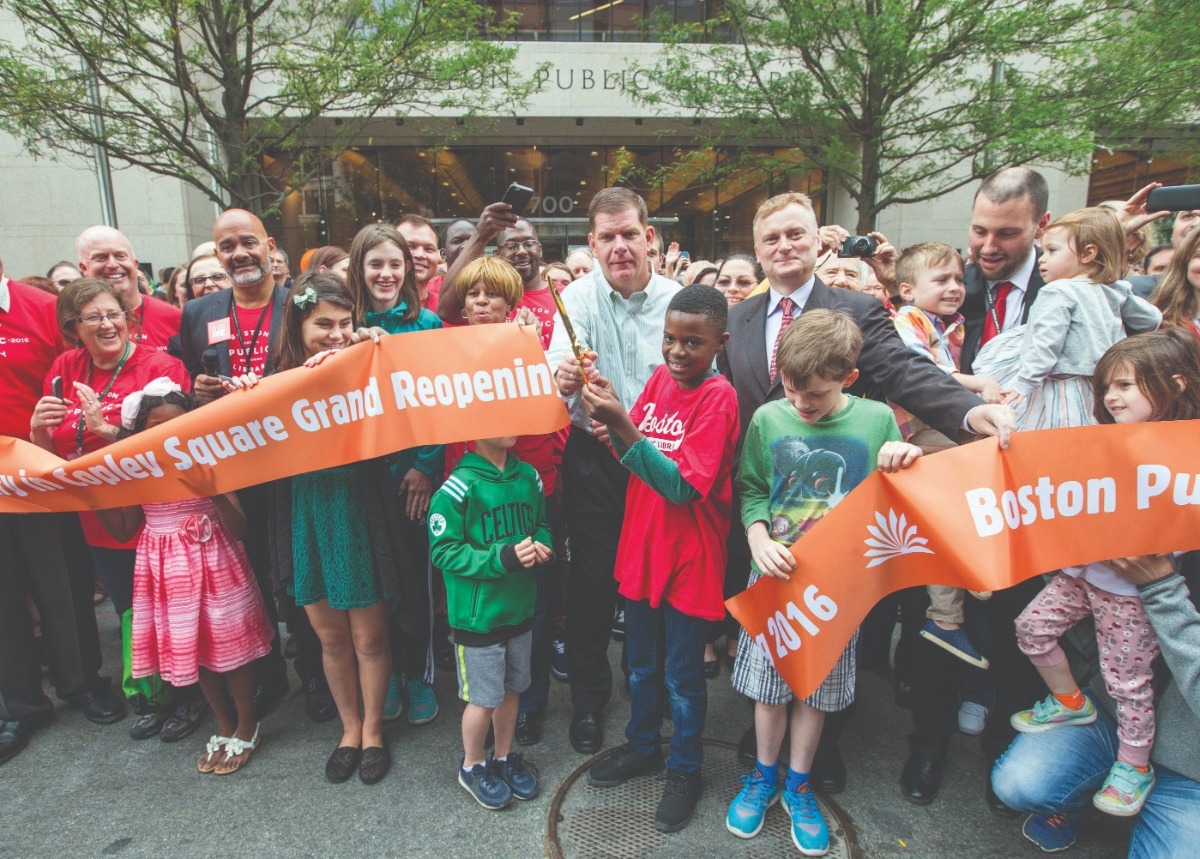
At the reopening of the Boston Public Library following its renovations.
AI AND LIBRARIES
Libraries today, like all other institutions, are tussling with the possibilities and problems posed by artificial intelligence. Clarivate’s Pulse of the Library 2025 report found that 67% of libraries say they are exploring or implementing AI.
With a collection of more than 23 million documents, AI dangles tantalising possibilities for BPL, particularly because, as David Leonard notes, just 12% of that enormous archive is currently digitised. Yet he is circumspect about a wholehearted embrace of the divisive technology.
“AI is a tool,” he says. “You can use a tool for good, or you can use it for bad – you can let a tool run rampant.”
With the BPL, he believes it faces three main challenges when it comes to AI. “One, of course, is where and when we should adopt it for our own internal systems, and of course, that’s the same question any company should be asking,” he says.
“The second thing is, as we serve our users and residents, particularly those who come from an economically challenged background, they will turn to the library to help them develop new skills to understand new technologies and we already have some offerings in that regard.”
The third question, according to David, is whether AI can help the library deliver answers for its patrons who want to do reference or research. “And what we’re seeing right now is that some of the tools are really good at simple questions, but the more complex ones require a little human intelligence to go along with the artificial intelligence.”
AI is only as good as its prompts, David points out. “If you want a successful result from an AI tool, whichever one you’re choosing to use, how you ask the question is the essential determinant of whether you get a successful result back or not,” he says. “That is something librarians have been working on for decades – how does a human ask a question when they’re trying to do research or obtain a piece of information, so we are completely prepared for dealing with this opportunity.”
As UCD breaks into the world’s top 100 universities, five alumni reflect on how their time at university shaped the impact they’re having on the world today
This year, UCD took its place among the world’s top 100 universities, ranking joint 100th globally in the latest QS World University Rankings. A leap of 18 places, it is confirmation of a sustained upward trajectory and puts UCD in the top 8% of the nearly 1,500 institutions ranked worldwide, with 13 subject areas ranked in the world’s top 100 and four of those within the top 50.
The University also holds a top-50 global position for sustainability and remains in the top 100 for graduate employment outcomes, further proof that a UCD education translates directly into real-world impact.
But rankings only tell part of the story. The measure of a university is found in the people it sends out into the world, and the impact they have. UCD graduates are playing a significant role in moments of change, and today, amid rapid technological shifts, global challenges and evolving communities, that matters more than ever.
Our future is being shaped by alumni working at the frontiers of industries including biotechnology, quantum computing, pharmaceuticals, education and film. Here, five trailblazing graduates share what their time at UCD gave them, and how it set them on the path to the work they do now.
From bootstrapping a company that would help pioneer synthetic biology, to building tools that could redefine computing, to reaching thousands of students across the globe, their stories share a common thread: an education that didn’t just prepare them for a career, but equipped them to shape the future itself.
AGHOGHO OKPARA
Founder of Achieve with Aghogho / EMPOWERING STUDENTS TO SUCCEED
Achieve With Aghogho is closing the gap between potential and opportunity for the next generation by turning its founder’s own story into a global case for educational equity. Recognised in the Forbes 30 Under 30 Europe 2026 list, Dr Aghogho Okpara has also been named a “Face of the Future” by the Irish Times.
The impact I want to make is to advance equality of opportunity globally.”
“Achieve with Aghogho is an educational equity organisation that helps students to believe in themselves and equips them with the skills and resources they need to succeed in their career. We run monthly workshops teaching skills like communication, study, or work-life related issues.
“So many young people don’t have the tools they need to get from where they are to where they want to be. We’re working to provide them with this, so that they can succeed, and Achieve with Aghogho has reached over 5,000 young people across 45 countries in the past year and a half. The thing our members talk about most is that we are connecting them to other young people with similar interests. It has been great to introduce participants to like-minded people with similar goals.
“I really enjoyed my time in UCD, where I studied medicine, mainly because of the people I met there. Many of the classmates I had were supportive of my journey, and some of the professors I met were instrumental in my journey as well. It wasn’t just with medicine but also with my life in general, helping me to understand how to interpret my various interests and what to do with them.
“For me, the impact I want to make is to advance equality of opportunity globally, so that everybody who has potential has access to the resources they need.”
DR BARRY CANTON
Founder and CTO at Ginkgo Bioworks / BIOENGINEERING OUR FUTURE
Ginkgo Bioworks’ mission is to make biology easier to engineer. Dr Barry Canton is one of five founders of the US biotech company. Cell programming, where DNA code is edited to give cells new jobs, and robot labs, which use automation to run large-scale biological experiments, are just two things that make it different.
The freedom to experiment in academia is precious and it should be celebrated.”
“Bringing an engineering approach to problems is probably the most impactful thing I took from my time at UCD. Getting that opportunity to do research so early was important for me, and at Ginkgo Bioworks, our mission is to make it easier to engineer biology.
“I started the company with four others and we bootstrapped it for a number of years, until we built up a small business. Then in 2014, we did the Y Combinator programme. We were the first biotech company to do that, and it was Sam Altman (now of OpenAI) who recruited us into it. Increasingly, we were able to win commercial contracts and all that culminated in Ginkgo going public in 2021.
“Getting to UCD and meeting a bunch of people who were also interested in science and engineering was, by itself, a big milestone for me. Professor Michael Gilchrist approached me at the end of my third year about doing undergraduate research. That was my first exposure to undergraduate research, and I discovered that I really enjoyed it. It set me on a path – I got exposure to biology, and I made a turn in my career from mechanical engineering to biological engineering.
“Into the future, universities will continue to be important for groundbreaking research that companies get to build on. The freedom to experiment in academia is precious and it should be celebrated: it enables lots of people to do exciting things.”
GRÁINNE HUMPHREYS
Executive Festival Director of the Dublin International Film Festival (DIFF) / THE WORLD IN CINEMA
Film is personal to Gráinne Humphreys, Executive Festival Director of the Dublin International Film Festival (DIFF). Gráinne volunteered at the original Dublin Film Festival in the 1980s, and now champions homegrown Irish film at DIFF with the same weight as major international premieres.
We try to find ways of connecting with filmmakers earlier in their careers, so we can help them to build and sustain a career.”
“I went to UCD basically as an alternative to a journalism degree in Manchester Polytechnic because my understanding was that to be a film critic, you needed to understand something about the arts.
“Effectively, what I actually came out with was a network and a portal into film programming that I’ve never left. In my first year, I joined the Film Society and I also joined the committee. About six months after I graduated, I got my first job running a film festival. UCD gave me an insight into the world of research, preparation and presenting films, which I still do now.
“Next year, the Dublin International Film Festival will be 25 years old. The great thing is that Irish cinema has done quite well in that time and the Festival has grown in parallel with that. I remember when we showed An Cailín Ciúin in 2022, there were floods of tears at the screening. I thought it was because it was an amazing film that hits everyone. Then it kept happening at other films, no matter what genre it was, and it was because people were so happy to be back out seeing films after the pandemic.
“I’ve had so many highlights over the years. Interviewing Al Pacino was quite cool, and he was so nervous about bringing a film about Oscar Wilde – Wilde Salomé – to Dublin. I was stunned that the actor who had played Michael Corleone would be worried about what an Irish audience would think about his film. As I keep telling filmmakers, without them, I don’t have a job.
“Looking to the future, we try to find ways of connecting with filmmakers earlier in their careers, so we can help them to build and sustain a career.”
DR JOE FITZSIMONS
Founder and CEO at Horizon Quantum Computing / PUSHING TECHNOLOGY’S BOUNDARIES
Only a few hundred specialists worldwide can currently formulate quantum algorithms. Joe Fitzsimons’ Horizon Quantum Computing aims to change that by making quantum programming accessible to any developer. In 2025, it became the first quantum software company to own and operate its own quantum computer.
My core motivation has always been a desire to create new technology that has an impact in the real world.”
“I studied theoretical physics at UCD, and one of the unique things about the programme was that you could take computer science in first year as an optional course. In fourth year, I had an option to take a course in quantum computing. That was my first exposure to it, and it would have been a very early course in the area.
“Quantum computing is really at that interface between computer science and physics, and looking back now, the programme turned out to be very good preparation for my career in the field.
“I have spent much of my career in academic research, but my core motivation has always been a desire to create new technology that has an impact in the real world. As quantum computing moved out of the lab and into industry, I decided to make the leap and leave academia to start a company myself, Horizon Quantum.
“Much of my research career was spent working on developing new quantum algorithms and protocols, but Horizon is trying to do something different: to build software development tools to make quantum programming more accessible. We’re ultimately trying to get to the point where we can take code written for conventional computers and automatically accelerate it with quantum computers.
“To make that possible, we have been developing the mathematical techniques and programming tools that underpin our approach. We are now operating quantum hardware ourselves, creating a testbed where we can integrate our software directly with the machines’ control systems. Our first system is at our Singapore headquarters, but we plan to establish a new testbed in Dublin soon with a more advanced quantum computer.”
DR MARGARET FAUL
Vice President Drug Substance Technologies and Site Head at Amgen / PIONEERING SUSTAINABLE PHARMACEUTICALS
Amgen is a biotechnology innovator, not just a medicine-maker. Dr Margaret Faul is looking to make those innovations greener and more sustainable as the company unlocks the potential of biology for patients suffering from serious illness, through tools such as advanced human genetics.
I’m working to influence the industry-wide approaches we take as we develop pharmaceuticals.”
“I had a great experience at UCD. I was focused on science, doing chemistry, biochemistry, pharmacology and more. I did a lot of lab work and I really enjoyed it because the professors were excellent. They gave me a really solid foundation and I was in a class with a great group of students. It set the foundation for what I have done since.
“When I left Ireland in 1987, I went to Harvard, which was a very different experience. I spent five years there and then I went to Eli Lilly for just over 10 years. That really was where I learned process chemistry, and I was able to grow and develop my experience there.
“I’ve met a lot of people through work, and I have continued to build my network. Now, I’ve been at Amgen for 23 years, and I have moved across a lot of parts of the organisation. I’ve been able to contribute to almost every commercial molecule that Amgen has launched, in addition to having a significant impact on the work they are doing in commercial development.
“As we develop those processes, our focus is increasingly on sustainability. We are looking to reduce the impact they have on the environment by making them greener. I’m working to influence the industry-wide approaches we take as we develop pharmaceuticals.”
Search
General Data Protection
We use cookies on our website to give you the most relevant experience by remembering your preferences and repeat visits. By clicking “Accept”, you consent to the use of ALL the cookies. However you may visit Cookie Settings to provide a controlled consent.
This website uses cookies to improve your experience while you navigate through the website. Out of these cookies, the cookies that are categorized as necessary are stored on your browser as they are essential for the working of basic functionalities of the website. We also use third-party cookies that help us analyze and understand how you use this website. These cookies will be stored in your browser only with your consent. You also have the option to opt-out of these cookies. But opting out of some of these cookies may have an effect on your browsing experience.
Necessary cookies are absolutely essential for the website to function properly. This category only includes cookies that ensures basic functionalities and security features of the website. These cookies do not store any personal information.
Analytical cookies are used to understand how visitors interact with the website. These cookies help provide information on metrics the number of visitors, bounce rate, traffic source, etc.
Advertisement cookies are used to provide visitors with relevant ads and marketing campaigns. These cookies track visitors across websites and collect information to provide customized ads.
Performance cookies are used to understand and analyze the key performance indexes of the website which helps in delivering a better user experience for the visitors.