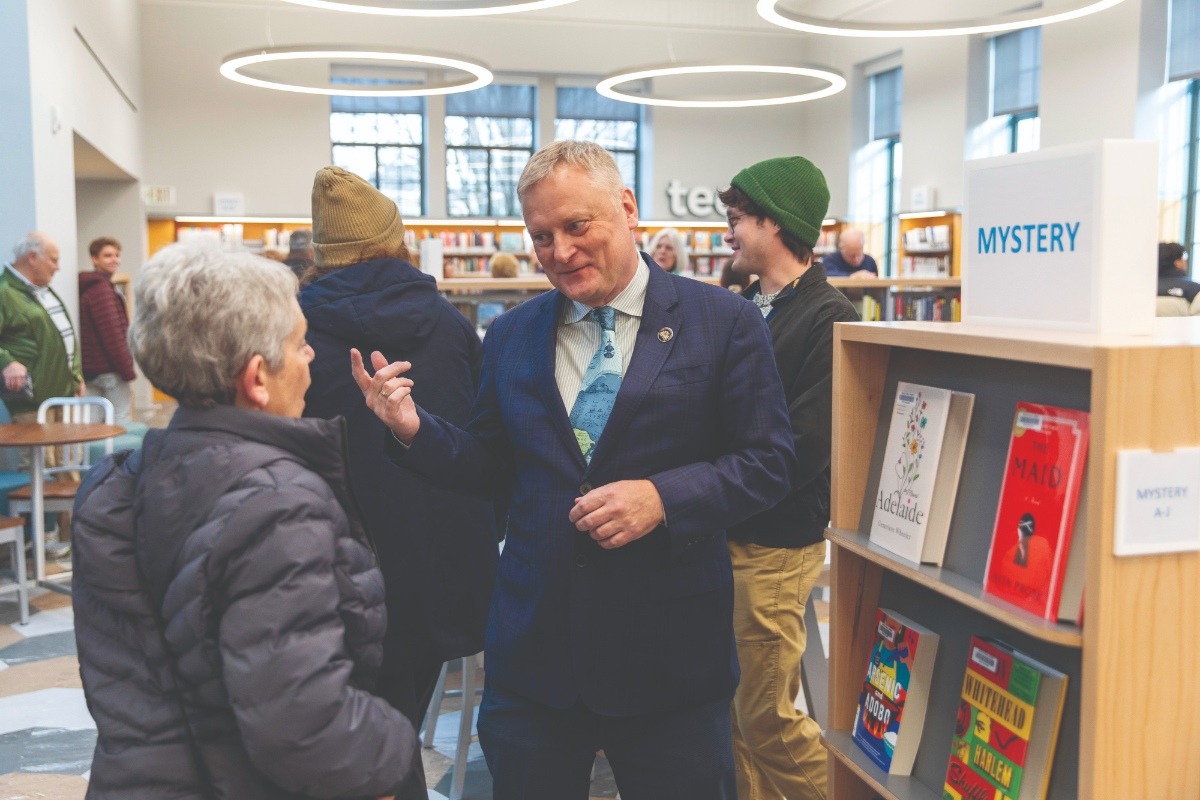

On paper, David Leonard isn’t the guy you would expect to be President of Boston Public Library (BPL), the oldest municipal library in the US. In actuality, his unique background in the seemingly opposing disciplines of philosophy and mathematics primed him perfectly for the complex but rewarding role, which sees him presiding over a collection of approximately 23 million manuscripts, maps, and other documents.
“That’s actually the beauty of a good college education,” he says. “It gives you a foundation and helps you find the things you care about, but that doesn’t mean that’s where you’re going to end up. But if you’re learning about something you’re passionate about, then you can apply that in any field that you end up in.”
David is from Dublin, pledging allegiance to both the north and south sides, given his father was from Ranelagh and his mother from Glasnevin. While he originally wanted to study science, he fell a few points short in the Leaving Certificate, and ended up studying mathematics as part of an Arts degree at UCD.
Philosophy was simply a random choice for another first-year class, but it ended up being a serendipitous one, as David discovered a “love and passion” for the subject. “For me, it was the best of both worlds. It wasn’t about how these are two opposite subjects, but rather two different ways of applying interest. So I think my philosophy interest was much more about, how do we think, and how do we know things? How do we understand the world?”
Early childhood tragedy – he lost his mother when he was just six years old – meant he was “always a big thinker”. “The ‘why’ question for someone who loses a parent early on is always there,” he admits. “‘Why’ becomes a very important question that they live with for the rest of their life in some ways. So it tracks in terms of what I was forced to deal with as a kid.”
David says his was ultimately the typical student experience of the 1980s – including living in bedsits in Rathmines which provided little in the way of comfort but total freedom. Upon graduation, he decided to delve deeper into some of the subjects he had encountered in his philosophy studies, choosing to complete a Masters degree. Then, one of his former professors at UCD, Richard Kearney – now Charles B. Seelig Chair of Philosophy at Boston College – suggested he come Stateside to study for his Doctorate in the subject.
For David and so many other graduates during that time, it was a no-brainer. Dublin in the 1980s, he points out, was not the vibrant, modern capital city it is today. “The Celtic Tiger hadn’t yet arrived,” he says. “Pursuing a PhD in Boston offered me two things – one, take my academic career to the next step, and two, have the experience of living somewhere else, other than Ireland.”
David quickly and easily made his home in the New England city, which has a relatively small core population of 700,000. “I have travelled the US extensively, and I think Boston is the most European of the American cities for many reasons,” he asserts. “I quickly made friends, had relationships, and built my career, and suddenly you realise you’ve spent more of your adult life there than at home.”
David never finished the PhD, admitting he was “burnt out” by the academic experience by the time he approached its conclusion. Timing, however, is everything, and his covetable mathematics experience was now in demand as the ‘dot com’ boom took off.
“It was the late ’90s, early 2000s, this is when the internet and all of the online world was getting started,” he explains. “It was a really interesting time to start working in that as a career, and with the math background and the interest in science and computers, suddenly that all came back into focus for me.” He worked for a number of consulting firms and non-profits before finding himself at Boston Public Library in 2009, where his first role was chief technology officer.
One of my biggest challenges is trying to describe in a simple sentence exactly what a public library in the 21st century is, because it’s also constantly in motion.”
“This was in the wake of the financial crisis of 2008, and so it was more a case of, well, where would be a good place to land for a few years?” he recalls. “I thought this looked interesting, and it could be a two- or three-year stint and then onto whatever was next. But I took to it like a duck to water in many ways, and loved the environment.”
Indeed, his pride at working for the venerable institution is evident as he explains his not-so-linear road to becoming President. Having spent seven years in different roles, the then-President stepped down, and David threw his hat in the ring.
“I do not look on paper like I am the right qualified person for this job, but it is an educational institution,” he explains. “So it’s drawing on my academic background, but I also spent 15 years in the technology space proper. Libraries today are as much about technology as they are about traditional services, as most people now consume information digitally. So by some calculation, I actually ended up being the logical choice for the role, and ten years later I am still having a blast.”
That’s despite the job being both challenging and frustrating, especially in recent times; David discreetly notes that with the BPL being part of the government in the US, “that comes with baggage”.
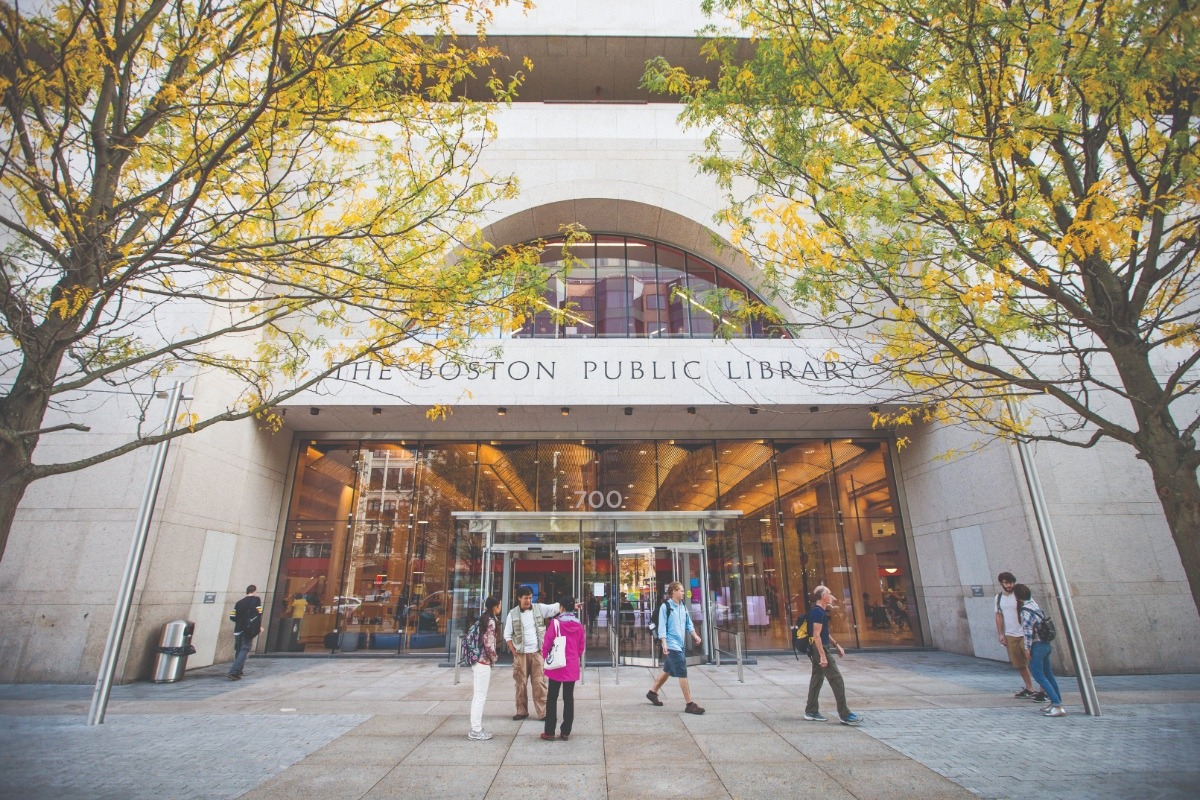
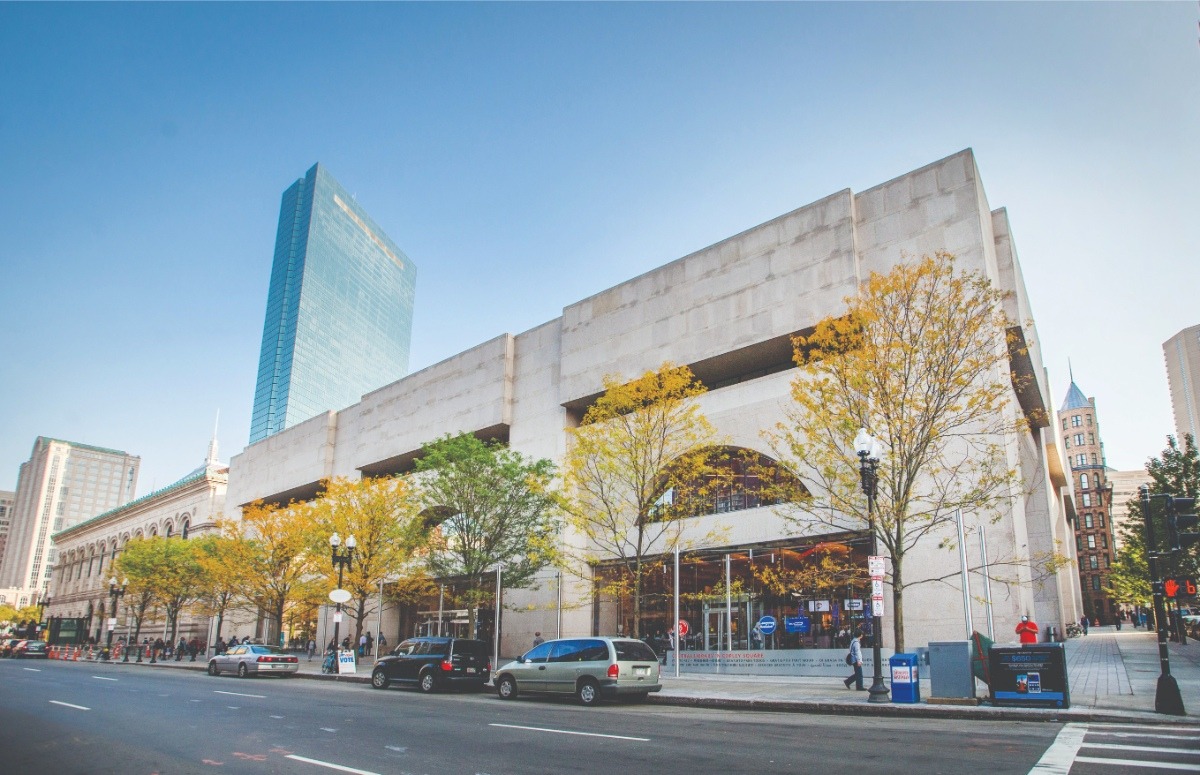
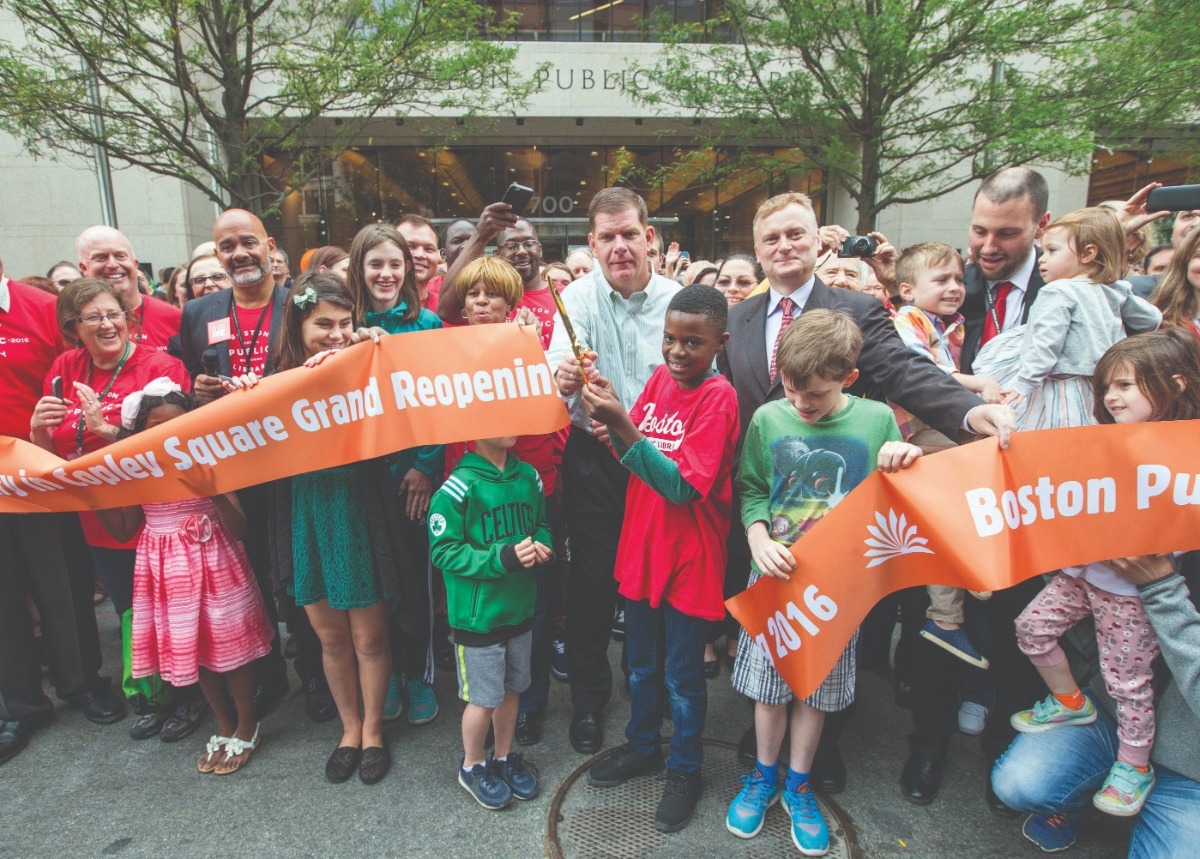
While the Boston Public Library encompasses 25 local library branches that are more akin to our own experience of a community library, the Central Library in Boston’s historic Copley Square is what most people think of as the library proper. David’s biggest achievement during his time as President, he says, was “undoubtedly” overseeing the delicate – and hugely expensive – renovation of the landmark 1972 extension to the building.
The Central Library, he explains, is two buildings: the original McKim Building, and the modern Boylston Street Building. “It’s a beautiful 1895 building, with its more European-style architecture, and then the other half, which was the result of the first major renovation, was a 1970s proto-brutalist building that was pretty dark and not the most welcoming experience.”
If you want a successful result from an AI tool, how you ask the question is the essential determinant.”
A $78 million transformation has changed all that, producing a “dynamic, warm, welcoming space” that Bostonians, initially sceptical of the high cost, ultimately fell in love with, he says. “We tracked the foot traffic to the building, and it was up by 40% over what it had been before the renovation. So, it became a destination in a new way, simply because we had transformed the experience, not just the building.”
As UCD continues its own redevelopment of the 1970s brutalist building that houses the James Joyce Library, David recalls his meeting with University Librarian – and fellow mathematician – Dr Sandra Collins, during a visit to Dublin two years ago. “It was a lovely opportunity, as two heads of libraries, to share stories of embarking on a renovation from about the same period,” he says. “BPL is a library but also part archive, part museum, and we are also a research library, so we have as much in common with a university library as we do with your local library down the street.”
David is still grappling with the big questions, admitting there is a constant tension that comes with balancing the weight of history with the persistent drive for modernisation. “One of my biggest challenges is trying to describe in a simple sentence exactly what a public library in the 21st century is, because it’s also constantly in motion,” he says. “For me, the question is how do we serve our community today, not, what do we have and how do we preserve it?
“Although those are important questions too, we have to consider what the modern society, the urban environment, and the democracy itself wants from a library, particularly right now when the world is in such a crazy state and people don’t know what to expect from the government or even from their own society. How does the library today promote dialogue around these things?”
The Boston Public Library is an educational, cultural and civic centre that has thrived throughout its 170-year-old history; David believes he is the person to continue to help it reach its full potential.
“It’s the oldest Municipal Public Library in the United States of America and it holds the third largest collection of objects. It is a very important place and that responsibility weighs on me every day, but I’m not done yet – there’s nowhere else I would rather be.”
AI AND LIBRARIES
Libraries today, like all other institutions, are tussling with the possibilities and problems posed by artificial intelligence. Clarivate’s Pulse of the Library 2025 report found that 67% of libraries say they are exploring or implementing AI.
With a collection of more than 23 million documents, AI dangles tantalising possibilities for BPL, particularly because, as David Leonard notes, just 12% of that enormous archive is currently digitised. Yet he is circumspect about a wholehearted embrace of the divisive technology.
“AI is a tool,” he says. “You can use a tool for good, or you can use it for bad – you can let a tool run rampant.”
With the BPL, he believes it faces three main challenges when it comes to AI. “One, of course, is where and when we should adopt it for our own internal systems, and of course, that’s the same question any company should be asking,” he says.
“The second thing is, as we serve our users and residents, particularly those who come from an economically challenged background, they will turn to the library to help them develop new skills to understand new technologies and we already have some offerings in that regard.”
The third question, according to David, is whether AI can help the library deliver answers for its patrons who want to do reference or research. “And what we’re seeing right now is that some of the tools are really good at simple questions, but the more complex ones require a little human intelligence to go along with the artificial intelligence.”
AI is only as good as its prompts, David points out. “If you want a successful result from an AI tool, whichever one you’re choosing to use, how you ask the question is the essential determinant of whether you get a successful result back or not,” he says. “That is something librarians have been working on for decades – how does a human ask a question when they’re trying to do research or obtain a piece of information, so we are completely prepared for dealing with this opportunity.”