
News

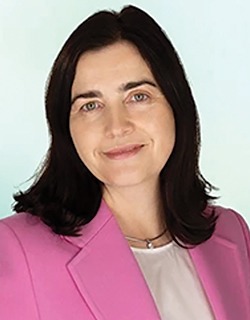
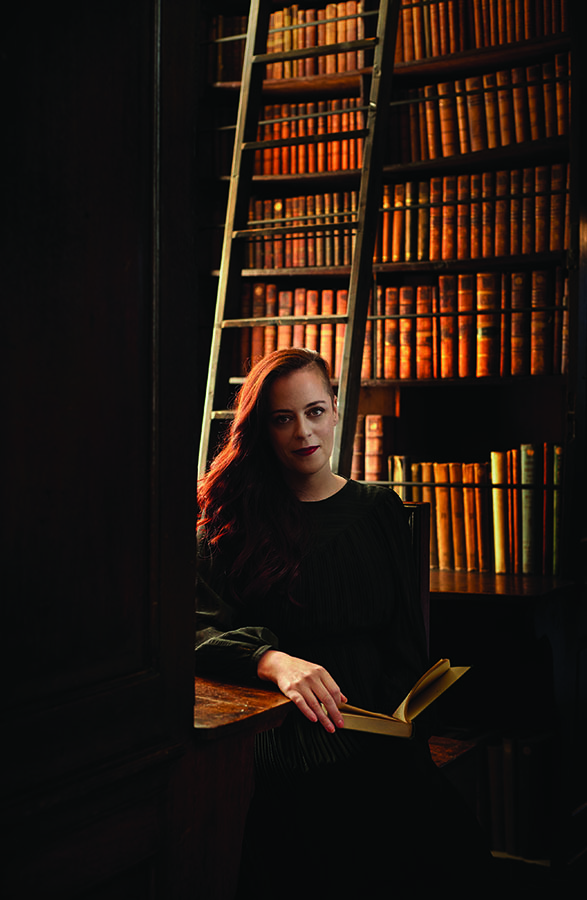
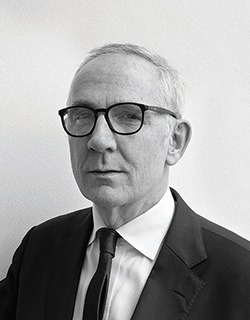
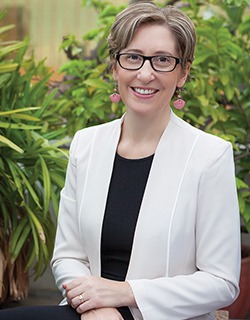
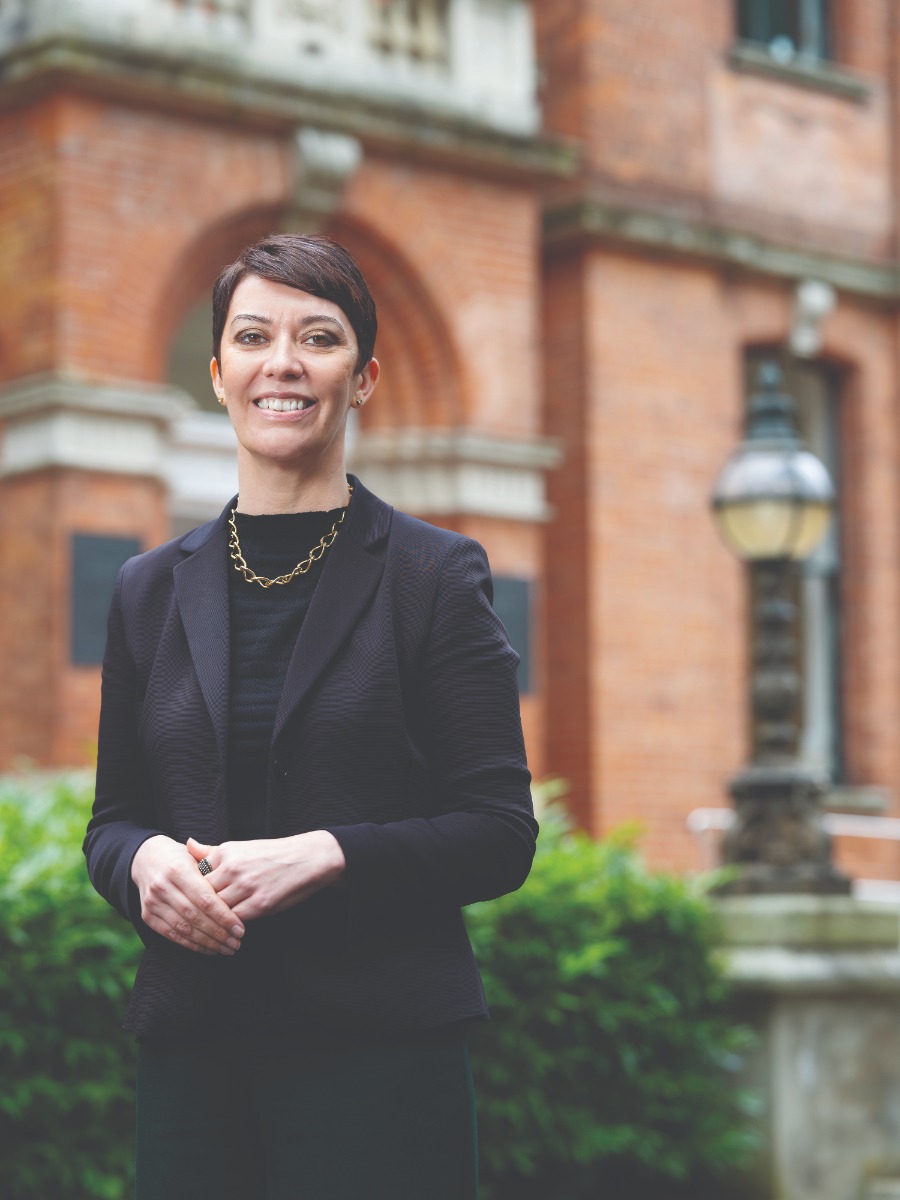
Dr Elizabeth Farries, Director of UCD Centre for Digital Policy, leads the FORSEE project to explore the benefits and risks of Artificial Intelligence (AI) from a societal perspective in order to enhance AI capabilities and EU regulatory frameworks.

AI: Powering New Discoveries

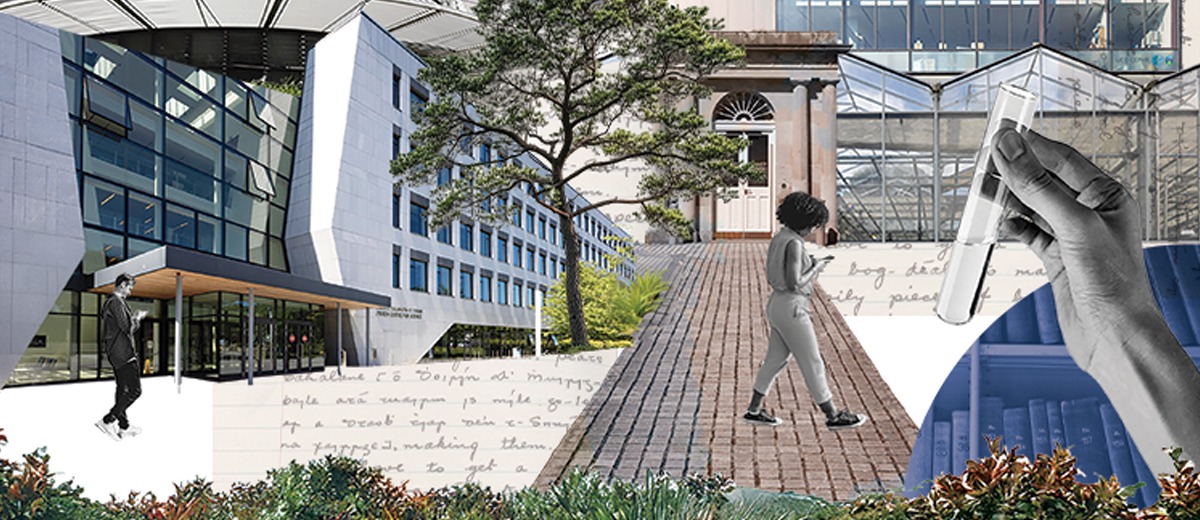
UCD is Ireland’s leader in AI and computational sciences, at the forefront of national capabilities. We look at seven applications that harness the power of this transformational technology

Artificial Intelligence (AI) has transformed the world as we know it forever. In its wake, AI cuts two diverging streams of risk and opportunity, both demanding the best expertise and the most inclusive collaboration to be navigated successfully for the benefit of all humanity.

UCD is in pole position to meet this challenge. The University’s world-class researchers across all six colleges are exploring the applications of AI, while those in the schools of mathematics and computer science have been pioneers of fundamental research for decades.

Projects such as GENSHIELD AI (mitigating adversarial threats from generative AI and proactive fraud prevention for future networks), MANOLO (trustworthy efficient AI for cloud-edge computing) and FORSEE (forging successful AI applications for European economy and society), led by UCD Centre for Digital Policy, exemplify national and international research at the highest level.

UCD is home to CeADAR, Ireland’s Centre for AI, which is co-funded by Enterprise Ireland and IDA Ireland. It hosts a European Digital Innovation Hub which supports companies to overcome challenges and enhance their competitiveness through technologies including AI. The University’s innovation hub, NovaUCD, runs the AI Ecosystem Accelerator programme in partnership with CeADAR to support entrepreneurs developing AI solutions for the global market, while UCD School of Computer Science is home to ML-Labs, a Research Ireland-funded PhD training centre.

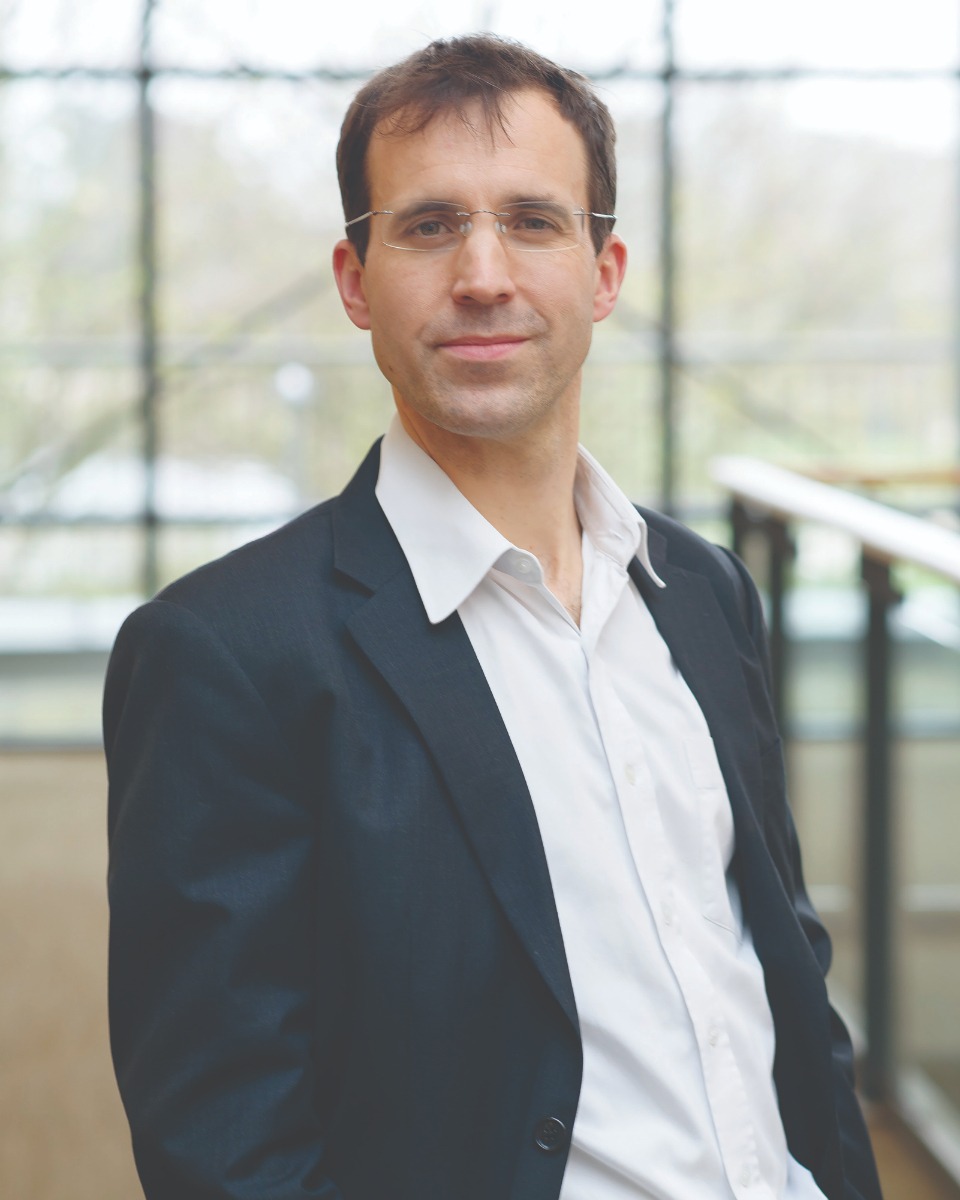
Associate Professor Brian MacNamee, UCD School of Computer Science, is co-director of the Research Ireland Insight Centre for Data Analytics, which is Ireland’s largest nationally funded research centre and co-hosted at UCD where AI – especially trustworthy AI and ethics in AI – is a key priority.

He said: “I think it’s fair to say that UCD is Ireland’s leader in AI research. We have the greatest concentration of world-leading academics working in the field – a lot of them are involved in Insight. More than 100 UCD researchers at the Centre are working on AI applications, fundamental AI technologies, the next generation of algorithms, tools and techniques that are going to drive the field forward.”

SPACE

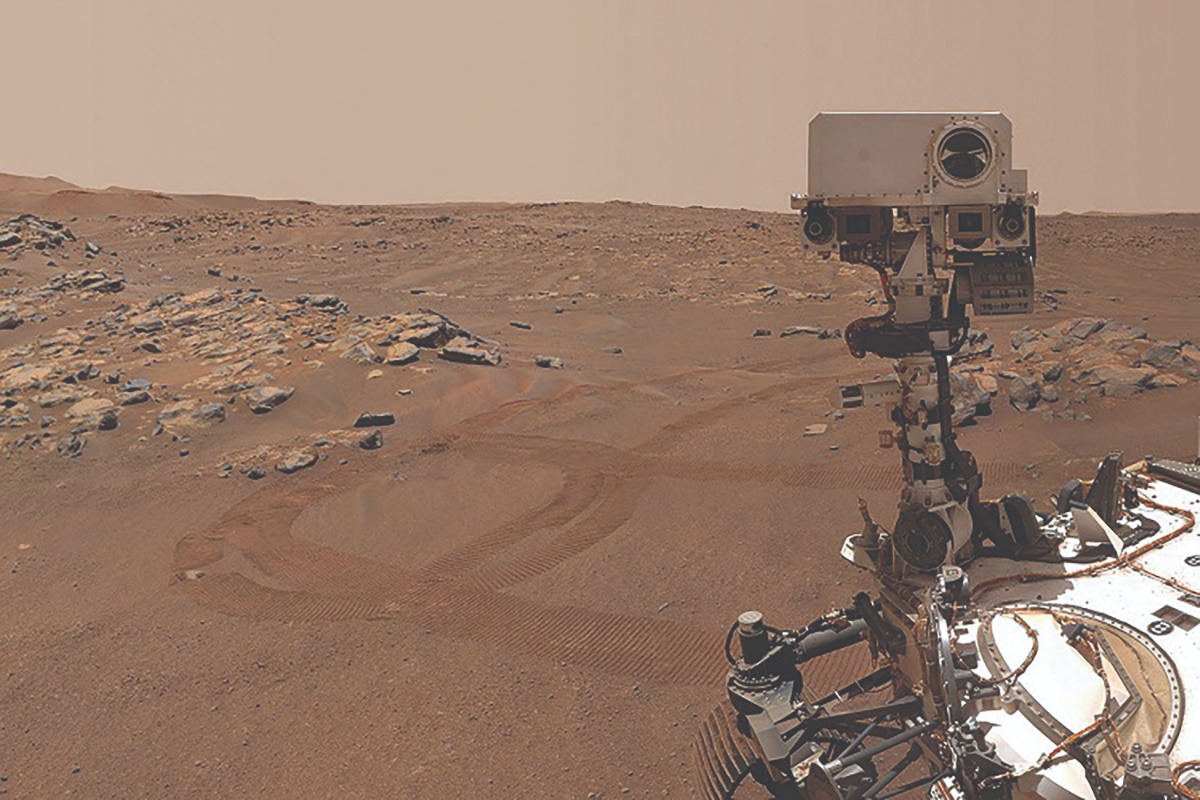
Technology in space underpins all aspects of modern life, from communications infrastructure to Earth Observation (EO) data, with vast downstream benefits in sectors such as advanced manufacturing, engineering and climate resilience, all enabled by AI. UCD has been fundamental to developing Ireland’s space sector, launching the first dedicated interdisciplinary space research centre (UCD C-Space) and Ireland’s first satellite in space.

The CAMEO (Creating an Architecture for Manipulating Earth Observation data) project is developing a new platform and tools for the analysis of EO data for use by government, industry and the public. Academic research itself will be a major beneficiary of CAMEO’s data platform.

The All-Ireland AI-enhanced Peatland Monitoring Platform (AI2Peat), which combines artificial and human intelligence to combat climate change, is a project that utilises satellite data, led by iCRAG applied geosciences research centre and CeADAR.
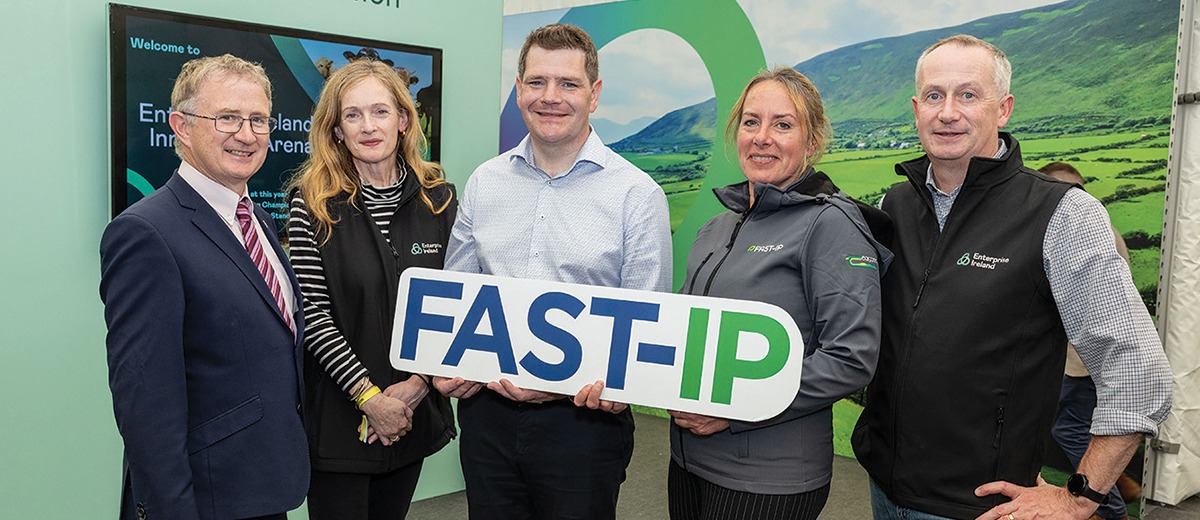
Prof. Frank O’Mara, Teagasc Director; Marina Donohoe, Head of Research and Innovation at Enterprise Ireland; Peter Burke TD, Minister for Enterprise, Trade and Employment; Prof. Kate Robson Brown, UCD Vice-President for Research, Innovation and Impact and Leo Clancy, CEO, Enterprise Ireland, at the National Ploughing Championships.

FOOD AND AGRICULTURE

Led by UCD School of Computer Science, the CONSUS project (Crop Optimisation Through Sensing, Understanding and Visualisation) was a pioneering strategic partnership between Origin Enterprises and world-class researchers recruited globally for their expertise, exploring digital/precision agriculture and crop science. To this day, the research and innovation generated under CONSUS has been transformational for the company and informs education and research programmes centred on data science, machine learning and new technologies that are disrupting the agricultural and agronomic sectors.

In partnership with Teagasc, UCD’s FAST-IP programme supports early-stage start-ups in agri-tech, providing training in digital agriculture, with access to the AgTechUCD Innovation Centre, which is based at UCD’s research and training farm in Co. Kildare.

At UCD Institute of Food and Health, the Food for Health Ireland programme specialises in the use of bioinformatics and computational approaches in research into food and health, particularly involving peptides. The Institute runs a number of significant projects that apply AI, such as the international WATSON project which uses digital and intelligence-based technologies to assist stakeholders to identify and prevent food fraud across the whole food chain.

UCD School of Biosystems and Food Engineering is pioneering the application of AI in food manufacturing. Its unique programme focuses particularly on the circular bioeconomy and carbon-negative food production, with research areas including multi-sensor data fusion and AI-optimised sustainable food production from waste streams.
DIGITAL CULTURES | CREATIVE FUTURES

DIGITAL CULTURES | CREATIVE FUTURES

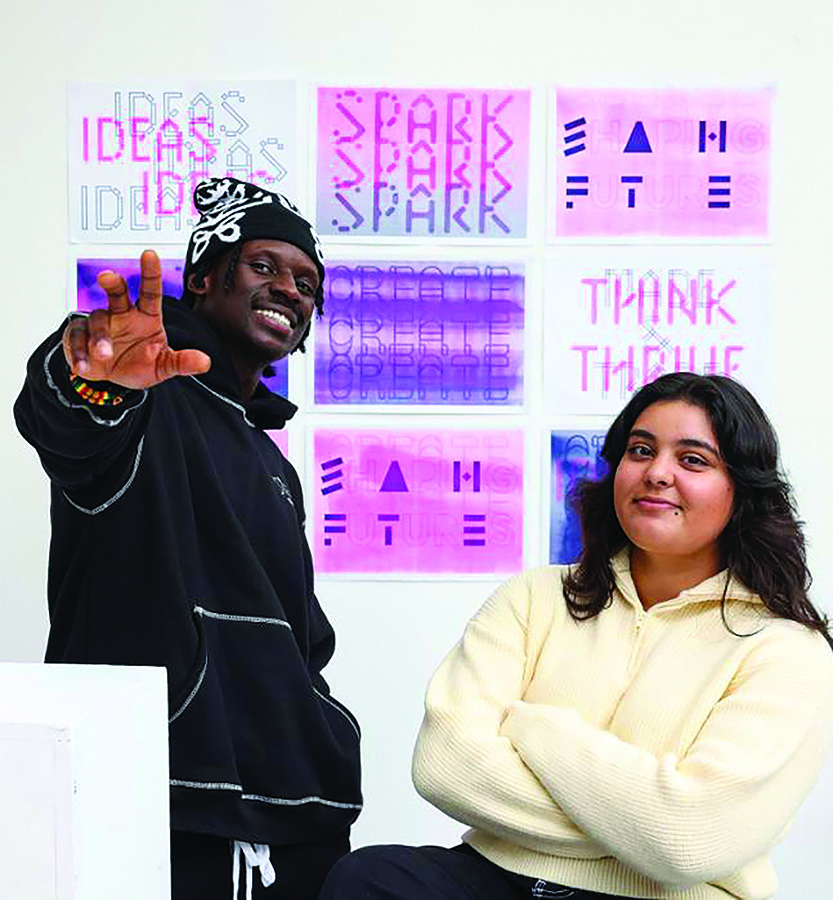
The role of artists, writers, makers, designers and creative thinkers has never been more vital to our world. To support dynamic creative and cultural sectors today and in the future, UCD College of Arts and Humanities has formed a ground-breaking partnership with IADT and NCAD to establish the Creative Futures Academy. Led from UCD, the Academy explores collaborations including with CeADAR, Ireland’s Centre for AI, to explore how this technology can impact the place of reading, writing, thinking, debating, collaborating, and creating.

Since 2018, UCD Centre for Cultural Analytics has been developing a research ecosystem for digital humanities. Providing a hub for international networks, it combines expertise from across arts, humanities and computer science in cultural criticism and data analysis, traditional disciplines and new computational approaches. The Curatr platform developed at UCD Insight – Centre for Data Analytics is a great example of how computational and humanities researchers are together defining how AI can be used to support exploration and curation of literature.
ENGINEERING – MANUFACTURING

ENGINEERING – MANUFACTURING

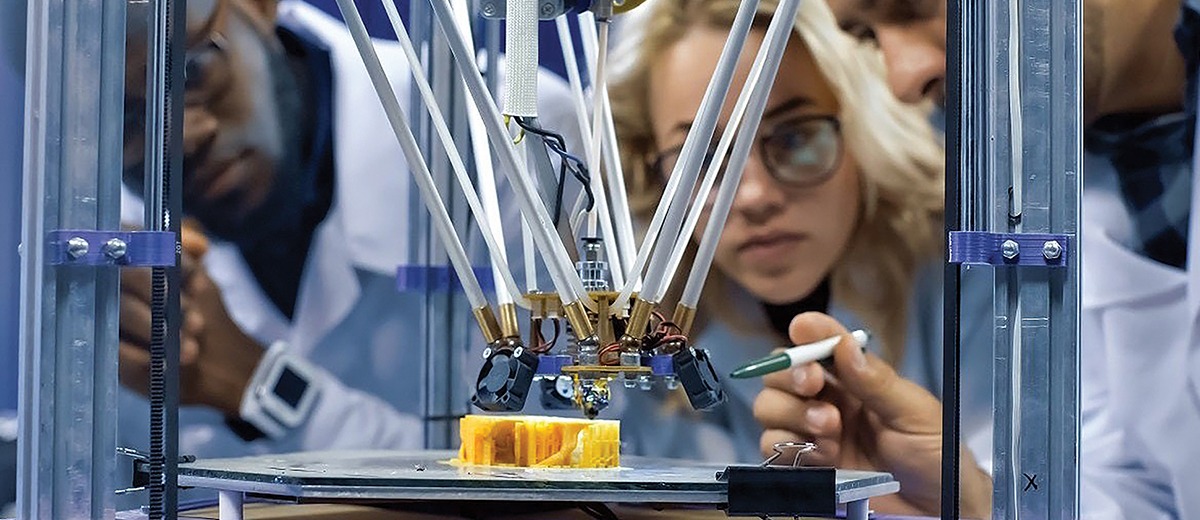
Based at UCD, I-Form, the Research Ireland Centre for Advanced Manufacturing, is the national leader in the application of digital and intelligence-based technologies in materials processing. Its researchers use AI, data analytics, augmented reality, predictive modelling and process simulation to create individualised products and new markets that were not previously possible, in areas such as medical devices, aerospace and pharmaceutical manufacturing.

One of I-Form’s funded investigators, from UCD School of Mechanical and Materials Engineering, leads the XenoSim project which uses computational mechanics to run simulations and provide fundamental clinical insights to enable animal-to-human cardiac transplantation.

UCD School of Electrical and Electronic Engineering is home to leading experts in advanced technologies using or enabling machine learning and AI, such as signal processing and quantum computing. Equal1, a UCD spinout and Ireland’s first quantum computing company, has developed the first commercially viable quantum system built to run inside existing AI and high-performance computing data centre environments.

ENVIRONMENTAL SUSTAINABILITY

UCD is a leader in Ireland and internationally in net-zero carbon energy research. UCD Energy Institute coordinates the highly ambitious NexSys (Next Generation Energy Systems) programme, with eight leading research institutions and nine industry partners, working towards a decarbonised energy system. Experts across its five research strands use AI and computational technologies to find innovative solutions for this era-defining challenge, including the development of an algorithm to identify reusable energy sources from different consumer groups in cities.

Other major projects in various areas of sustainability at UCD include the UCD-Met Éireann programme which will soon launch a national centre for weather and climate research using AI and data science; AI4Coasts, which uses AI to improve coastal resilience in data-sparse locations; and Vacancy Map Ireland, which is developing an open geospatial data model for vacancy using proxy datasets GIS and AI.

Campus News

Rankings, researchers and a revolutionary make headlines

UCD RISES IN WORLD UNIVERSITY RANKINGS

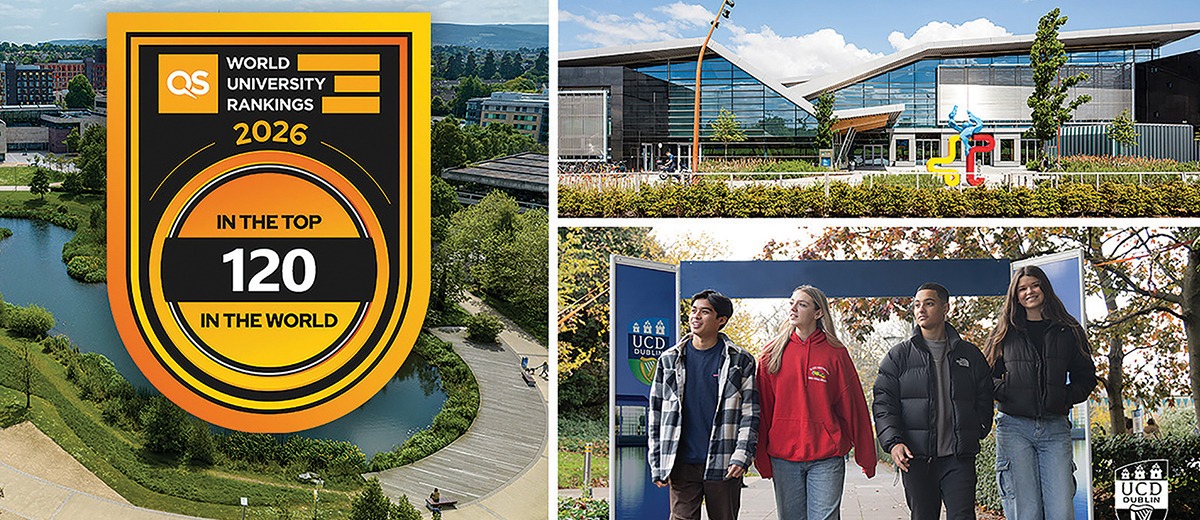
UCD is ranked 118th in the latest QS World University rankings, up eight places from last year. This marks the third consecutive year of upward movement for the University, which also remains in the top 100 for employment outcomes, at 88th globally.

Four subjects at UCD are ranked in the top 50 globally in the QS World University Rankings by Subject 2025. The top-ranking subjects are Veterinary Science (33), Petroleum Engineering (34), English Language and Literature (41) and Nursing (44). A further nine subjects at UCD are listed in the top 51-100, with a particularly strong representation across Arts and Humanities.

In the latest sustainability rankings, UCD is ranked number one in Ireland and 49th in the world, and is the only Irish university to make it into the top 100 globally. This reflects UCD’s commitment to sustainability and is based on the University’s performance in the areas of environmental impact, social impact, and governance.

UCD Michael Smurfit Graduate Business School is named Ireland’s top business school in the latest Financial Times rankings and is ranked among the top 30 business schools in Europe for the ninth consecutive year. In the 2025 Financial Times MBA rankings, the school’s full-time MBA programme is ranked 73rd globally and is Ireland’s only MBA programme to make it into the prestigious top 100 list.

NovaUCD is among the top 150 start-up hubs in Europe for the second year running, in the latest Financial Times rankings. It is one of only five start-up hubs and the only university-based hub in Ireland to feature on the list.

Highly Cited Researchers Among World’s Most Influential

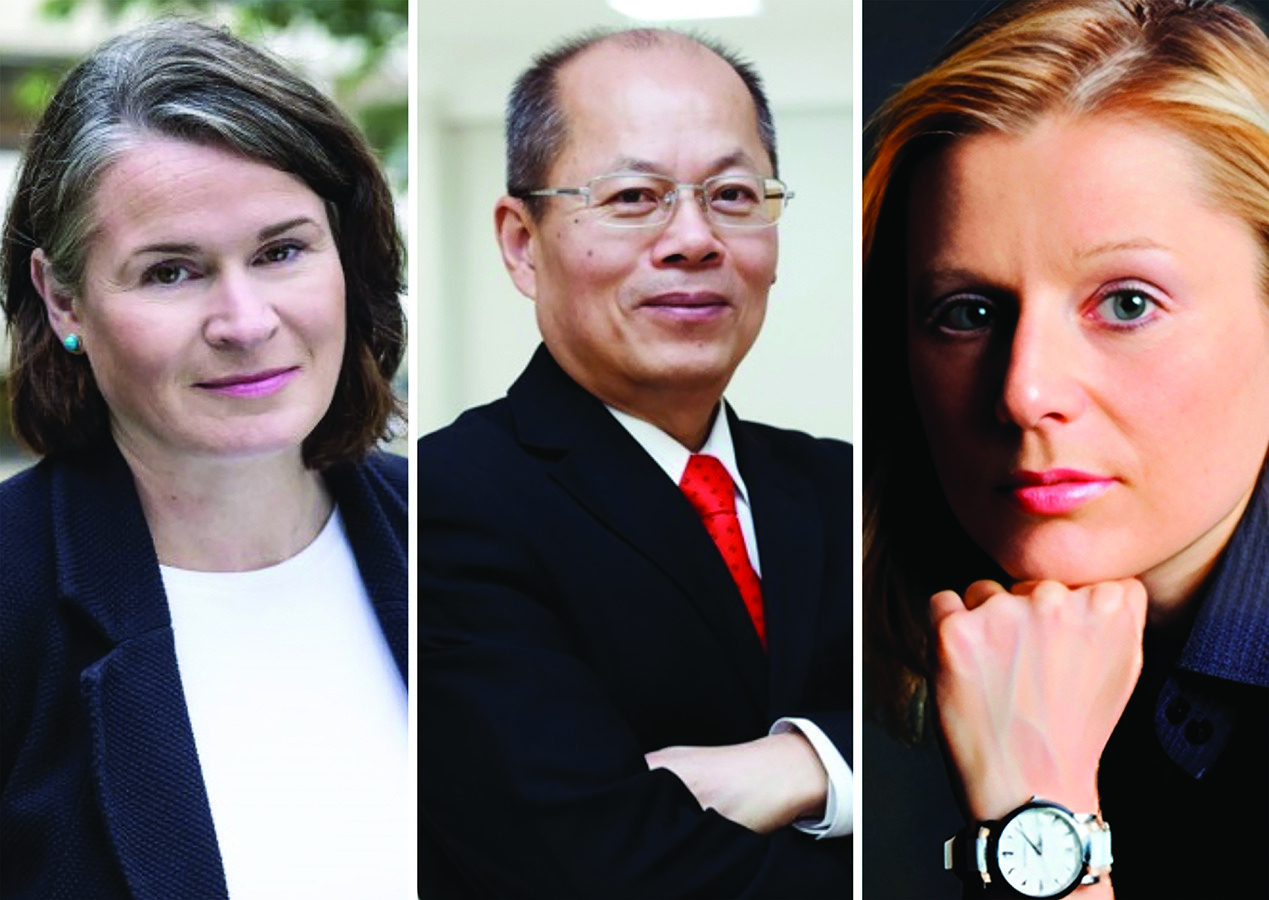
Three researchers and an Adjunct Professor at UCD are among the top 1% of the world’s most cited academics, according to the latest Highly Cited Researchers report by Clarivate Analytics. Professors Paula Bourke and Da-Wen Sun in UCD School of Biosystems and Food Engineering, Professor Eliana Souto in UCD School of Chemical and Bioprocess Engineering, and Dr Brijesh Tiwari, Adjunct Professor in UCD School of Biosystems and Food Engineering are all on the list, which identifies and celebrates individual researchers whose work has disproportionately extended the frontiers of knowledge and contributed to making the world healthier and more sustainable.

Prof. Paula Bourke, Prof. Da-Wen Sun, both of UCD School of Biosystems and Food Engineering, and Prof. Eliana B. Souto, UCD School of Chemical & Bioprocess Engineering.
Maths Superwomen

Ireland’s Maths Superwomen

Dr Christiana Pantelidou, a Research Fellow in UCD School of Mathematics and Statistics, is leading a nationwide outreach project to inspire and empower girls in primary school to consider careers in STEM. Posters in English and Irish celebrating the achievements of seven Irish female mathematicians are being distributed to schools and community centres across the country.

Sheila Tinney, renowned mathematical physicist and UCD Associate Professor, features in the ‘Ireland’s Maths Superwomen’ project.

Dónal Lunny
Dónal Lunny

Lifetime Achievement Award for Dónal Lunny

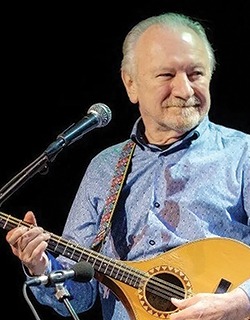
UCD Musician in Residence Dónal Lunny has been honoured with the prestigious lifetime achievement award at the annual RTÉ Irish Folk Awards. The renowned musician and composer has long been a driving force behind the popularity of Irish folk and traditional music, and is a founding member of seminal bands Planxty, the Bothy Band, Moving Hearts, Emmet Spiceland and Coolfin.

Colm Bairéad and Cleona Ní Chrualaoi

Acclaimed Broadcaster and Oscar-nominated Filmmakers among Recipients of UCD Honorary Degrees

UCD has awarded an honorary degree to award-winning broadcast journalist Orla Guerin in recognition of her great courage and expertise in reporting from conflict zones across the globe. The Dublin native became RTÉ’s youngest foreign correspondent, covering the collapse of the Soviet Union and the breakup of the former Yugoslavia, before she joined the BBC as International Correspondent in the Middle East. In a career that has led to numerous honours, including an MBE for Services to Broadcasting in 2005 and repeated Emmy and BAFTA nominations, she has covered foreign affairs, wars and disasters over many years.

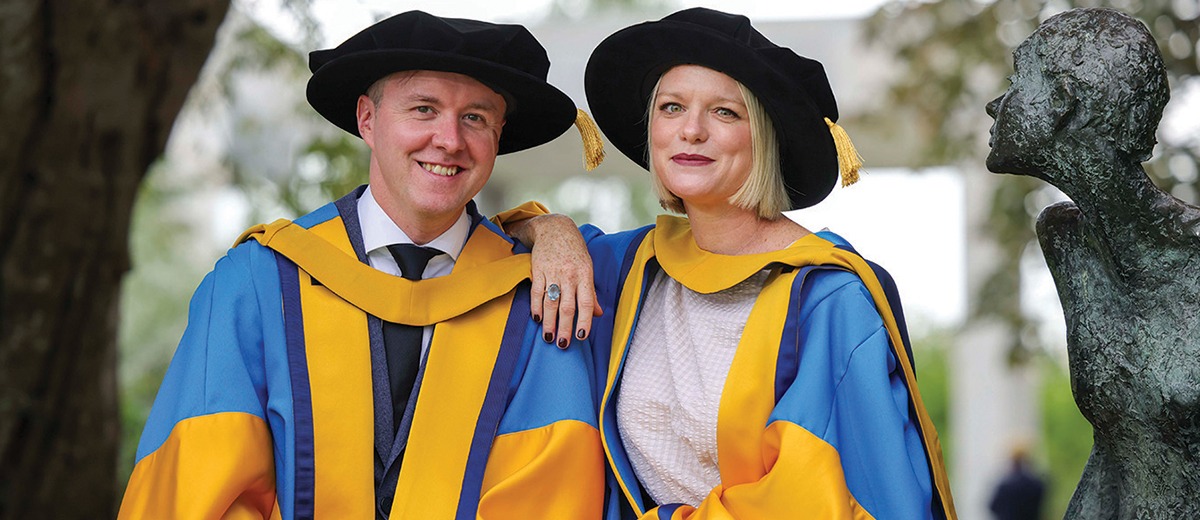
Honorary degrees were also conferred on Colm Bairéad and Cleona Ní Chrualaoi in recognition of their outstanding achievements in the field of Irish language filmmaking and the global success of their feature film An Cailín Ciúin, the first ever Irish film to be nominated in the ‘Best International Feature Film’ category at the Academy Awards.

Other recipients of honorary doctorates from UCD in the past year include business leaders and philanthropists Angela Moore and Tony Smurfit, healthcare activist Missie Collins, former EU Commissioner Mairéad McGuinness, and renowned folklorist Professor Henry Glassie.

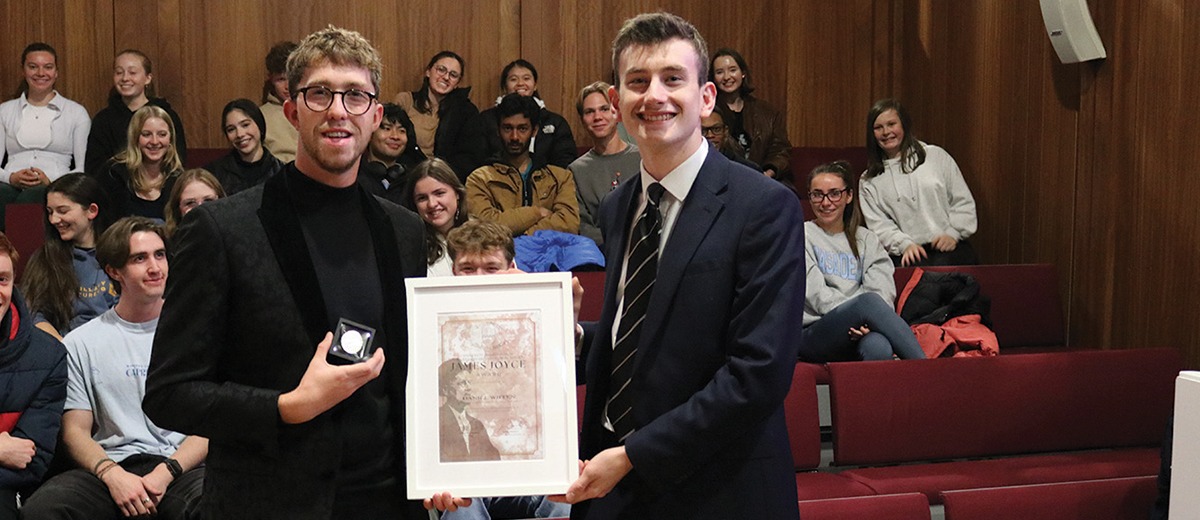
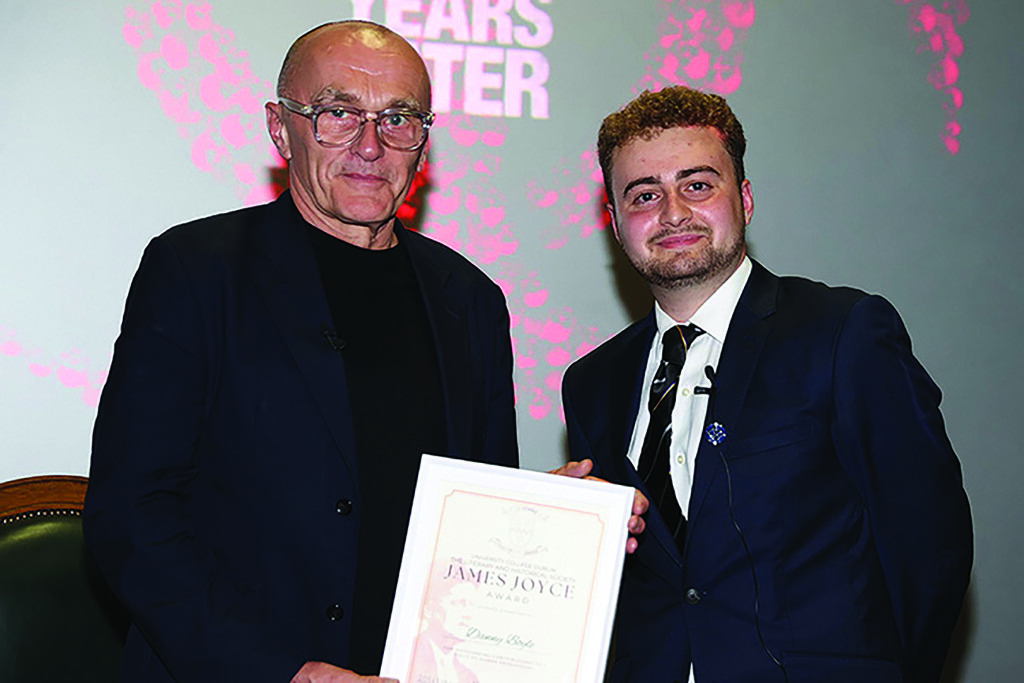
Daniel Wiffen is presented with the James Joyce Award by Stéphane de Bairéid, auditor of the L&H.

James Joyce Award Honour for Stephen Fry, Daniel Wiffen and Danny Boyle

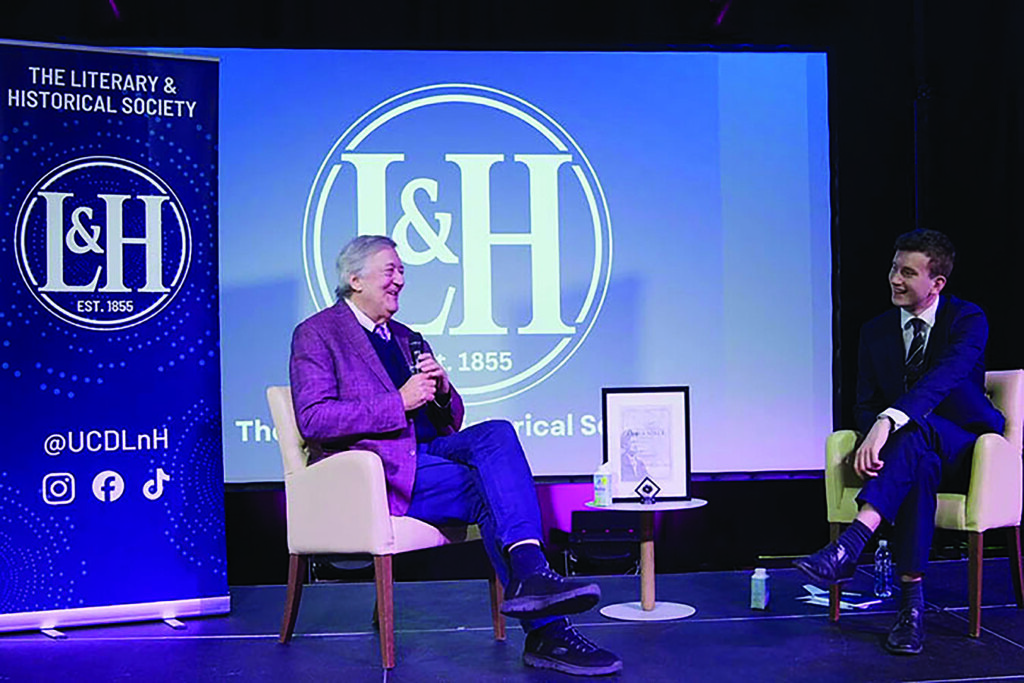
In the past academic year, UCD’s Literary and Historical Society (L&H) has honoured Olympic champion Daniel Wiffen, actor, broadcaster, comedian and writer Stephen Fry, and acclaimed film director and producer Danny Boyle with James Joyce awards. Considered among the highest honour that any student body in Ireland can bestow, the James Joyce award is presented to public figures who have made an outstanding contribution in their field. Daniel Wiffen is a two-time world champion swimmer who made history at the Paris Olympic Games, winning gold in the 800m Freestyle and bronze in the 1,500m Freestyle. Stephen Fry has received multiple awards and nominations for his work throughout a career spanning more than three decades. Among Danny Boyle’s best known works are Trainspotting, The Beach, 28 Days Later and Slumdog Millionaire, which won the Academy Award for Best Picture in 2009. He also directed the opening ceremony for the 2012 Olympic Games in London.


Prof. Andrew Parnell.

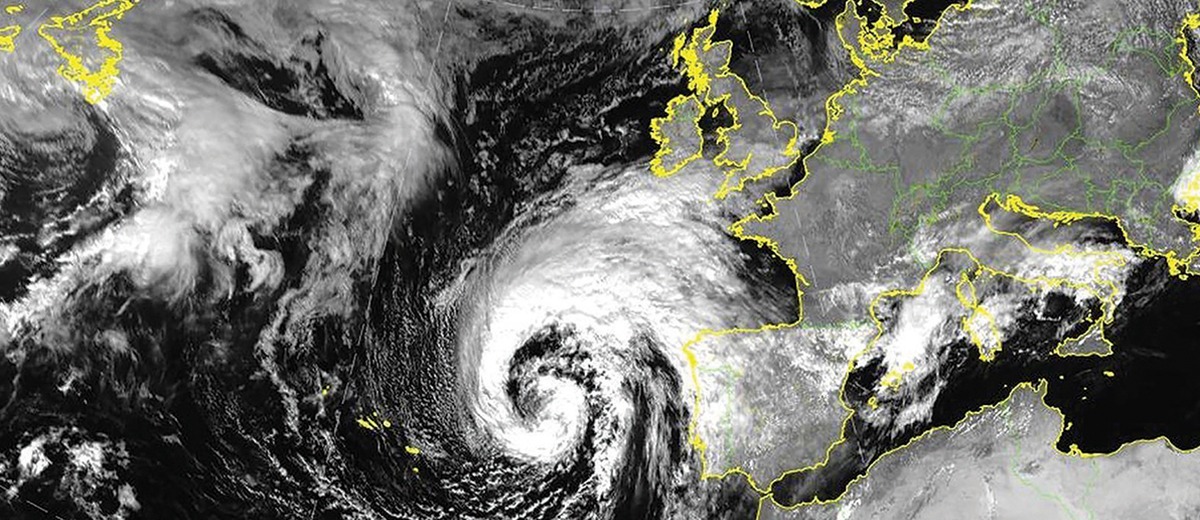
Met Éireann Partners with UCD on Weather and Climate Research

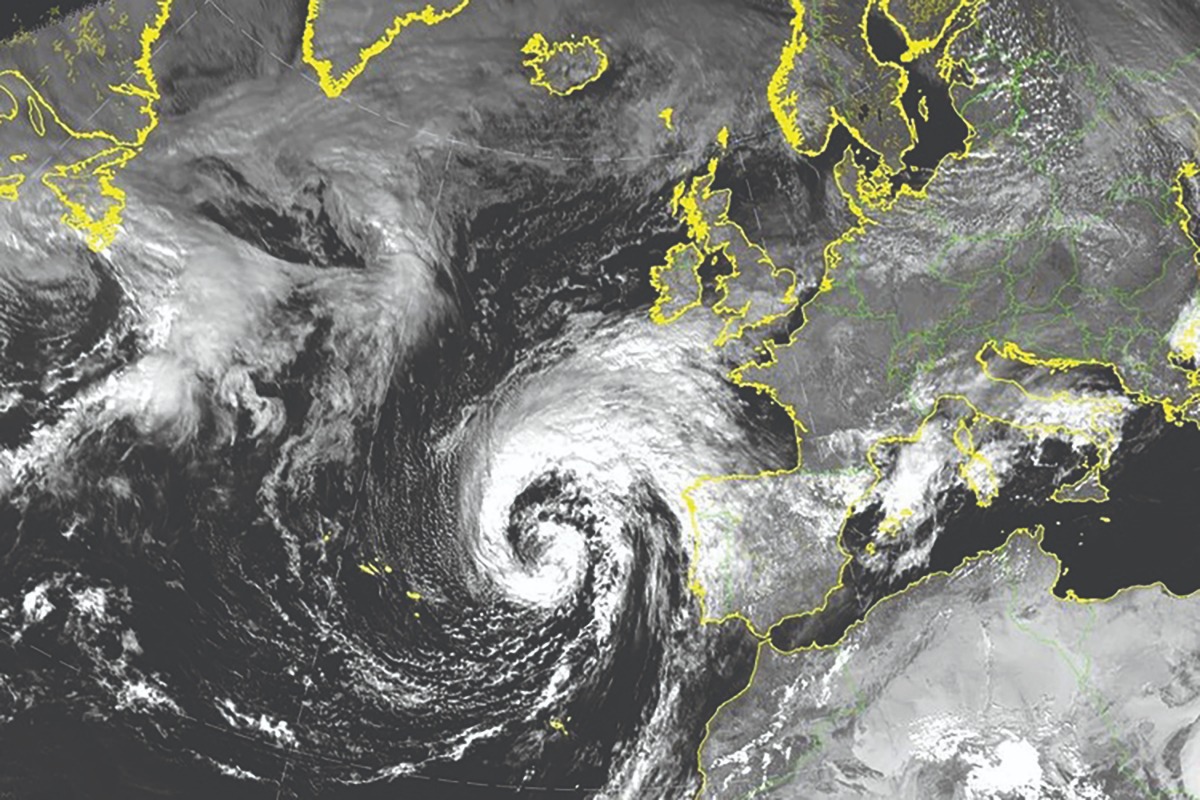
AI expert Professor Andrew Parnell has been appointed to lead a new multi-million-euro research programme in a ground-breaking partnership between UCD and Met Éireann, the Irish Meteorological Service. The Met Éireann Weather and Climate Research Professorship was established to bridge the gap between research and operations by examining the context of high impact weather, flood forecasting and the understanding of Ireland’s climate. It will leverage the full power of data science and AI-based technologies to make Ireland better prepared for extreme climate and weather scenarios, and support the protection of life, property and infrastructure.

The aim is to create a world-class weather and climate research centre at UCD that plays a significant role in supporting Met Éireann to achieve its strategic objectives around enhancing citizen safety, bolstering economic and environmental resilience, and supporting multi-sectoral decision-making.

Following an international peer review process by Met Éireann, UCD’s application was selected based on its demonstration of excellence and impact, and its commitment to collaboration and knowledge transfer for the benefit of society and the economy.

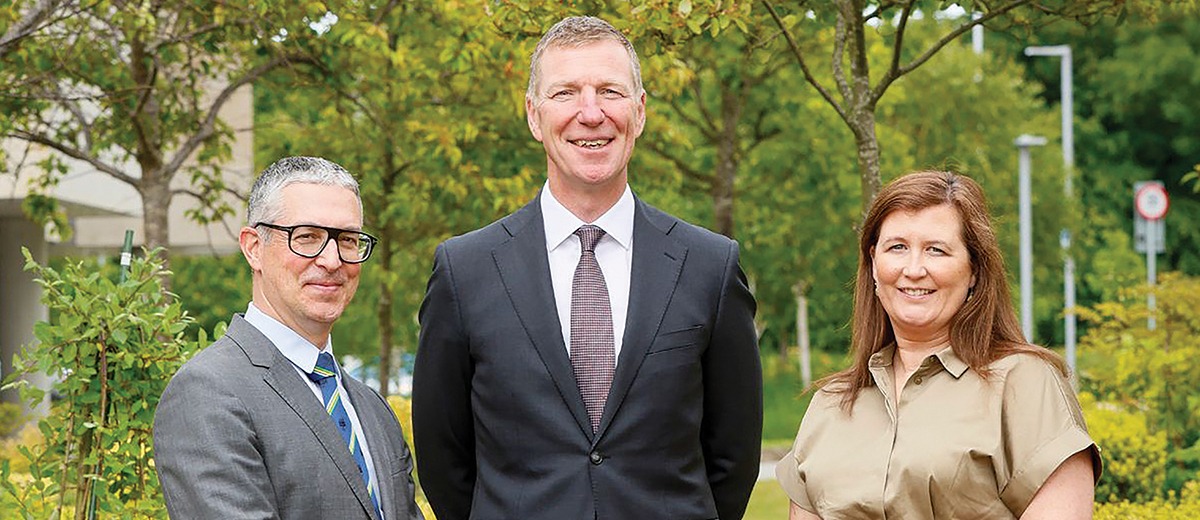
Prof. Laurent Pech, Head of UCD Sutherland School of Law; Patrick Spicer, Chairperson of Matheson; and Susanne McMenamin, Corporate Partner at Matheson.

UCD Matheson Corporate Governance Partnership

UCD and law firm Matheson have begun a partnership to support the teaching and research of corporate governance and related law at UCD Sutherland School of Law. The partnership will include the appointment of a new assistant professor, the introduction of the Matheson UCD Governance Hackathon, which will see Law students working in teams to apply original thinking and problem-solving skills to fictional scenarios in corporate governance, and a new seminar series in which leading experts and practitioners will discuss and analyse the latest developments in corporate governance, company law and compliance.

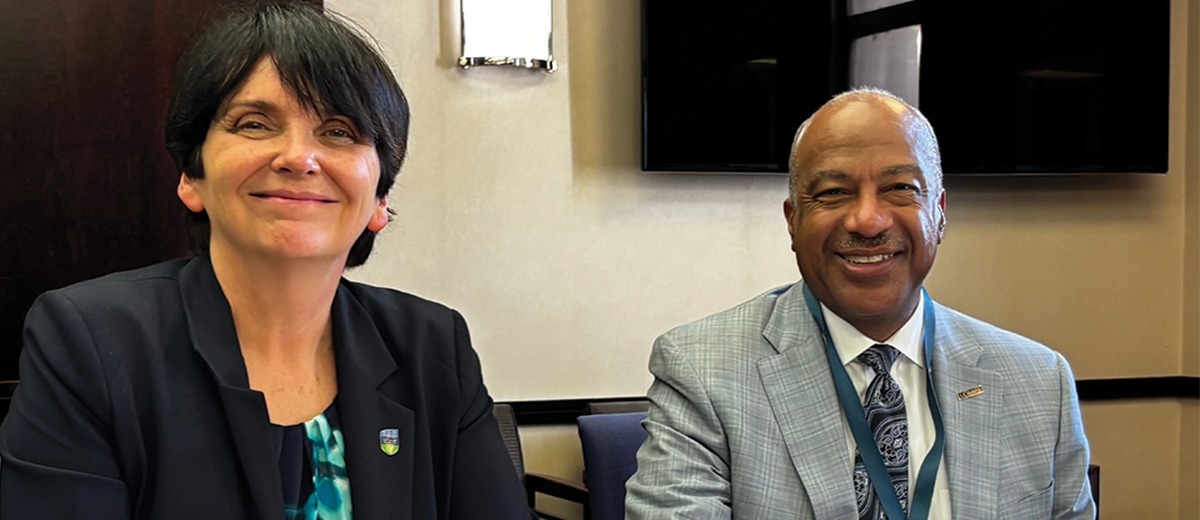
UCD President, Prof. Orla Feely and Chancellor of UC Davis, Prof. Gary S. May.

UCD Strengthens Strategic Partnership with UC Davis

UCD and University of California, Davis have signed an agreement of cooperation to address some of the most pressing global challenges. This latest agreement builds on over a decade of collaborative research and exchange between the universities and will focus on the themes of sustainable food systems, One Health, artificial intelligence and data science. Past collaborations have addressed a range of themes including agrifood, veterinary medicine, law, environmental research and health sciences. Both universities bring a depth of expertise and innovation to the long-standing strategic partnership.

The signing ceremony took place during the Universitas 21 Annual Network Meeting at UC Davis. The event was attended by Daniel Kearns, Talent and Innovation Attaché at the Consulate General of Ireland in San Francisco, who spoke of the exceptional quality of research in Ireland, emphasising that the most impactful research emerges through collaboration. He highlighted research as a cornerstone of societal progress, economic growth and inclusive, forward-thinking development, and described the partnership between UCD and UC Davis as a model for other universities to follow.

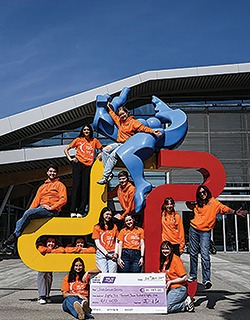
UCD Relay for Life

This year’s UCD Relay for Life raised over €86,000 for the Irish Cancer Society, which will go directly towards funding cancer research, and services such as night nurses and counselling for families affected by cancer all around Ireland. The 24-hour relay took place on the UCD athletics track and the event included a Candle of Hope ceremony, where those present were invited to lay a candle along the relay track in memory of a loved one lost to cancer. The event was the largest ever Relay for Life college event outside the US.

UCD Delivers First National Training Programme for Special Needs Assistants

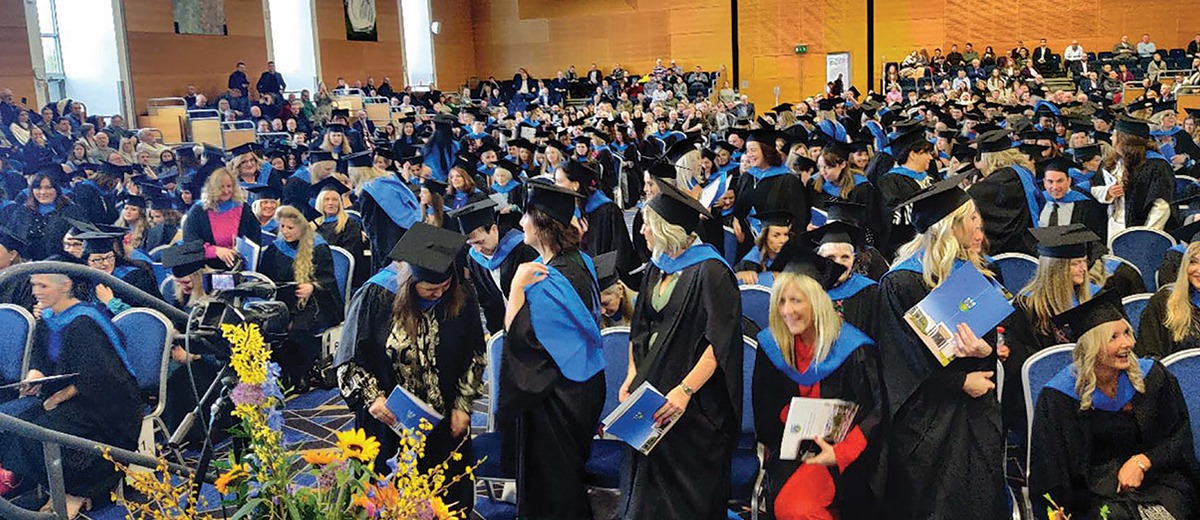
UCD delivered the first dedicated national training programme for special needs assistants (SNAs). The comprehensive online programme, commissioned by the National Council for Special Education, was delivered by UCD School of Education, supported by UCD School of Nursing, Midwifery and Health Systems. It consisted of five modules over 10 months, and covered areas such as the principles of inclusive education, supporting students with autism, understanding the primary care and medical needs of students with additional needs, and communication and language difficulties.

There are approximately 20,000 SNAs now working in the Irish education system, providing crucial support to students with additional care needs at primary, post-primary and special schools. Since 2021, more than 1,300 SNAs have been conferred with a Diploma in Inclusive School Support from UCD.

WHO One Health
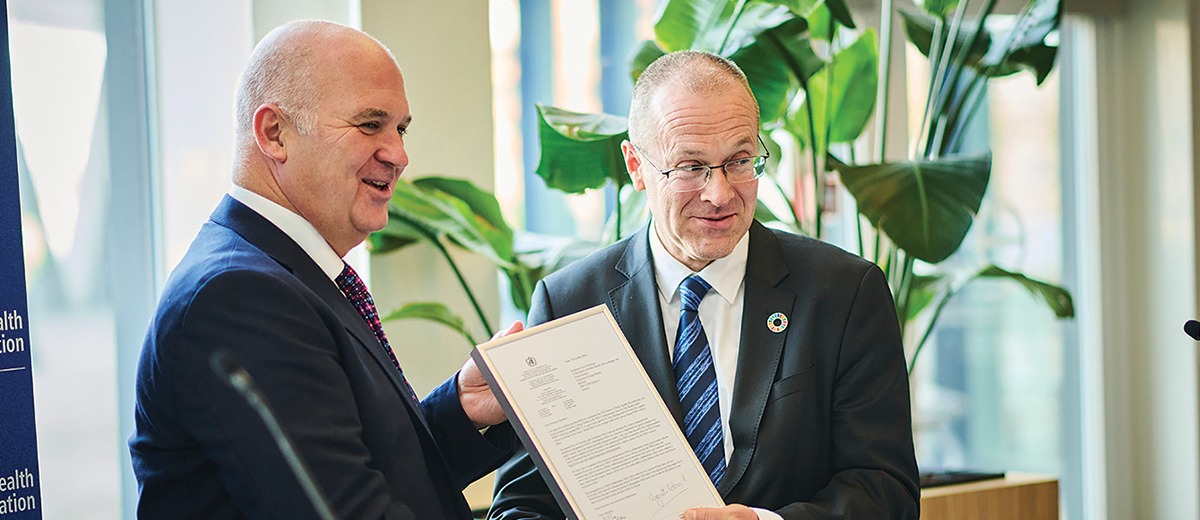
Adjunct Professor, Dr Tony Holohan, Director of the UCD Centre for One Health, and Dr Hans Henri P. Kluge, WHO Regional Director for Europe.

WHO Designation for the UCD Centre for One Health

The UCD Centre for One Health has been designated a WHO Collaborating Centre on One Health – the first of its kind in Europe. One Health is a collaborative, multisectoral and transdisciplinary approach that recognises that the health of people is closely connected to the health of animals, plants and their shared environment. The WHO designation provides UCD with significant opportunities to exchange knowledge and information with other world-leading institutions and drive research, education, and collaboration in One Health at national, regional and global levels to address the complex challenges facing humanity.

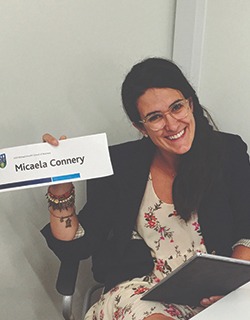
Micaela Connery Interview

Master’s plan

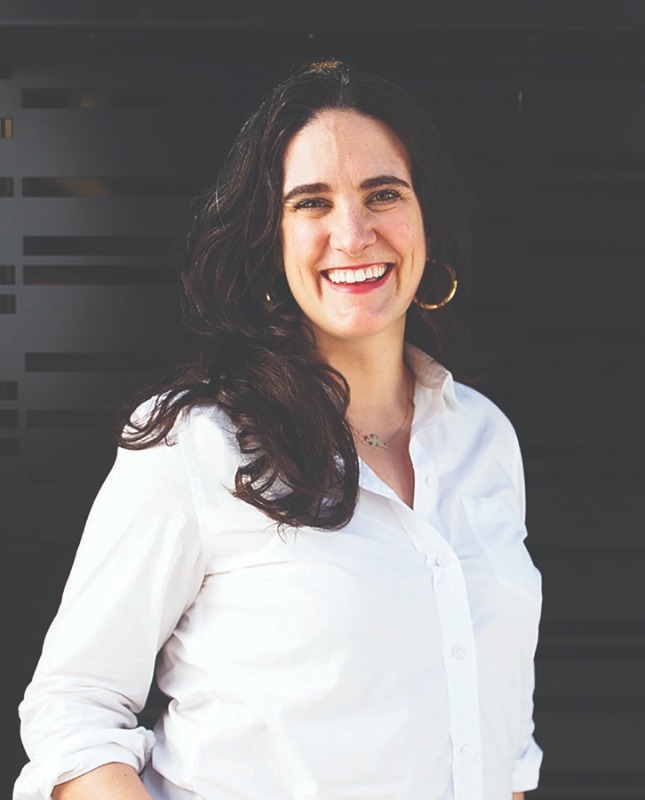
Micaela Connery developed the business plan for The Kelsey, a San Francisco-based not-for-profit organisation for the development of disability-forward inclusive community housing, while taking an MBA at UCD Michael Smurfit Graduate Business School
ELIJAH C. COLLINS
Photo by Elijah C. Collins

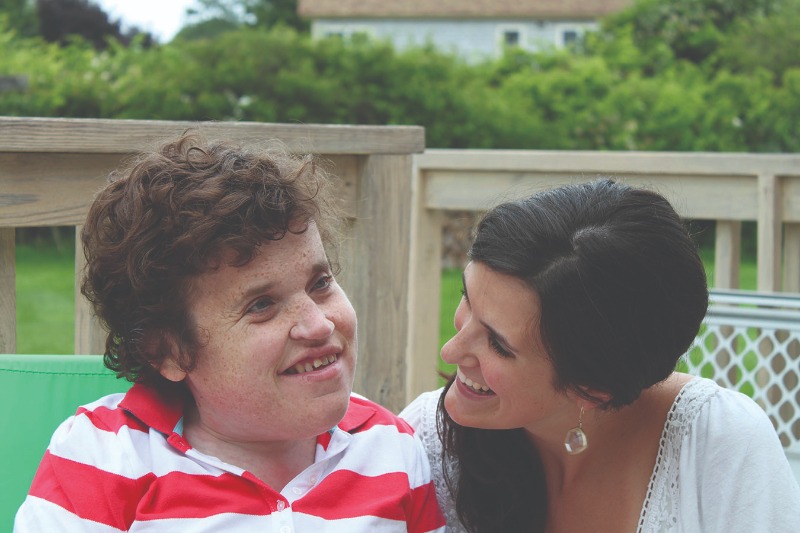
When Mitchell Scholar Micaela Connery arrived at UCD Michael Smurfit Graduate Business School in the autumn of 2016 to embark on her MBA, she already had a very clear idea as to what she hoped to achieve. Growing up, though Micaela moved around the eastern part of the US with her family because of her father’s job, she always considered Rhode Island home and spent summers there with a large extended Irish American family of Flynns, Connerys and O’Connors that included her cousin Kelsey. Born three months apart, the girls were close.

“Our moms, Keely and Chyleene, are sisters,” says Micaela. “My mom just digitised a bunch of our family home videos, and Kelsey and I are together in so many of them.” Though Kelsey needed 24/7 support and lived with multiple physical, developmental and medical disabilities – using a wheelchair to move around and modified sign language to communicate – when the cousins were elementary school age, they went to the same summer camps. “Initially there weren’t any inclusive camps,” explains Micaela, “but our moms finagled us into a sailing camp together and then my aunt Chyleene started an inclusive camp for kids with and without disabilities that we went to together.”

While Kelsey began her education at a special school, thanks to Chyleene’s work advocating for her daughter, she later moved to a mainstream school and participated in the same church and social activities as Micaela. “Kelsey was a real pioneer,” says Micaela. “She was in inclusive settings throughout her childhood and teenage years, even with her support needs. She was an advocate in her own right, and her parents and sisters were right there with her. When people said Kelsey couldn’t do X, Y, or Z, their response was, ‘Why? Let’s figure out how to build the structure so that she can participate.’ Before Kelsey was born, my aunt had worked in disability services as both an educator and a direct support provider so she knew this world very well. She was a remarkable advocate and I was a witness to that. Even now that Kelsey has passed [she died in 2018 at the age of 31], she continues, recognising that their advocacy to make communities more accessible wasn’t just for Kelsey, but for other people like Kelsey or with other disabilities. I think that’s profound.”

From her closeness to Kelsey, Micaela understood from a young age that it was not Kelsey’s disability that was the problem, but rather the way spaces, places and experiences were designed that made things difficult for her. In 2002, at the age of 15, Micaela founded Unified Theater, a school-based arts programme for students with disabilities, which focused on inclusion and accessibility.

“I could see there was an option to do things another way that would make them possible for people like Kelsey,” explains Micaela, “and I felt driven to address this important, interesting and exciting work. It’s both a need and an opportunity to think about how we redesign and recreate our societies, our structures, our buildings, our approaches, so that everybody can be part of them. There’s a lot of creativity and innovation in that.”

After college, Micaela spent five years running Unified Theater full-time and scaled the organisation successfully. But by 2014 she felt it was time to move on. She didn’t know exactly what she wanted to do but decided to go to graduate school and take a couple of years to explore new possibilities. She knew that she wanted to stay working in the social impact/non-profit sector or work in government to achieve something meaningful. Around this time, two things happened which helped Micaela hone her focus.

The first was that Kelsey’s parents hit roadblock after roadblock in their endeavours to secure inclusive living for their daughter. Eventually they found something that would meet Kelsey’s needs, but were not able to achieve anything in relation to bigger vision. “That was shocking to me,” explains Micaela, “because they had been able to do so much already, but housing was a much bigger barrier. Simultaneously, I was running an inclusive youth programme, and I was invited by the students who had recently graduated to a hearing at the Connecticut State Capitol about how few opportunities for community inclusion they had once they became adults. All of the programming, including the one I was running, dropped off a cliff.”

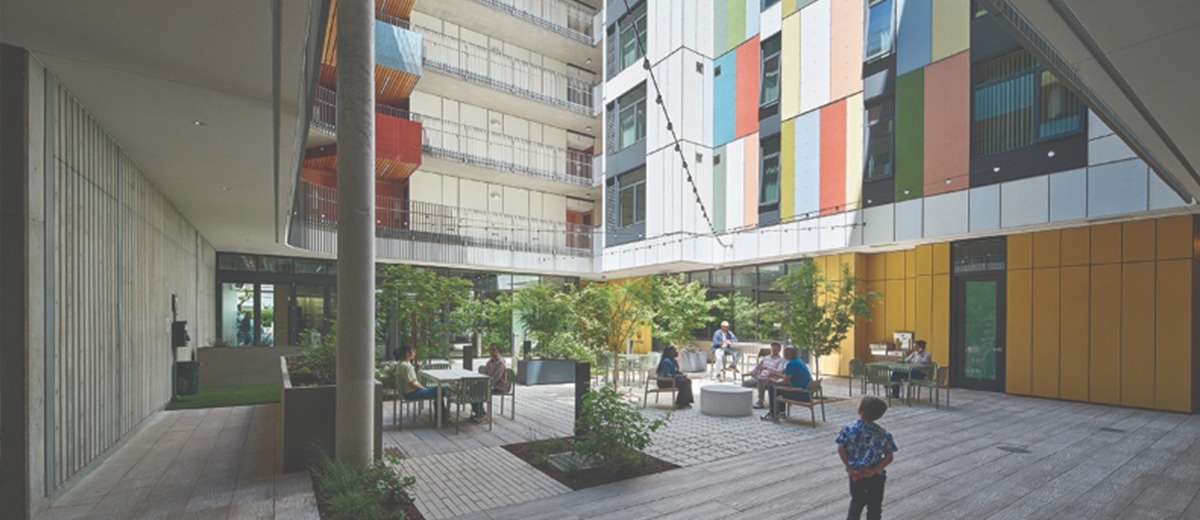
The Kelsey has two buildings in San Francisco, providing 227 homes. The aesthetic standard of The Kelsey’s developments is high: “There’s dignity in good design," says Micaela.
“There’s dignity in good design”.

It was then that Micaela decided that housing – such a fundamental part of life for every person – was the endeavour to which she would devote her energies. But she was focused on going to graduate school, and it was not part of her plan to start another organisation. She felt sure that there was a government agency or non-profit already in existence addressing the issue – she could go and work for that. But during her time at the John F. Kennedy School of Government at Harvard University, through carrying out research, case studies and site visits, she came to realise that nobody had either solved the problem or was making any big dent in it.

“That was what led me, with some pushing from my mentors, to start The Kelsey. I kept saying, ‘I don’t want to start another organisation – we have so many non-profits already.’ But what little stuff there was out there was not inclusive, not integrated, and not affordable. Hearing from different folks I respected in the housing and disability world who said, ‘Not only is this needed, but you should go do it,’ is what convinced me to pursue this path. I could see a gap, and an opportunity to build something new.”

In her last year at Harvard, Micaela developed the core idea of The Kelsey through Kennedy School’s Social Innovation and Change initiative. Her final project looked at the theory behind the entity she was formulating and how she would approach it. At Smurfit, she developed the operational side – how she would build the company, where it would be based, what its financing structure would be, what its first project might look like.

“Smurfit was where I put the business plan together,” says Micaela, “and once I graduated in 2017 I was ready to launch the business full time. Kelsey was my co-founder. We got our first round of funding in March 2018, the month she passed away.” Her time in Ireland was not all work, though, because while she was studying at Smurfit, Micaela met her future husband and fellow American, Zach. The couple now have a one-year-old son, Wicklow.

The Kelsey’s business approach is threefold: it creates its own homes, assists other projects and non-profits to develop homes through technical assistance, and enables cities and states to develop disability-forward housing through advocacy for policy change, advice on funding and direct project support. Its open-source resources, sharing development strategies, inclusive design standards and resident services models, have been utilised across the United States and further afield.

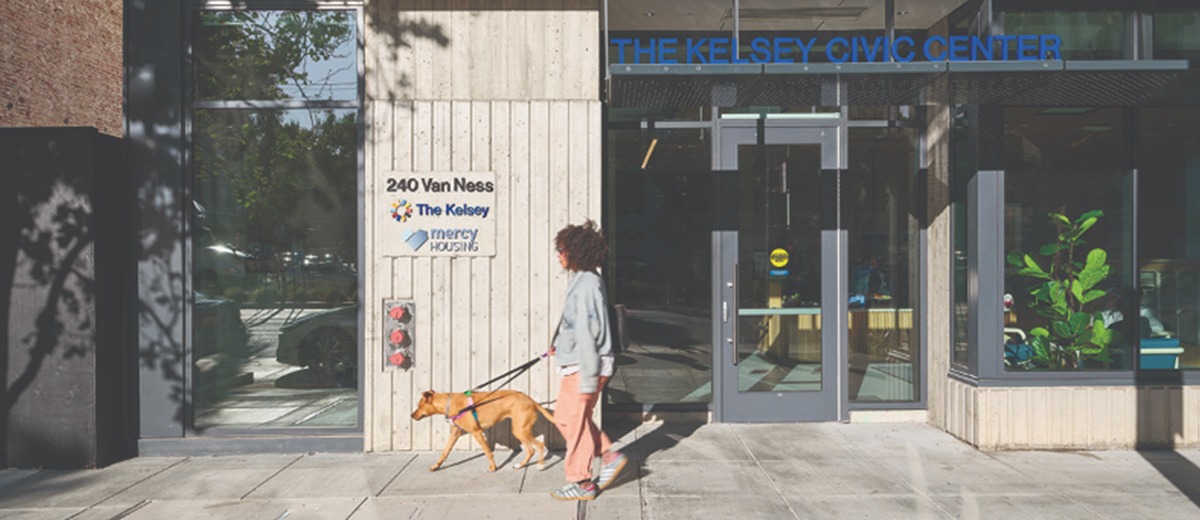
The Kelsey, San Francisco.

The Kelsey is funded through philanthropic donations and revenue earned from providing technical assistance alongside fees from developments. Each community is a separate entity, built with a mix of public and private finance, with operating expenses funded through rents. The Kelsey now has two buildings open and operating in the Bay Area of San Francisco, providing 227 homes between them. Another community is under development in Birmingham, Alabama; others are at the exploratory stage. Residents pay rent commensurate with their income, ranging from a few hundred dollars a month to a couple of thousand. Each building has an inclusion concierge to assist residents.

Notably, the aesthetic standard of The Kelsey’s developments is high. “There’s dignity in beauty and good design, and there’s also a value expression in that,” explains Micaela. “A disabled advocate who works for one of our funders says there’s a misconception that we can’t have nice things. I noticed when I toured different housing communities that the privately funded ones paid for by wealthy families were always very nice, but anything ‘affordable’ with government participation was missing the bells and whistles and the design standards were lower. Our projects are feasible, but very intentionally show that you can build beautiful, well-designed disability-forward housing that is accessible, that is affordable.

The ambition is to support 20,000 homes by 2030, touching communities across the US.

Micaela Connery

“After eight years, I think there’s now a broader acceptance of and buy-in to the concept of inclusive, affordable, and accessible housing. People know these things matter and they can happen. But I wouldn’t say the structural conditions have made it easier to create them. In the US, we are currently in a challenging policy environment. There have been some good things recently – such as the expansion of affordable housing tax credits – but set against that services for people with disabilities are more strapped and funding for public housing is more limited. Housing and construction costs are going up. So structurally on the development side things are more difficult, but systemically on the movement side, things are more opportunity-filled.”

As part of her final capstone project at Smurfit, Micaela met with some of the Irish organisations working on disability-forward housing and the affordable housing gap. She doesn’t rule out working on an integrated community housing project in Ireland in the future.

“It would be a dream to create a partnership to build something in Ireland,” she says, “I think Ireland is dealing with some of the similar questions that we have dealt with in the US around the outdated ‘care’ type of framework, building more facility-based options for adults with disabilities to solve and serve. We don’t want unintentionally to create new institutions. And there are similar dynamics in Dublin and San Francisco, given the huge growth of tech and the money that has brought to the city, but the housing crisis that followed in its wake.”

Eight years on from founding The Kelsey, Micaela says one of the aspects of the work she enjoys most is the relationship-building with partners, because it has become clear that this is the way to achieve scale. Fundraising is the most challenging, but she finds it “incredibly satisfying” when The Kelsey is successful in securing new partners who enable it to bring its work to new levels.

The ambition is to support 20,000 homes by 2030, touching communities across the US, whether that’s through homes that The Kelsey creates itself, or through providing technical assistance or support to achieve policy change, to others.

“Our hope is that in five years there is disability-forward, accessible, inclusive, affordable housing existing everywhere using The Kelsey’s approach. I hope I’m not still having to explain to people why people with disabilities should be in integrated communities with people without disabilities. We still have that discussion, and I find it exhausting and frustrating. So hopefully in five years, because of what we’ve made possible, there will be belief and understanding that people with the level of needs that Kelsey had, which were significant, can live – with supports – in community-based housing. And that’s true of people with any type of disability. My other hope is that in 2030, people just agree that affordable, accessible, and inclusive housing is the right kind of housing to build.”

Why Research Matters

From the tech in our phones to the treatment we receive in hospital, research conducted at universities makes our lives easier, healthier and safer. UCD alumni tell us, from their perspectives, how research drives innovation and policy-making

At University College Dublin, research is more than the pursuit of knowledge – it is a catalyst for real-world change that transcends disciplines and borders. Our alumni clearly demonstrate, in meaningful ways, why research matters. Through bold enquiry and collaborative endeavour, they highlight the lasting value of research and its capacity to shape a better future. Their perspectives are both inspirational and grounded, demonstrating how they are addressing society’s greatest challenges, driving economic growth, informing policy, improving health outcomes, and enriching cultural and community life. These contributions not only strengthen UCD’s reputation as a leading research-intensive university, they also deliver meaningful, measurable impact in Ireland and globally.

NAVIGATING THE LEGAL SYSTEM

Mark Garrett Director General / The Law Society of Ireland

We live in a time where uncertainty is certain, disruption constant, growth uneven. The need for an anchor – effective, trusted, legislative and regulatory change is vital for the public interest. And given current geopolitics, nothing can be taken for granted. At the Law Society, I’m clear that our research makes a positive contribution to national policy making and our working approach is twofold.

Firstly, we actively share the expertise and experience of solicitors as front-line advocates within the legal system. It helps to shape policy development at its earliest point so that complex legislation is informed and guided by practical experience and foresight. This data is collected through specialist legal committees, practitioner focus groups, case studies and direct insights. To the average observer, the Law Society contribution should be low key as it seeks only to support a workable and effective change to the legal system.

Secondly, the Law Society’s Centre for Justice and Law Reform is future-focused and is the first research centre of its kind in Ireland to conduct evidence-based research on law reform. The aim is to improve the public’s experience of the Irish justice system. The Centre considers best practice, new thinking, and stakeholder experience to ensure discourse and debate on matters facing the Irish public. Access to Justice, Economic, Social, and Cultural Rights and Evolving Legal Services are currently in focus. The most recent Summer School event brought together 200 policymakers to discuss and engage on the topic of Defending Democracy: Legal Responses to Emerging Threats.

At the Law Society, research makes a positive contribution to national policy making …

NEW FRONTIERS IN SUSTAINABLE NUTRITION

Marguerite Larkin Chief Financial Officer / Kerry Group

Research and innovation are critical drivers of future growth. Whether it be in digital technology, health sciences, or in the understanding of nutrition, new discoveries provide the impetus to our forward momentum, enabling us to live longer, healthier, and more prosperous lives.

At Kerry, we recognise and value this fundamentally important activity, and its role in advancing our purpose, to create a world of sustainable nutrition. The work undertaken by more than 1,200 Kerry scientists around the world provides the fuel for our future business growth, creating the food and beverage products of tomorrow.

Over the past ten years, Kerry has invested over €3 billion in science and technology capabilities, enabling research which has advanced our understanding in myriad ways; for example, by shedding light on how nutrition and the microbiome interact to influence cognition; how enzymes can be leveraged to lower exposures to potential dietary carcinogens; and how the power of biotechnology and precision fermentation can be harnessed to combat resource scarcity in key product categories, such as coffee and cocoa.

In order for research to thrive, it needs ultimately to be applied. Our Global Innovation Centre at Naas is home to Kerry’s global IP, and powers an international network of innovation centres to ensure that our research finds its commercial application all over the world, generating the returns needed to fund the next discoveries.

Lastly, we know too that research cannot happen without researchers – the skilled scientists and practitioners who can imagine, theorise, and demonstrate the substantive concepts that seed new science, and new possibilities. We appreciate the very important role that UCD and the third-level sector plays in creating the next generation of researchers, who will help drive us all forward.

PATIENT EXPERIENCE AND OUTCOME

Dr Cormac Farrelly / Chief Medical Officer, LaNua Medical, a NovaUCD spin-out, founded in 2024 with fellow alumni Dr Tom Fitzmaurice and Dr Eoin O’Cearbhaill, and Dr Sajjad Amiri

University research provides a critical and unique environment where multidisciplinary expertise – spanning engineering, medicine, materials science, and computer science – can converge to address complex healthcare challenges. This collaborative ecosystem actively supports academic and clinical cooperation and is therefore driven by real-world clinical challenges, ensuring that solutions are patient-centred and clinically applicable. It also fosters the discovery, development and refinement of technologies such as the innovative embolisation solutions we are working on at LaNua Medical.

Embolisation is a minimally invasive procedure that involves blocking blood vessels to treat conditions such as aneurysms, tumours, or internal bleeding. University-driven research into new embolic devices and techniques can improve patient outcomes by reducing the risk of complications, such as nontarget embolisation or post-procedure inflammation. These technical improvements can lead to clinical improvements such as shorter recovery times, lower complication rates, improved efficacy and reduced hospital stays, benefiting both patients and healthcare systems. They also open exciting possibilities for synergy with other treatments. Looking ahead, research into smart embolisation systems could further integrate embolisation with targeted cancer drug delivery, immunotherapy, gene therapy, or nanomedicine. New devices will play a key role in ensuring these advanced therapies remain localised, reducing toxicity and enhancing therapeutic impact.

Through programmes like the UCD MedTech Innovation Team and collaborations with Ireland’s national hospitals and research bodies, UCD aims to bridge the gap between laboratory research and clinical applications. The University also provides access to seed funding and enterprise initiatives through NovaUCD, encouraging commercialisation and start-up formation. These facilities and networks have inspired and supported the formation and spin-out of LaNua Medical. In short, university research is essential in driving forward safer, more effective, and less invasive medical technologies, improving patient outcomes and shaping the future of healthcare.

PREDICTING THE WEATHER

Eoin Moran / Director, Met Éireann

Ireland is increasingly experiencing more frequent and severe high-impact weather and climate events, presenting significant challenges to national resilience and wellbeing. In this context, Met Éireann’s world-class scientific expertise in meteorology and climatology stands as a vital national resource, dedicated to protecting lives and property while supporting societal wellbeing. This mission is underpinned by state-of-the-art science and technology, with Met Éireann driving progress in weather, flood, and climate prediction models, supercomputing, satellite and surface observations, and cutting-edge weather and climate research.

This work is carried out in close collaboration with leading European scientific institutions and research networks. Domestically, Met Éireann engages with Ireland’s research ecosystem primarily through its Weather and Climate Research Programme. A flagship initiative within this programme, TRANSLATE, equips Ireland for a changing climate by delivering accessible, actionable climate data to inform decision-making across sectors. This project is delivered in partnership with the Irish Centre for High-End Computing (ICHEC) and MaREI, the SFI Research Centre for Energy, Climate and Marine at University College Cork.

Met Éireann partnered with UCD in 2024 to establish a Professorship of Weather and Climate Research, with a dedicated research centre scheduled to open later this year. The launch of this pioneering role and facility seeks to integrate artificial intelligence and data science to enhance forecasting of extreme weather, flood risks, and long-term climate trends. As the challenges of a changing climate grow, Ireland’s investment in world-class weather research reflects a strong national commitment to safeguarding the future through knowledge, preparedness, and scientific excellence.

Met Éireann partnered with UCD in 2024 to establish a Professorship of Weather and Climate Research.”

A COMPLEMENTARY RELATIONSHIP

Jennifer Banim / Director General, Central Statistics Office (CSO)

The Central Statistics Office (CSO) and UCD share a complementary relationship rooted in a commitment to evidence-based research and excellence. Both institutions play key roles in advancing understanding of changes taking place in Ireland’s society and economy.

To advance this work, the CSO supports all universities with access to Research Microdata Files including, for example, UCD’s important research on Growing Up in Ireland (GUI), the National Longitudinal Study of Children. In addition, the Irish Social Science Data Archive (ISSDA), hosted at UCD, serves as a vital repository of CSO and academic data, facilitating widespread access for researchers.

UCD’s MA in Statistical Data Science is an EMOS (European Master in Official Statistics) programme and equips graduates with key skills and experiences that closely align with the needs of the CSO in its expanding role. This includes the CSO’s delivery of the National Data Infrastructure’s (NDI) standards, skills and services to utilise data as a national asset. We are proud of how our statistical outputs are used in UCD and other universities on a daily basis driving innovation, research and learning.

A HEALTHY EARLY LIFE

Dylan McMahon / Co-Founder and Co-President, with father Ross and brother Will McMahon, of Kendal Nutricare. All are UCD alumni

At Kendal Nutricare, research underpins every stage of our work, from formulation to factory floor. In early life nutrition, our Research & Development teams are constantly working to translate emerging science into meaningful innovation. Scientific evidence informs not only the nutritional profile of our products, but also the stringent quality and safety processes behind them.

We start with full-cream whole milk as our base, preserving milk fat globule membrane (MFGM) and phospholipids to better reflect the structure of breast milk and support cognitive and immune development. Our formulations include dual prebiotics (GOS and FOS) to nourish the gut microbiome, alpha-lactalbumin to optimise protein quality and digestibility, and essential fatty acids ARA and DHA to support brain and visual function. Beyond nutrition, research drives our operational standards – from microbiological safety protocols to the optimisation of spray drying for nutrient stability and manufacturing efficiency. Our facility operates with a pharmaceutical-grade mindset, where precision, hygiene and consistency are paramount.

This combination of scientific nutrition and operational excellence is central to our ability to innovate while earning the trust of healthcare professionals and parents alike.

INVESTING IN UNIVERSITIES: A BUSINESS IMPERATIVE

Anne O’Leary / Head of Meta Ireland and President, Ibec

Enterprises such as Meta, along with companies across Ibec’s membership, are experiencing an unprecedented pace of change in skill requirements. The availability of talent remains a top priority for Irish business. A high quality, engaging and dynamic education system plays a vital role in equipping society to meet the challenges of climate change, digitalisation and infrastructure development.

Universities such as UCD provide an excellent foundation. However, to ensure they remain globally competitive, it is important to address the longstanding underinvestment in the sector. Increased support will help close the gap with international peers, enhance our global reputation and strengthen our ability to attract world class research and business investment.

The recent OECD Review of Skills in Ireland highlights potential to improve workforce development and lifelong learning. By investing in people and skills, Ireland can navigate the digital and green transitions while enhancing innovation and leadership. Ibec welcomes the €4.5 billion investment in national research, including a successor to the Programme for Research in Third Level Institutions, which Ibec had long called for. This will modernise infrastructure and boost Ireland’s competitiveness in key sectors.

Alumni Relations

A community that spans the world

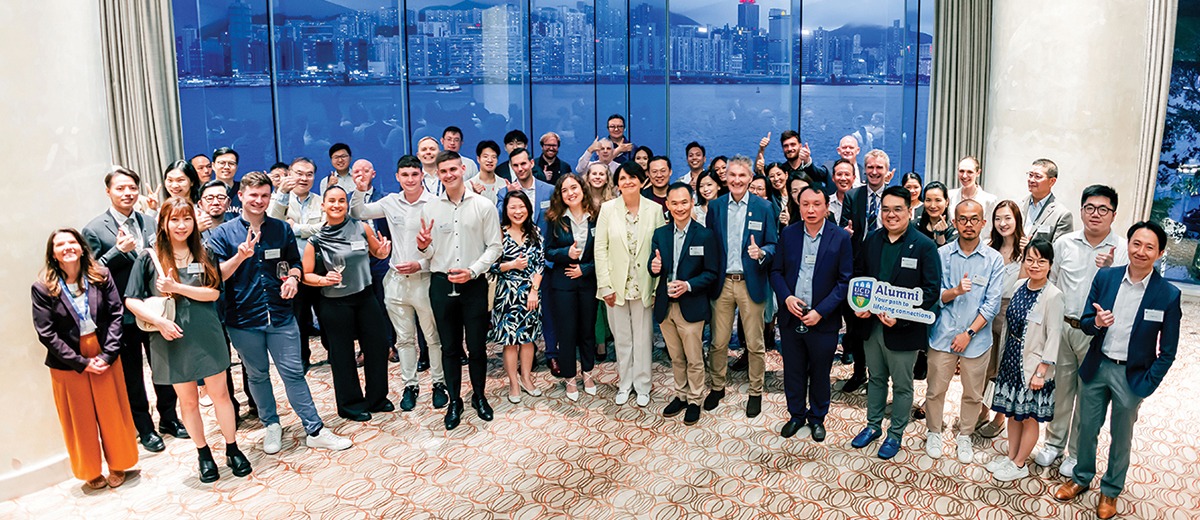
Don’t miss out on the personal and professional benefits available to you as a member of the UCD alumni community. Keep in touch with your Alumni team through LinkedIn, by phone or email, join us at overseas events, or drop in to our office on campus. Let’s stay connected!

As a UCD graduate, you’re part of a very dynamic and far-reaching global community that spans continents and careers. With alumni chapters active across Europe, North America, Asia – and more on the way – you’re never far from a vibrant network of fellow graduates who share your UCD connection.

Whether you’re settling into a new city, exploring career opportunities, or simply looking to connect, your UCD alumni chapter is here to support you. These communities host everything from casual meet-ups to career panels, mentoring, and networking events – making it easy to stay involved, wherever life takes you.

Each chapter also has its own LinkedIn group – an excellent way to stay informed, get involved, and expand your professional circle. And if you’re passionate about giving back, there are plenty of ways to contribute your time and experience while building meaningful connections.

GET INVOLVED AND STAY CONNECTED

If you have questions about the UCD alumni community, please get in touch at alumni@ucd.ie and visit www.ucd.ie/alumni/get-involved/global-community

BE IN WITH A CHANCE TO WIN

By keeping your contact details up to date, you can make the most of many opportunities available to you as a UCD graduate, while staying in touch with us in the UCD Alumni office, with the University, and with each other. If you have changed your name, location, email address, phone number, or have moved jobs, please update your details and be in with a chance to win a travel voucher worth €500. (Terms & conditions apply. Closing date: 31 October 2025)

Artist in Residence

POET AS TROUBLEMAKER

Tá Scríbhneoir Cónaitheach UCD, an file Annemarie Ní Churreáin, tar éis go leor a dhéanamh: ceardlanna a chur ar fáil do mhic léinn, d'fhoireann agus d'alumni; í féin a thumadh i gCnuasach Bhéaloideas Éireann UCD; agus campas Belfield agus a nádúr a bhaineann leis a fheiceáil…

I grew up on Cnoc na Naomh surrounded by the northwest boglands of the Donegal Gaeltacht. It was a place that encouraged me to think imaginatively about history, roots and culture. My grandmother, Mary Thaidhg, who also lived on the hill, instilled in me a great belief in oral storytelling and folklore. She was full of piseoga, leigheasanna and tall tales about her years as a domestic servant in New York. Mary taught me that language is a portal and that Gaeilge, the tongue we spoke at home, offers a uniquely rich perspective on the world. Through Mary’s scéalaíocht I developed an ear for the musicality of words and a curiosity about how that songfulness might translate onto the page. Unsurprisingly, I went on to discover poetry and I fell in love with the work of the sage Biddy Jenkinson who writes that “the poet is by profession a troublemaker. She must be independent to the point of eccentricity and is often, though not necessarily, as curst as a crow-trodden hen and as odd as one of the triple-faced monsters with which the Celts depicted Ogma the omniscient, gazing in all directions at once.”

Photo by BARRY MCCALL

In my debut poetry collection, Bloodroot, (Doire Press, 2017), I first began to tinker with personal history by peeling back the layers on family ancestry. The title poem references the story of a family member who was sent to the Castlepollard Mother and Baby Home in the 1950s and who became parted from her firstborn child for almost forty years. In my follow-up collection, The Poison Glen, (The Gallery Press, 2021), I revisited the theme of family separation, this time with a lens on the ‘missing’ child and looking to the left behind sites of former church and state industrial or ‘reform’ schools and other ‘care’ institutions.

Some poems draw directly from my girlhood experience of being raised in a family that fostered children. Altramas (the Gaeilge word for fosterage) is a concept deeply embedded into ancient Irish culture but today the practice looks very different. One of my poems remembers the day a teenager came to the family home to say a last goodbye to the baby she was about to relinquish to adoption. The first mother; the ‘ghostgirl’. It was an encounter that shifted my whole understanding of what it means to come of age in a patriarchal society.

Poetry is discovery and poems revolve out of my subconscious the way dreams revolve, slowly and over time. In the same way that speaking a dream aloud seems to alter the dream, the act of writing is, by nature, transformative. In my role as UCD/Arts Council Writer in Residence 2025, I’ve had the gift of designated time to evolve a series of new projects and to consider certain relevant questions: Cad is brí le stair fholaithe nó doiléir a scríobh? Cad iad na dúshláin? Cad iad na freagrachtaí? What does it mean to write hidden or obscured histories? What are the challenges? What are the responsibilities? These questions have been greatly nourished by the time spent with university students, staff and alumni through a series of public workshops titled Poet as Troublemaker. Through these tailored poetry workshops I’ve encouraged participants to think of themselves as witness to family stories, social histories, and the living culture of folklore, magic and the Otherworld. Together we’ve opened up conversations about the place of witnessing in Irish literature, and looked at the history of the Irish filidh. We’ve untangled the difficulties of writing trauma, hurt and social injustice, and embraced the possibilities of working with native rituals and ceremonies passed to us ó ghlúin go glúin.

When I began my residency term in January, I was given a spacious writing desk and a large, clear window in the Newman Building that overlooks the leafy campus. Amazed I was to watch the trees come into full bloom. Still, I am often to be found in the dark corners of the UCD National Folklore Collection, buried in the treasure trove of their books, handwritten manuscripts, audio recordings, videos and photographs, drawings and paintings. The National Folklore Collection is one of the largest collections of folklore material in the world and the mere, papery smell of the rooms never fails to thrill me. Truly, I could not have dreamed of a better location to develop my latest poetry collection ‘A Hymn to All the Restless Girls’ (due in November 2025 with The Gallery Press). These poems celebrate the girl who appears to be an outsider – the rebel, the truth speaker and the one who is, often, necessarily a troublemaker. She is the kind of girl who is always questioning and searching. In some poems she takes the figure of Mary Thaidhg, in others she is recognisable as public figures from Irish history or mythology. The book’s title is inspired by A Restless Life, the autobiography of the late poet and novelist Leland Bardwell, and many of these poems in this third collection are carefully hand-stitched with folklore, Gaeilge words and the atmosphere of rural living. The book features a long poem titled ‘Raven lore for a Restless Girl‘, which weaves together elements of ‘fiachaireacht’ (the art of watching the ravens for omens) with snippets of material pulled from cabinets of the National Folklore Collection.

Like most poets, I am often working on several projects at once. In addition to the delivery of workshops, poetry readings and one-to-one mentoring, I am developing a new opera libretto titled The Curing Line for Straymaker, a new company led by Irish composer Michael Gallen. Tá an ceoldráma bunaithe ar ár dtaighde leanúnach ar thraidisiúin dhúchasacha na hÉireann maidir le “leigheasanna a dhéanamh”. Leanann sé téamaí an leighis, an bháis, agus an tobchliste comhshaoil, trí scéal a phléann, agus muid ag smaoineamh gur rudaí éagsúla iad beatha an duine agus an timpeallacht, go bhfuil ag teip ar an tsochaí a admháil go bhfuil bunchodanna dínn féin agus dár gcultúr ag dul in éag.

Mar chuid den obair seo, bhain mé taitneamh as daoine a chur faoi agallamh; daoine a bhfuil leigheasanna teaghlaigh faighte acu le haghaidh tinnis ar nós fuiliú, asma, faithní agus craosghalar srl. B’aistear thar a bheith suimiúil é agus tríd an tionscadal seo chuaigh mé i muinín mo chreideamh i dtraidisiún rúndiamhair agus muirneach. Arna choimisiúnú ag Centre Culturel Irlandais Paris, tá an ceoldráma léirithe ag Straymaker i gcomhar le Féile Ealaíon Chill Chainnigh, Miroirs Étendus, Once Off Productions agus Féile Ceoldrámaíochta Chóbanhávan. Tá Duais Fedora, an duais cheoldráma is mó ar domhan, buaite ag The Curing Line cheana féin, agus beidh sé ar stáitse den chéad uair ag Féile Ealaíne Chill Chainnigh i mí Lúnasa 2026 sula dtéann sé ar camchuairt in Éirinn agus go hidirnáisiúnta sa bhiaiste in 2026/27.

The UCD/Arts Council residency has offered me a year to ground my practice in what I love to do. Is aoibhinn liom ceardaíocht agus rúndiamhair na filíochta. Is breá liom an t-idirphlé a eascraíonn as comhoibriú cruthaitheach. Is breá liom an ‘immram’ nó an turas isteach go dtí an Saol Eile agus a bheith le filí atá ag teacht chun cinn ar an gcéad aistear i dtreo an leathanaigh. I have benefited hugely from the exposure at UCD to world-class scholarship, expertise and research. Last spring I was lucky enough to take several of the UCD Earth Institute campus walks where among other things I learned about ‘Hanami’, the Japanese traditional custom dedicated to admiring the blooms of cherry trees. What a gift it has been to write on a campus full of wildflowers and in the presence of lakes, ducks, swans; to be thinking and dreaming alongside a diverse community. As a child I watched my father cut turf and work on fishing trawlers as my mother’s knitting circle made Aran jumpers to order. Making was a way of being in relationship and, contrary to what many believe, even poetry does not get made in isolation. It has been extraordinarily energising to be here, in this environment, where making in collective spaces is embodied and valued. I love being here with the ordinary ritual of making a poem from scratch; of being with that lovely labour of wrestling with an image, a sentence, a word. Poetry is a way of sitting with uncertainty. Bíonn tú i gcónaí ag dul sa tseans. Caithfidh tú tosú sa dorchadas gan aon rud a bheith ar eolas agat agus ligean duit féin a bheith saor.

Annemarie Ní Churreáin is the UCD/Arts Council Writer in Residence. She is the current poetry editor at The Stinging Fly Magazine. Visit studiotwentyfive.com

A Hymn to All the Restless Girls

On this anniversary of The Irish State better instead to celebrate a restless girl.
A restless girl speaks the language of a birch.
A restless girl can besmirch a priest in a flash.
A restless girl takes a splash of whiskey before noon.
The skin of a restless girl smells of gunfire and wolves.
Often a restless girl will ask if not now, when?
Many restless girls fall asleep in the sun.
One restless girl had to be pinned down by six men.
Another restless girl tore up an image of the pope.
A restless girl may disguise herself as a stone.
Sometimes a pale horse will take a restless girl away in the night.
The underslip of a restless girl should not be washed; it should be burned.
When leaving a room first check the corpse of a restless girl has not sprung alive behind your back.
Best always to bury a restless girl in the wettest, darkest earth.
It has been said that a restless girl once returned to haunt an innocent man.
A whole town can be fouled by one restless girl.
But see how the restless girl shimmers in the razor-light of a Scots pine.
See how she sweetens the air like hawthorn.
The restless girl belongs to us as fox belongs to moon.
The fact is the restless girl has been, for us, a constitution.
On public occasions we wear a necklace from which the ornament of her cut tongue hangs.
If the last restless girl ends up drowned, or turned to ash, or trapped inside a horse-haired wall, what then?
What then?

HONOURING SUCCESS AND GLOBAL IMPACT

UCD Alumni Awards 2025 celebrate excellence that resonates worldwide

This year marks the 12th anniversary of the UCD Alumni Awards – an annual celebration of the extraordinary accomplishments of our alumni community. Since their inception in 2014, the Awards have recognised individuals who exemplify excellence and embody the values of UCD through their work and contributions to society. Each year, these honours spotlight alumni who have made a significant impact across a wide range of fields – including business, industry, healthcare, science, culture, sport, and the arts. With a global alumni network of over 334,000 in 184 countries, awardees are selected from a highly competitive pool, chosen for their ambition, innovation, and global influence. The UCD Alumni Awards not only pay tribute to the achievements of our most distinguished graduates but also serve to inspire the next generation – highlighting the enduring legacy and global reach of the UCD community.

BUSINESS AWARD

AIMEE CONNOLLY / BComm International 2015

Aimee Connolly is one of Ireland’s most recognisable and loved beauty entrepreneurs. Before founding her award-winning beauty brand, Sculpted by Aimee, at the age of 23, she gained invaluable experience working in the beauty industry, crafting her trade whilst completing a first-class honours BComm International degree in UCD.

Sculpted by Aimee is now one of the fastest growing Irish beauty brands in the market. The business is rooted in great quality products that make make-up easy, and its community feel amazing. The company currently employs more than 100 people and is well on its way to becoming a globally recognised brand, with major expansions happening across the UK market at pace. Sculpted by Aimee now has stores in Dublin, Kildare, Belfast and London.

Aimee has won numerous awards, including IMAGE PwC Businesswoman of the Year 2025, a Business & Finance Elevation Award 2024, and an EY Entrepreneur of the Year Award 2021. She now sits on the EY Entrepreneur of the Year judging panel. Sculpted by Aimee was named as one of the BeautyMatter Future50 brands shaping the face of global beauty.

SOCIAL SCIENCES AWARD

PAUL O’BRIEN / BA Philosophy and Economics 1989

In April 2021 Paul O’Brien was appointed Executive Director of Amnesty International USA, a human rights organisation of 240,000 members and 125 staff. He had previously co-led Oxfam’s worldwide advocacy efforts during the Covid pandemic and led Oxfam America’s advocacy work with the US government and US corporations.
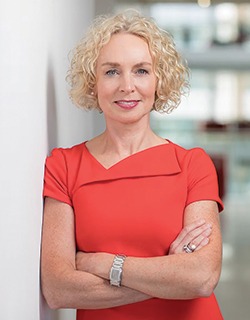
Over his career, Paul has worked on human rights research and advocacy in more than 50 countries, including most recently Mexico, Israel, Gaza and the West Bank. He lived in Africa for 10 years, working for local and international organisations, and spent five years in Afghanistan. He was previously an advisor to the President of Afghanistan, the Africa Policy Advisor for CARE, an organiser in Nairobi’s informal urban settlements, and President of Echoing Green, a global non-profit that uses venture philanthropy principles to support social entrepreneurs. Paul holds a Juris Doctor (JD) from Harvard Law School and previously worked as a litigator in New York for Cravath, Swaine & Moore LLP. His book, Power Switch: How We Can Reverse Extreme Inequality, was published in 2020.

HEALTH AND AGRICULTURAL SCIENCES AWARD

DR PETER J. TIMONEY / MVB 1964

Through his visionary leadership and pioneering research, Dr Peter J. Timoney has had a profound global impact on equine veterinary science. He is an internationally acclaimed expert in equine infectious diseases and has made significant contributions to improving global practices in equine health and disease management. He has published extensively in the field, including on equine viral arteritis, contagious equine metritis, equine herpesviruses and equine encephalomyelitis. He is past president of the World Equine Veterinary Association, currently serves on the World Organisation for Animal Health International Horse Sports Confederation Technical Committee, and held research and academic appointments at the Irish Department of Agriculture Veterinary Research Laboratory, the Irish Equine Centre, and Cornell University, before joining the faculty in the Department of Veterinary Science at the University of Kentucky in 1983. He was appointed Director of the Maxwell H. Gluck Equine Research Centre in 1989 and held the Frederick Van Lennep Endowed Chair in Equine Veterinary Science from 1988 until his retirement in 2022.

Peter was inducted into the University of Kentucky Gluck Equine Research Hall of Fame in 2009, and in 2022 he was awarded the Kentucky Thoroughbred Association’s Lifetime Achievement Award in recognition of his service and steadfast commitment to equine health.

LAW AWARD

SARAH KEANE / BCL 1995, LLM 1996

As the first Chief Executive Officer of Swim Ireland, a position she has held since 2004, Sarah Keane has played a pivotal role in the modernisation of the organisation and the development of swimming, water polo, diving and other aquatic disciplines in Ireland. In 2017 she became the first female President of the Olympic Federation of Ireland (OFI), and was reappointed in 2020. She stepped down from the role in December 2024 after leading the OFI to Ireland’s most successful Olympic Games ever in Paris 2024.

Sarah is actively involved in global and national sports governance and sits on the government-appointed Leadership Group for the implementation of the National Sports Policy. She is a committed advocate for Gender Equality, Diversity and Inclusion and is currently Chair of the first European Aquatics DEI Committee.

A qualified solicitor with a degree in law, a masters in commercial law and diplomas in corporate and financial management, Sarah was an Associate Partner in Matheson law firm. She was appointed to the Central Bank of Ireland Commission in 2020 and continues in that role today.

ARTS AND HUMANITIES AWARD

DR EMILY O’REILLY / BA 1979, Honorary Doctorate of Laws 2014

Dr Emily O’Reilly was the Ombudsman and Information Commissioner for Ireland from 2003 to 2013. Her outstanding success in this role was reflected in her election to the post of European Ombudsman by the European Parliament in 2013, and she completed her third and final term in office in early 2025. She has made an extraordinary impact as a defender of human rights and a fearless advocate for transparency and accountability in public bodies and government agencies. She has demonstrated an unwavering commitment to protecting the rights of individuals, increasing public access to information, and upholding the values of the EU.

Emily began her career as a political journalist and has won multiple awards for both her journalism and advocacy work. She has held senior positions with The Irish Press and The Sunday Tribune as well as serving as a political columnist at The Sunday Times and as the Political Editor of the Sunday Business Post. She was awarded a prestigious Nieman Fellowship in Journalism from Harvard University in 1987. She is the author of three books: Candidate: The Truth Behind the Presidential Campaign (1991), Masterminds of the Right (1992), and Veronica Guerin (1998).

ENGINEERING AND ARCHITECTURE AWARD

NIALL MC LAUGHLIN / BArch 1984

Award-winning architect Niall McLaughlin is Professor of Architectural Practice at the Bartlett School of Architecture, University College London. After graduating from UCD he worked with Scott Tallon Walker, before establishing his own practice in London in 1990. He designs buildings for education, culture, health, religious worship and housing.

Niall won Young British Architect of the Year in 1998 and received the RIBA Charles Jencks Award for Simultaneous Contribution to Theory and Practice in 2016. He exhibited in the Venice Biennale in 2016 and 2018 and won the RIBA Stirling Prize in 2022 for The New Library, Magdalene College, having previously been shortlisted for the prize in 2013, 2015 and 2018. Other significant projects include West Court Jesus College (Cambridge 2017), Auckland Tower & Faith Museum (Bishop Auckland 2020) and the International Rugby Experience (Limerick 2022). Niall was elected an Aosdána Member for Outstanding Contribution to the Arts in Ireland and as a Royal Academician in the Category of Architecture in 2019. In 2020 he was awarded an Honorary MBE for Services to Architecture. Niall was a visiting professor at the University of California Los Angeles in 2012-2013 and was appointed Lord Norman Foster Visiting Professor of Architecture at Yale for 2014-2015.

SPORTS AWARD

LOUISE QUINN / BSc 2011

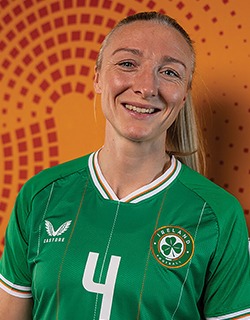
Louise Quinn is the former vice-captain of the Republic of Ireland women’s national football team. In her 17-year career playing at international level, she earned 121 caps playing for Ireland and gained a reputation as a brilliant defender, an outstanding leader and an excellent ambassador for women’s football. She joined the Dublin club Peamount United in 2004 and became the club captain at 16 years old. The club won the FAI Women’s Cup final in 2010 and the 2011-2012 Women’s National League under her captaincy. Louise is one of four players to score a European hat-trick in the UEFA Women’s Champions League. She moved to Swedish club Eskilstuna in 2013 and later played for Notts County, Arsenal, ACF Fiorentina and Birmingham City. Louise was awarded a Football Association of Ireland scholarship to UCD and graduated in 2011 with a degree in Sports and Exercise Management. She was named the FAI Senior Women’s International Player of the Year in 2013 and again in 2019. She played the full 90 minutes in all three games at the 2023 FIFA Women’s World Cup and is currently fourth on the WNT All-Time Top Scorer List with 16 goals, 15 of which were headers. Louise announced her retirement from professional football in April 2025.

RESEARCH, INNOVATION AND IMPACT AWARD

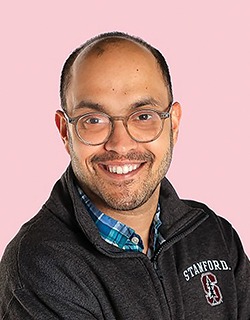
DR SHOURJYA SANYAL / GradCert Innovation, Entrepreneurship and Enterprise 2013, PhD 2017

A physicist turned innovation strategist, Dr Shourjya Sanyal is at the forefront of AI-driven transformation for the benefit of business and society. He has spent over 15 years bridging deep tech, healthcare innovation, and enterprise AI across the US and Europe, earning a string of awards, including the European C-Voucher for Circular Economy and the Luminate Award in New York.

Shourjya is the founder of Think Biosolution, a Dublin-based digital health company, and Voice Health, an AI-powered virtual medical receptionist platform, now serving clinics across the US. He is currently Head of Artificial Intelligence/Machine Learning at UNUM Ireland, a Fortune 250 insurance provider, where he drives strategic AI initiatives delivering over $100 million in enterprise value.

Shourjya has served as an advisor to the World Health Organization’s Digital Health Board and is a member of the Harvard Business Review Advisory Council. A committed voice for responsible AI and innovation equity, he believes that the true challenge lies not just in deploying intelligent systems, but in aligning them with regulatory, ethical and human values. His work continues to shape how businesses leverage AI to improve access, accuracy and agility across sectors like healthcare, insurance and education.

SCIENCE AWARD

DR ÚNA MCCARTHY-FAKHRY / BSc 1998

Dr Úna McCarthy-Fakhry is an international STEM education specialist and a passionate advocate for women and girls in STEM. She has worked in diverse roles in research, public administration, and international development. Currently based at UNESCO in Paris, Úna leads global efforts to strengthen girls’ participation, learning, and retention in STEM.

Her work spans Africa, Asia, and Latin America, and centres on ensuring all learners, regardless of gender or background, can build STEM literacy and thrive in an increasingly digital world.

A core principle of Úna’s work is her human-centred approach, reflected in national and regional initiatives that advance equity and inclusion. In Cambodia, she led the Annual Cambodia STEM Festival, founded STEM Sisters Cambodia, and supported the Cambodian government in developing a national STEM education strategy through her work with the Asian Development Bank. In Africa, she contributed to World Bank research, evaluated gender-responsive teacher training programmes, and is currently supporting a project focused on closing the digital divide through inclusive digital education. Úna received the Girls in STEM Award 2020 from Juniper Networks and was named in the 2021 Leading Lights Asia Pacific Kindness and Leadership Awards.

IS FEARR GAEILGE BRISTE NÁ BÉARLA CLISTE

UCD alumni, staff and students are keeping the Irish language beo agus ábhartha for a modern audience

Fis a bhí físeán margaíochta á dhéanamh aige don MA Scríobh & Cumarsáid na Gaeilge iUCD – cúrsa atá dírithe ar shainscileanna teanga a sholáthar do Mhic Léinn chun tabhairt faoi phostanna le Gaeilge, cosúil le haistriúcháin, eagarthóireacht, scríbhneoireacht chruthaitheach, iriseoireacht, agus na meáin – tháinig an Dr Cathal Billings, Ollamh Cúnta i Scoil na Gaeilge, an Léinn Cheiltigh agus an Bhéaloidis UCD, ar smaoineamh do thionscnamh pobalbhunaithe chun rannpháirtíocht i dteanga na Gaeilge a chothú.

“D’iarramar ar dhaoine an focal Gaeilge is fearr leo a lua. Bhí na freagraí tugtha chomh suimiúil, pearsanta, agus greannmhar sin go rabhamar ag iarraidh iad roinnt leis an bpobal. Mar sin, chuimhníomar ar ‘Fave Focal Wall UCD’ a dhéanamh in Áras Newman UCD. Chuireamar fáilte roimh dhaoine – cuir i gcás mic léinn, baill foirne, alumnas – an focal Gaeilge is fearr leo a scríobh ar chlár bán. Ba choincheap sách simplí é, ach spreag sé caidreamh dearfach leis an nGaeilge.”

“Bhí cuid de na focail roghnaithe ag daoine bunaithe ar an taithí a bhí acu leis an nGaeilge agus iad ar scoil. Scríobh duine amháin ‘leadránach’, agus scríobh duine eile ‘an bhfuil cead agam dul go dtí an leithreas’. Freisin, rinne duine tagairt do Chluastuiscint na hArdteiste nuair a scríobh siad “Léigh anois go cúramach, ar do scrúdpháipéar, na ceisteanna agus na treoracha a ghabhann le cuid A … bííííp”. Bhí baint ag cuid de na focail roghanithe le coláistí samhraidh sna Gaeltachtaí; mar shampla, luaigh duine ‘Ballaí Luimní’ – ainm damhsa ag céilithe. Bhí baint ag cúpla focal eile le féiniúlacht phearsanta nó féiniúlacht áitiúla, mar shampla: ‘bród, ‘bródúil’, agus ‘aerach’.”

“Tá an-chuid dár stair le feiceáil i logainmneacha na tíre” arsa an Dr Bilings. “Mar shampla, scríobhadh ‘Tír Chonaill’ agus ‘Dún na nGall’ ar an gclár bán, ainmneacha difriúla ar an gceantar céanna. Tagraíonn ‘Tír Chonaill’ do chóras ceannais dúchasach agus léiríonn ‘Dún na nGall’ (‘Fort of the Foreigners’) conas a tháinig athrú ar struchtúr poilitíochta na tíre seo. Go minic, ní bhíonn sna logainmneacha Béarla ach fuaimeanna, ach bíonn ciall leo sa Ghaeilge.

Is alumnas de chuid UCD é Manchán Magan (BA Gaeilge & Stair 1991), a raibh leabhar sárdhíola i 2020 aige, dar teideal 32 Words for Field, a phléann an nasc idir focail Ghaeilge atá fréamhaithe sa tírdhreach agus dár stair choiteann. Tarraingíonn Manchán aird ar an gcaoi a chuirtear ar ár suaimhneas muid nuair a mheabhraítear dúinn nach bhfuil ionann ach lúb sa slabhra i gcúltúr a théann siar na mílte bliain. Braitear an suaimhneas seo go háirithe nuair atá an oiread sin daoine ann ar domhan a bhfuil imní orthu faoin todhchaí. “Tá neart dúinn sa tóir ar nasc níos doimhne le rudaí tábhachtacha na laethanta seo – an tír, ár sinsir, nó an cultúr agus an oidhreacht óna dtagaimid. Bhí nasc láidir ag ár sinsir leis an tír, na séasúir, agus an t-alltar draíochtúil a cheapamar go raibh mórthimpeall orainn tráth.”

Bhí baint ag neart de na focail Gaeilge scríofa ar an gclár bán don ‘Fave Focal Wall UCD’ le hainmhithe agus leis an dúlra. Is cosúil go raibh siad roghnaithe ag daoine mar gheall ar shanasaíocht na bhfocal, nó cad as a dtáinig siad. Bhí ‘smugairle róin’ (‘jellyfish’) luaite go minic, mar shampla. Nuair a aistrítear an téarma seo go Béarla focal ar fhocal, cialaíonn sé “Spit (smugairle) from a Seal (róin)’. Freisin, bhí ‘Bóín Dé’ (‘ladybird’) luaite; téarma a chilaíonn “Little Cow (bóín) of God (Dé) sa bhrí litiúil. Má bhíonn tuiscint againn ar shanasaíocht focail, d’fhéadfadh sé cuidiú linn feasacht éiceolaíochta a chothú, freisin”, a dúirt an Dr Billings.

“Is iomaí focal Gaeilge a bhfuil baint aici leis an nádúr. Mar shampla, murach na focail ‘fraoch’ (heather) agus ‘luachra’ (rush), ní bheadh ‘cearc fraoigh’ (the hen of the heather) againn ar grousse ná ‘earc luachra’ (lizard of the rush) ar newt. I gcomparáid le teangacha eile, tá bua ar leith ag an nGaeilge maidir le téarmaíocht a bhfuil baint aici leis an dúlra, cúrsaí talmhaíochta, iascaireacht, an tírdhreach, ná an aimsir. Léiríonn sé seo an dlúthnasc atá ann idir an cine daonna, an tír, agus an domhan mórthimpeall orainn.”

Ag deireadh an 19ú haois, theip ar Athbheochan na Gaeilge an fhís a bhí ann chun an Ghaeilge bheith mar theanga an phobail a bhaint amach. Sin ráite, áfach, tháinig athrú ar mheon na ndaoine maidir leis an nGaeilge; bhí ról lárnach tugtha don Gaeilge i struchtúir an stáit nua ó 1922 ar aghaidh.

“Bhí drochthaithí ag an-chuid daoine leis na nGaeilge agus iad ar scoil. Chuir sé le meon diúltach a bhí ann don teanga, dá bharr”, a dúirt an Dr Billings, a bhain amach BA, MA, agus PhD i UCD. “Creidim go bhfuil meon dearfach i leith na Gaeilge ag daoine go fóill – Mar shampla, tá méadú tagtha ar an éileamh don oideachas trí mheán na Gaeilge sna Gaelscoileanna. Freisin, tá spéis ag níos mó daoine an Ghaeilge a fhoglaim tar éis dóibh an t-oideachas foirmiúil a chur i gcrích.”

Treisíonn an leasú ó 2021 ar Acht na dTeangacha stádas na Gaeilge mar phríomhtheanga an Stáit agus cruthaíonn sé deiseanna fostaíochta ar fud na hearnála poiblí. Feictear agus cloistear tionchar an Achta gach lá sna meáin chlóite agus sna meáin chraolta, agus braitear anois go bhfuil ról tábhachtach ag an nGaeilge sa lá atá inniu ann. Mar shampla, bhí An Cailín Ciúin ar an gcéad fadscannán a bhain áit amach ar an ngearrliosta do na hainmniúcháin don Ghradam Oscar don Fhadscannán Idirnáisiúnta is Fearr. Tá amhrán ag Hozier dar teideal ‘Uiscefhuaraithe’ – téarma nach féidir a aistriú go Béarla go gonta ach a chialaíonn ‘rud atá déanta fuar ag uisce’. Freisin, tá leagan iomlán Gaeilge den amhrán ‘Heroes or Ghosts’, dar teideal ‘Taibhsí nó Laochra’ ag an mbanna ceoil The Corona’s. Tá neart amhráin Gaeilge cumtha ag an tríréad hip-hop, Kneecap, le déanaí.

Thug an dearthóir faisin, Róisín Pierce, ‘Mná i Bhláth’ agus ‘Bláthanna Fiáin’ ar a bailiúchán mór le rá. Bhí aistriúchán Gaeilge curtha san áireamh ag Seán McGirr, stiúrthóir cruthaitheach an lipéid Alexander McQueen, nuair a bhí a chéad bhailiúchán faisin don ardán taispeána á sheoladh aige.

“Feictear go bhfuil níos mó deiseanna ná riamh ann dóibh siúd a bhfuil caighdeán ard bainte amach acu sa Ghaeilge. 20 bliain ó shin, nuair a thosaigh mé mo chéim, bhí an chuma ar an scéal gurbh í an mhúinteoireacht an t-aon rogha a bhí ann ó thaobh gairme de. Anois, áfach, tá neart cairde, comhscoláirí, agus iar mhic léinn de mo chuid, tar éis gairmeacha ráthúla bheith acu mar aistritheoirí, dlítheangeolaithe, scríbhneoirí, eagarthóirí, taighdeoirí, léachtóirí, agus státseirbhísigh,” a dúirt an Dr Billings.

Tagann an-chuid Gaeilgeoirí ó chúlraí éagsúla, ní hamháin in Éirinn ach thar lear chomh maith. Tacaíonn siad leis an nGaeilge. Is sampla maith é an Dr Fangzhe Qiu, Ollamh Comhlach i Scoil na Gaeilge, an Léinn Cheiltigh agus an Bhéaloidis UCD. Ní cainteoir dúchais é an Dr Qiu, ach tá an-dámh aige don Ghaeilge agus tá dearcadh ar leith aige uirthi.

“Is teanga neamhghnách í an Ghaeilge ó thaobh struchtúir de, a bhfuil traidisiún liteartha láidir aici a théann siar 1,300 bliain.” Dar leis an Dr Qiu, is é an bealach is fearr chun daoine a mhealladh a gcuid Gaeilge a úsáid ar bhonn laethúil ná a chinntiú go bhfuil sí “ábhartha agus luachmhar” sa chomhthéacs.

“Cosúil le gach teanga eile, is iomaí rud gur féidir a léiriú go cruinn sa teanga dhúchais amháin. Mar shampla, ní hionann ‘Bíodh an rath ort’ ná ‘slí na fírinne’ agus a leithéidí sa Bhéarla.” Tá téarmaí ann sa Ghaeilge nach bhfuil gá le haistriú. Feictear an nós seo ar fud na cruinne. Mar shampla, baineann na Moslamaigh leas as phrásaí as Araibis, agus bhain mo sheanmháthair leas as an Malaeise chun a hoidis a mhúineadh dúinn. Sa chás sin, ní féidir ‘sambal’ ná ‘kuey teow’ a rá ar bhealach difriúil.”

Tuigtear don Dr Qiu go mbeidh todhchaí na Gaeilge ag brath ar fhoghlaimeoirí ó thíortha eile.

“Ba cheart go mbeadh an Ghaeilge neamhspleách ón náisiúnachas agus ba cheart go mbeadh sí ar fáil d’foghlaimeoirí ar fud na cruinne. Mar shampla, tá líon na ndaoine atá foghlaim Gaeilge ar DuoLingo níos airde ná líon na nGaeilgeoirí ar domhan.”

Más rud é go bhfuil spéis ag duine feabhas a chur ar a chuid Gaeilge, luann an Dr Billings go bhfuil níos mó deiseanna agus bealaí ann chun í a fhoghlaim ná riamh.

Éist le podchraoladh (is alumnae de chuid UCD iad na láithreoirí ar na podchraoltaí iontacha (‘How to Gael’ agus ‘Beo ar Éigin’). Bíodh Gaeilgeoirí dhíograiseacha á leanúint agat ar na meáin shóisialta, nó féach ar na deiseanna foghlama atá ar fáil i UCD.

Fiú mura bhfuil ach cúpla focal agat, is amhlaidh is saibhre a bheith do shaol dá bharr.

The Rise of the Cúpla Focal

When Dr Cathal Billings, Assistant Professor at the School of Irish, Celtic Studies and Folklore, was creating a marketing video for the MA Scríobh agus Cumarsáid (Writing and Communications) programme at UCD, aimed at providing students with the advanced language skills required for jobs in Irish, including translation, editing, creative writing, journalism and media, he stumbled across an idea for a community-based initiative to encourage engagement with the Irish language.

“We asked contributors to name their favourite word in Irish. The answers were so interesting, personal and funny, we wanted to make use of the material, so we created the Fave Focal wall in the Arts/Newman building at UCD, with all passers-by – students, staff, alumni – encouraged to write their favourite Irish word on the wall. It was a really simple, but positive interaction with Irish.”

Some words chosen reflected experiences people had of Irish at school, he says: “One wrote ‘leadránach’, another ‘an bhfuil cead agam dul go dtí an leithreas’, and another referenced the Leaving Cert aural exams with ‘Léigh anois go cúramach na ceisteanna agus na treoracha a ghabhann le cuid A… bííííp’. Some entries referred to the impact of Gaeltacht summers on students (the ‘Ballaí Luimní’ dance at nightly Céilithe included). Others related to personal or local identity, with words such as ‘bród’ (pride), ‘bródúil’ (proud) and ‘aerach’ (gay).

“So much of our history can be read in our placenames,” says Dr Billings, “For example, both ‘Tír Chonaill’ and ‘Dún na nGall’ were written on the wall, both referencing Donegal. One – Tír Chonaill – reflects the native ruling system and the other – Dún na nGall/Fort of the Foreigners – shows how the political structure of our country changed in time. Our placenames in English are often just sounds, but in Irish they have meaning.”

UCD alumnus Manchán Magan (BA Irish and History 1991), whose 2020 international bestseller, 32 Words for Field, explored how the rich rooted-in-landscape nature of Irish words gives us clues to our collective past, points out that in an increasingly globalised world, where so many of us can feel uncertain about the future, it can be reassuring to acknowledge that we are the current iteration of a culture that goes back many thousands of years. “So many of us are seeking a deeper connection with something meaningful these days – the land, our ancestors, or the culture and heritage from which we arise. Our ancestors were deeply rooted to the land, the seasons, and the magical Otherworld that we once believed was all around us.”

Many of the words on UCD’s Fave Focal wall related to animals and the natural world, and their etymology, or underlying meaning, is probably what made them stick with the people who chose them. ‘Smugairle róin’, meaning jellyfish, featured a lot, for example. It means literally ‘seal spit’, and you can really imagine a jellyfish lying on the shore. Bóín Dé featured too, which is Irish for ladybird but literally means ‘God’s Little Cow’.

Understanding the etymology of words can help with nurturing ecological awareness too, says Dr Billings: “‘Grouse in Irish is ‘cearc fraoigh’, or hen of the heather, while a newt is ‘earc luachra’, or lizard of the reeds – without the heather or the reeds, we won’t have the grouse or the newt. Irish as a language is particularly rich in terms relating to the natural world, agriculture, fishing, landscape, the weather, for example, which reflects our close connection as a people to the land and the elements.”

The revival of Irish in the late 19th century failed in its mission to make Irish the vernacular of the Irish people, but it did change people’s attitude to the language. This change in attitude resulted in Irish being given a central role in the structures of the new state from 1922 on.

“The way Irish was taught in the intervening years – often with the stick rather than the carrot – resulted in many people taking a negative stance towards the language,” says Dr Billings, who did his BA, MA and PhD at UCD. “But I think a positive attitude towards Irish persists, reflected in the increased demand for immersive Irish education in Gaelscoileanna, for example, and in the amount of people taking an interest in learning Irish after completing their formal education.”

The 2021 amendment to the Official Languages Act underpins the status of Irish as the first official language of the state and creates job opportunities across the public sector. The impact of the Act can be seen and heard every day, in print and broadcast media, and contributes to the idea that Irish is an important part of modern life.

Colm Bairéad’s An Cailín Ciúin became the first Irish-language film to be shortlisted for an Oscar in the Best International Feature Film category. Hozier’s ‘Uiscefhuaraithe’ is inspired by the untranslatable meaning of its title: ‘something that has been made cold by water’. The Coronas’ Taibhsí nó Laochra (a translation of their song ‘Heroes or Ghosts’) is written entirely in Irish, as are many recent hits from Belfast hip-hop trio Kneecap. Fashion designer Róisín Pierce named her acclaimed collections Mná i Bhláth and Bláthanna Fiáin, and Creative Director of Alexander McQueen, Seán McGirr included Irish translations in the introduction for the livestream of his debut runway collection.

“For those who bring their Irish to a high level,” says Dr Billings, “there are more employment opportunities than ever before. When I started my degree 20 years ago it seemed teaching was the only career path for graduates of Irish, but since then friends, classmates and students of mine have made successful careers as translators, lawyer-linguists, writers, journalists, editors, researchers, lecturers and civil servants.”

Irish as a language is particularly rich in terms relating to the natural world, agriculture, fishing, landscape, the weather …”

There is also a very diverse Irishspeaking cohort in Ireland and abroad, advocating for the Irish language. Dr Fangzhe Qiu, also an Associate Professor at the School of Irish, Celtic Studies and Folklore, and an alumnus of UCD, is a good example. As a non-native speaker with an infectious enthusiasm for Irish, he has a unique perspective, describing Irish as “structurally unusual, with a very strong literary tradition that stretches back 1,300 years”.

Dr Qiu thinks the best way to encourage people to use a little Irish in their daily life is to “make Irish relevant and irreplaceable. Like in every language, there are many things that can only be expressed accurately in Irish, ‘bíodh an rath ort’ is definitely not the same as ‘good luck’ and ‘slí na fírinne’ not the same as ‘path of truth’. The goal should be that people realise that there are things that they can only express in Irish, like Muslims use Arabic phrases, or, when my grandmother described her recipes, she had to switch to Malay – there is simply no other way to say ‘sambal’ or ‘kuey teow’”.

The resilience of the Irish language, maintains Dr Qiu, will also rely on more non-Irish learning the language. “Irish should be detached from nationalism and available to learners all over the world. The Duolingo language app, for instance, has more people learning Irish than there are Gaeilgeoirí in the world.”

To alumni who are thinking about brushing up on their Irish again, Dr Billings points out there are more opportunities and ways to learn Irish than ever before. Listen to a podcast (How to Gael and Beo Ar Éigean, both presented by UCD alumni, are excellent), follow enthusiastic Gaeilgeoirí on social media, and check out learning options at UCD. Even if you use just one fave focal or two, your life will be all the richer for it.

College Highlights

COLÁISTE NA hEOLAÍOCHTA / College of Science

BUAICEANNA / HIGHLIGHTS 2023-2024
PRÍOMHOIFIGEACH AN CHOLÁISTECOLLEGE PRINCIPAL
An tOllamh / Professor Jeremy Simpson

The College of Science continues to thrive, thanks to the dedication and passion of our students, staff and academics. As members of our alumni community, you are an integral part of our ongoing journey of discovery, innovation, and academic excellence. It gives me great pleasure to share with you some updates from the past year.

In April 2024, one of the most influential AI researchers of the past 50 years, Professor Geoffrey Hinton received the UCD Ulysses Medal, the highest honour the University can bestow, in recognition of his immense global contributions.
Professor Therese Kinsella, CEO and founder of ATXA Therapeutics, won the 2024 NovaUCD Innovation Award. ATXA Therapeutics is a clinical-stage pharmaceutical company developing life-changing treatments for cardiopulmonary diseases. In January 2024, a new six-month AI Ecosystem Accelerator programme was launched to support entrepreneurs developing disruptive AI solutions in key sectors such as healthcare, cybersecurity, education, sustainability, and finance.
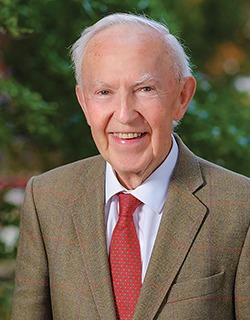
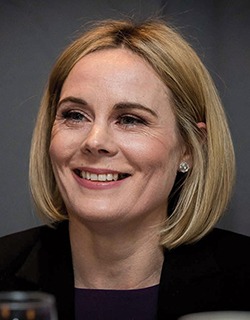
In December 2023, Ireland’s first ever satellite, EIRSAT-1, built and designed by UCD students, was launched into space in December. The mission has been in development for the past six years with 50 Physics and Engineering students.

UCD Conway Institute marked 20 years at the leading edge of research…

Met Éireann partnered with UCD on a multi-million-euro research programme supporting the development of weather and climate services using data science and AI. It aims to develop AI-enhanced models that will enable Met Éireann to build on its forecasting capabilities.

In October 2023, UCD Conway Institute marked 20 years at the leading edge of research, innovation and impact. Over 500 alumni, staff, students and friends of UCD gathered to celebrate. UCD student, maths ace Elaine Pidgeon who is undertaking a BSc in Applied and Computational Mathematics and Statistics, has been named among the recipients of this year’s prestigious RIA Hamilton Prize, the top award for undergraduate mathematical students in Ireland.

Ireland’s first space genomics project, MARSCROP, could lead to the surface of Mars becoming fit for farming. UCD is seeking to harness microbes in plant root systems to produce safe and nutritious food using Martian soil.

College Highlights

COLÁISTE GNÓ / College of Business

BUAICEANNA / HIGHLIGHTS 2023-2024
PRÍOMHOIFIGEACH AN CHOLÁISTECOLLEGE PRINCIPAL
An tOllamh / Professor Anthony Brabazon

UCD College of Business was once again recognised as Ireland’s leading business school and a centre of excellence for rigorous, relevant, business education and research.

For a remarkable fifth time, the College was awarded AACSB re-accreditation, celebrating 20 years as the first Irish business school to attain ‘triple-crown’ accreditation from AACSB, AMBA and EQUIS. The College also celebrated the 50th anniversary of Ireland’s first Human Resource Management and Employment Relations Department. To commemorate the contributions of the Founding Professor of Industrial Relations, Brian J. Hillery, new student awards were created to continue his legacy of excellence.

Professor Susi Geiger was appointed as an independent expert with the newest WHO Technical Advisory Group on Pricing Policies for Medicines. Professor John Geary led a first-of-its-kind study that examined the extent to which the pandemic reshaped work in Ireland and the consequences for workers’ job quality and wellbeing. Professor Cal Muckley, using a machine learning algorithm, found individuals clinically diagnosed with Alzheimer’s and related dementias can be identified four years in advance, with money management difficulties among lead indicators. This research will help financial services companies to better protect vulnerable individuals. Professor Donna Marshall, an executive member of the UCD Earth Institute and leading sustainable supply chain scholar, was named in the Vogue Business 100 Innovators List, which recognises people at the forefront of fashion industry reform. UCD Quinn School students won the first UCD On-Campus Hult Prize Competition, which challenges young people to solve the world’s most pressing issues. Their company, Bean Around, makes exfoliating soaps from repurposed coffee grinds and will compete for $1m to make their idea a reality. In addition, UCD Smurfit School’s student team took first prize for the third year in a row at the competitive CFA Ireland Research Challenge.

Professor Federica Pazzaglia assumed the role of Director of UCD Smurfit School, bringing with her expertise in behavioural approaches to strategy, cognition and entrepreneurship. Tim Wray was appointed Director of UCD Smurfit Executive Development, ushering in a new global top 50 and EU top 25 placement in the Financial Times Executive Education Rankings in both the Open Enrolment and Custom Executive Education categories. The UCD Smurfit School CEMS Masters in International Management placed 17th, Executive MBA 64th, and the full-time MBA programme 91st, in the Financial Times global rankings. The school is ranked 24th in the FT European Business School rankings, making it first in Ireland.